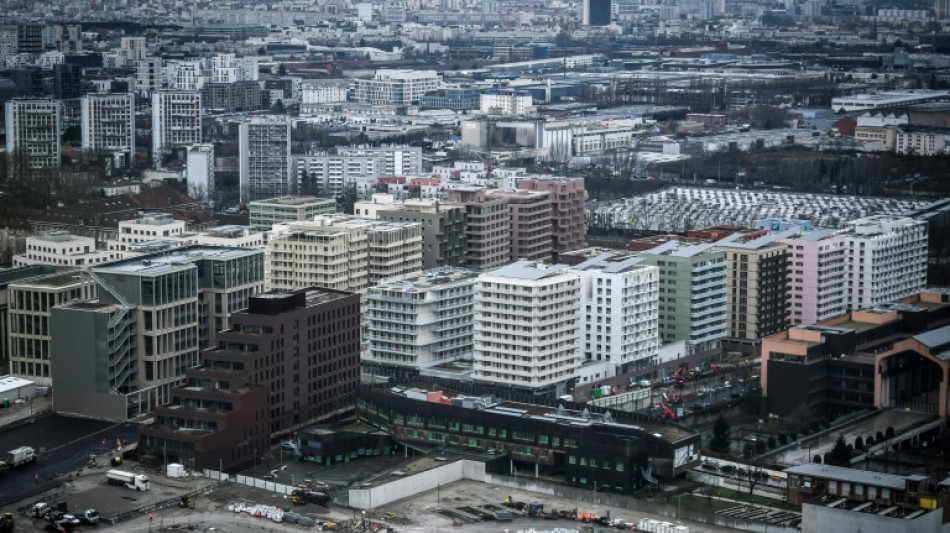
Recycled fish nets and geothermal power: inside the Paris Olympic village / Photo: STEPHANE DE SAKUTIN - AFP

 Bardot auction in Paris fetches nearly one million euros
 No timeline on Daniels injury return, says Commanders coach

 British Columbia sues OpenAI in US court over Canada school shooting

 French star Batum retires after 18-year NBA career

 Zidane leads first France training session
 Man shot by ICE agent in Texas detained with bullet inside him: lawyer

 California declares state of emergency ahead of El Nino

 South Africa arrests three more suspects, after nine women murdered
 Carse needs time away from England, says captain Brook

 NOWPayments Releases Cross-Chain Payout Data Revealing Key Performance Benchmarks Across TRON, BNB Chain, and Solana
 British Museum bans photos of Bayeux Tapestry as crowds linger
 COP31 host says AI climate footprint to be a summit priority

 Berlin's far-left vote winners reject anti-semitism charges

 Mancini eager for 'new adventure' on Italy return

 Mbappe says having Zidane as France coach 'like a film'
 Palmer, Rice out of England Nations League squad
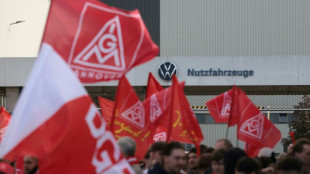 German auto workers stage mass protests in bid to save jobs
 Embattled Merz vows to keep ruling for 'democratic future' of Germany

 Merz vows to keep ruling coalition together for 'democratic future' of Germany
 Spain coach De la Fuente gets new deal after World Cup success

 Pressure grows on Germany's Merz after election defeats
 China's Zhang beats Japan rivals to Asian Games gymnastics gold

 Samlingen Haupt: Vad pengar avslöjar om oss människor

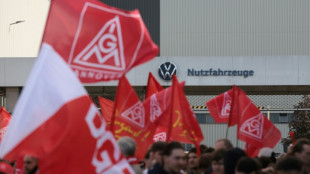 Tens of thousands of German auto workers protest to save jobs

 हॉप्त् कलेक्शन: पैसा हमारे बारे में एक इंसान के रूप में क्या प्रकट करता है
The athletes' village for the Paris Olympics, which is set to be inaugurated Thursday, contains a host of innovations intended to make it a model of low-carbon construction.
Faced with concerns about the vast emissions caused by the Games -- from the construction work, the air miles and catering -- Paris 2024 organisers set out to make the village as environmentally friendly as possible.
With its roughly 40 different blocks, it was intended to be a "coherent model of the best things we can do at the start of the 21st century, even a bit ahead of time," according to the head of the Paris Olympics infrastructure group, Nicolas Ferrand.
The 2,800 apartments will generate around half of the carbon emissions as equivalents built with regular construction techniques when energy savings over their lifetimes are taken into account, the Paris Games infrastructure body Solideo says.
After they have been used by Olympians and Paralympians between July 26 and September 8, the apartments will be converted into homes, with at least a third destined for public housing.
Here are some of their features:
- Naturally cool -
Organisers are proud of offering an Olympic village that they say does not require air-conditioning to keep residents cool, with temperatures inside set to be at least 6 degrees Celsius (42 Fahrenheit) lower than outside in summer.
As well as high-performance insulation and sun shades, the secret is reversible underfloor plumbing linked to a local geothermal power plant that draws cool water from beneath the surface during the summer and heat from far underground in the winter.
The renewable system helps dramatically reduce operational costs and the carbon footprint of the buildings, but it has alarmed some sporting delegations given Paris' recent record-breaking summers.
Many countries, including the United States, have asked for portable air-conditioners to be provided just in case.
- Concrete improvements -
Real estate companies had to agree to build the apartments while generating 30 percent less emissions per square metre than a traditional building under the terms of their contracts, according to Georgina Grenon, head of sustainability for the Paris Games.
"That brought up new construction techniques," she told AFP.
In many cases, the builders swapped out carbon-intensive concrete for wood, resulting in many of the structures using the natural material for their core support, as well as facades and floors.
Low-carbon concrete -- which uses less energy-intensive materials and processes to make the bonding agent -- was widely used across the site.
"We chose materials not for their technical, economic or architectural qualities, but for their carbon footprint," said Julie Bosch, project director for real estate group Vinci Immobilier, which built part of the village.
Recycled concrete was also deployed as ballast on the site and mixed with compost to form a base layer for the gardens.
- Real greenery -
As a showcase of a future urban model, the village has large gardens that will account for 40 percent of total land space and include 9,000 trees and shrubs once the area has been fully developed after the Olympics.
"It's a very high ratio, and with our system of recycling water, it will enable areas for relaxation and cooling off," Charles Richard-Molard, deputy director in charge of public spaces at Solideo, told reporters.
- Water works -
The site includes its own mini water treatment centre which will collect and purify waste water which can then be used on the gardens.
One experimental building, known as "the Cycle building", will use purified rainwater for its toilets, which are designed to separate out urine and faeces which can then be converted into fertilisers.
Some of the pavements have been made out of recycled oyster and seafood shells, which absorb more heat than a traditional tile, while other walkways contain byproducts of the paper-making industry or resin from pine trees instead of oil-based bitumen.
- Circular economy -
Of the roughly 300,000 household items destined for the Olympic village, all are set for a second life afterwards.
"We signed with suppliers only if they were able to show that they would be able to recycle or re-use," said Julia Watson, deputy director for the village works at Solideo.
The bed bases will be made of reinforced cardboard and the mattresses are being manufactured from recycled fishing nets -- the same system as at the Tokyo Olympics.
Much of the wooden street furniture is from reclaimed wood, while some of the street lighting has been made from recycled steel piping.
H.Romero--AT