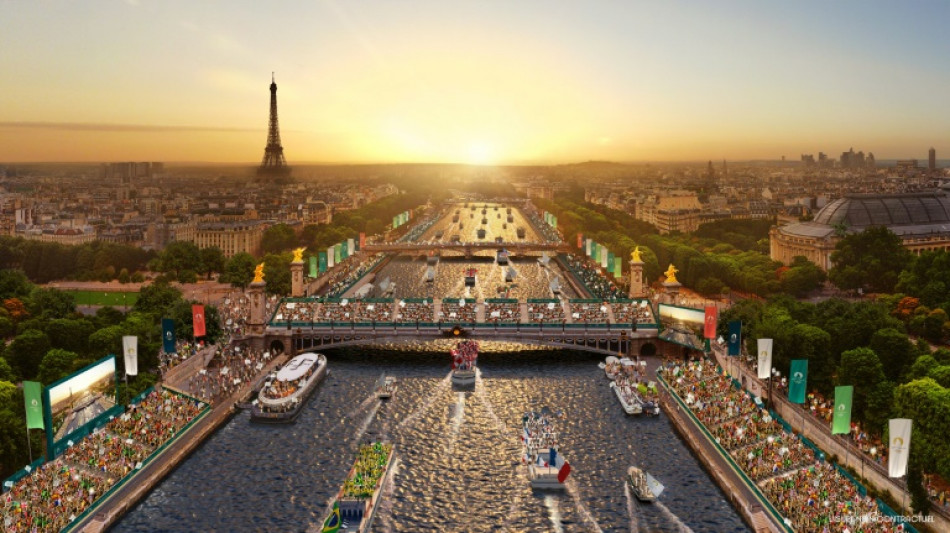
Paris 2024: a 'new era' of corruption-free Olympics? / Photo: Florian Hulleu - Paris 2024/AFP/File

 Swimming prodigy Yu, 13, says 'interviews way harder than racing'
 Star coaches make their bows as Nations League returns
 Rams bounce back as Giants reel from Dart injury
 In Bangladesh, Pakistan's Jinnah photo stirs anger

 Two New Zealand naval ships transit Taiwan Strait

 Zidane gets down to work as France start new era
 Inside the Venezuelan prison meant to 'drive you insane'
 UK king braces as memoir by Diana's brother goes on sale
 Akkodis and Hamburg Public Transport Association Showcase hvv mia at InnoTrans 2026, Demonstrating the Future of AI-Powered Mobility
 Macron says talks with Trump on Red Sea, Ukraine 'constructive'
 Green policies just good politics, says UK minister
 Bardot auction in Paris fetches nearly one million euros
 No timeline on Daniels injury return, says Commanders coach
 British Columbia sues OpenAI in US court over Canada school shooting

 French star Batum retires after 18-year NBA career
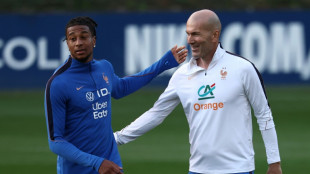 Zidane leads first France training session
 Man shot by ICE agent in Texas detained with bullet inside him: lawyer
 California declares state of emergency ahead of El Nino

 South Africa arrests three more suspects, after nine women murdered
 Carse needs time away from England, says captain Brook
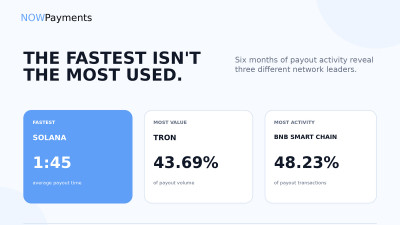 NOWPayments Releases Cross-Chain Payout Data Revealing Key Performance Benchmarks Across TRON, BNB Chain, and Solana
 British Museum bans photos of Bayeux Tapestry as crowds linger
 COP31 host says AI climate footprint to be a summit priority

 Berlin's far-left vote winners reject anti-semitism charges
 Mancini eager for 'new adventure' on Italy return
Ahead of the Paris Olympics in July and August, French prosecutors are working on four enquiries into possible wrongdoing, but are the investigations a sign of problems or of genuine efforts to tackle graft?
Andy Spalding, an academic and author who studies corruption in sporting "mega-events" such as the Olympics or the football World Cup, believes French authorities are showing they are serious about delivering a clean Games.
Three preliminary investigations are into possible favouritism in the awarding of around 20 contracts worth tens of millions of euros, while a fourth -- revealed on February 6 by AFP -- is scrutinising the pay of chief organiser Tony Estanguet.
In an interview with AFP, Spalding, a professor at the US-based University of Richmond School of Law, explained the troubled history of Olympic corruption and why he believes the Paris Games might spell the start of a "new era" of cleaner international sport.
Question: When did corruption in the Olympics first come to wide public attention?
"The Salt Lake City Winter Olympics in 2002 was the first time in which there was hard evidence of corruption that went public. Pre-2002, we know there's corruption. But we can't prove it and the world is largely resigned to corruption.
Then in the late 1990s, there's something sometimes called the "corruption eruption" -- a period of time in which all of a sudden the world starts paying a lot of attention to corruption issues.
There are new international conventions; there's an explosion of scholarship. There are scandals and resignations, new enforcement initiatives.
What we saw in the ensuing Games was not just incidents of corruption, but systemic corruption. Russia with the Sochi 2014 Winter Olympics was probably the most egregious example of this, where billions of dollars are estimated to have been embezzled in the course of the event."
Question: What has been the effect on the Olympics movement?
"The corruption scandals have damaged the International Olympic Committee brand enormously. That was most obvious in 2015 at the time of the awarding of the 2022 Winter Games, when the only credible candidate, China, was a country that had almost no winter sports tradition.
Other countries just didn't want them because of the systemic corruption and the cost overruns.
The IOC needs a sustainable business model, so they adopted reforms, attacking the two different components of corruption: one is the corruption at the IOC level, particularly with the executive committee, meaning they needed to reform the bidding process.
Then the second step was addressing corruption at the host level: the organising committee, the municipality, the National Olympic Committee."
Question: Part of that approach is a new "anti-corruption clause" in the contract with the Olympics host city. What is this?
"France is the first country to be under an enforceable contractual obligation to adopt anti-corruption compliance programs. Nobody knows what it means yet, but starting with Paris, moving forward to the 2026 Winter Games and Los Angeles in 2028, we will have these contractual obligations each time.
You start with a contractual provision. The next step is to provide some guidance on what that means. Then we need operations and some enforcement for breach of contract. When all of those steps are completed, then the clause will mean something.
When any convention or statute is adopted, there is a lag before enforcement. The statute that was the catalyst for global anti-corruption enforcement, the US Foreign Corrupt Practices Act, was on the books for 25 years before we did anything with it."
Question: How else is Paris 2024 different?
"It's really important to note that France was awarded the Olympics in 2017, the same year that it adopted a new highly innovative anti-corruption law, Sapin II. That created a freestanding requirement that companies adopt anti-corruption compliance programs to prevent things like bribery, favouritism or extortion. In most of the world, anti-corruption compliance is not legally required.
France applied all this to the Olympics. They put the organising committee under the jurisdiction of the new French Anti-Corruption Agency (AFA) whose sole purpose is to help companies build compliance programs.
And in reviewing the organising committee, AFA has uncovered issues that are potential red flags. It sends those red flags to prosecutors, and prosecutors are now investigating.
What is that evidence of? Systemic corruption or an innovative anti-corruption initiative working really well? It depends on whether anything is verified. And if it's verified, how serious it is.
I think Paris could mark the beginning of a new era of anti-corruption law enforcement and anti-corruption measures in the Games."
S.Jackson--AT