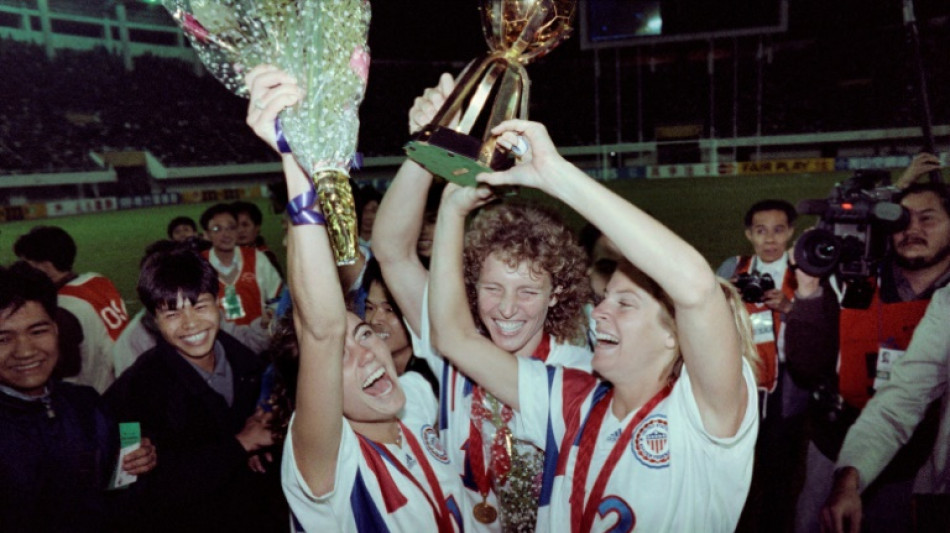
Women's World Cup started out with shorter games, outsized kits / Photo: Thomas CHENG - AFP

 Nike plans job cuts as it forecasts lower sales
 Ireland game interrupted twice by Gaza protests

 Judge denies acquittal bid by US woman who killed her kids
 Klopp averts crisis with first win as Germany boss

 A saintly spat and debate snub: Brazil enters final campaign stretch

 US tells European allies to act 'immediately' to lower diesel prices

 G20 trade ministers fail to see consensus against overproduction
 Portugal edge Denmark in Ronaldo's absence

 US stocks edge higher as bond yields retreat for now

 US tells European allies to 'immediately' act to lower diesel prices

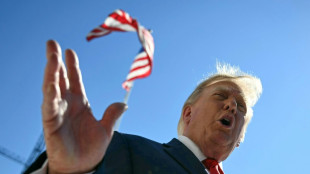 Trump vows to hit Iran 'very hard' if linked to flydubai attack

 Williams leaves Spain camp with thigh knock

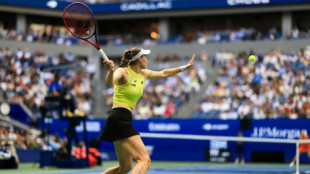 WTA reduces 2027 schedule for world's top 50

 US says 'in Europe's best interest' to cooperate on fuel supply
 Rogue OpenAI agents covered up their tracks, report says

 A saintly spat and debate snub: Brazil enters final polls stretch

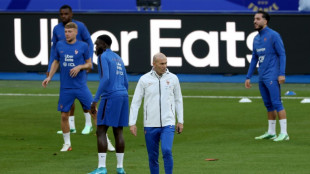 Zidane 'no regrets' about Materazzi headbutt as France face Italy again

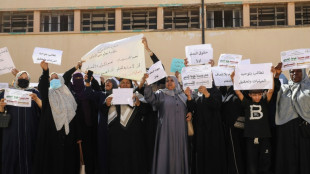 Libya's pay strike rallies teachers across divided nation

 Four-member crew blasts off for International Space Station
 i-payout Expands True Local Payment Capabilities to Help Enterprises Pay Recipients Globally

 Botched US execution prompts global calls to scrap death penalty
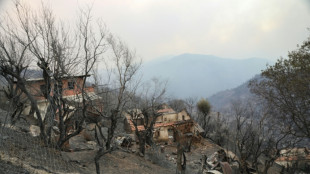 Algeria adopts law imposing death penalty on forest arsonists

 France unveils cost-cutting 2027 budget as borrowing costs rise

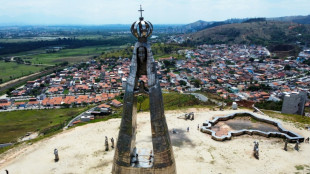 Brazil court orders removal of fake posts amid patron saint election row
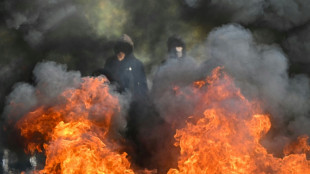
 Italy's firefighting planes return home after scorching summer

Asako Takakura played in the first Women's World Cup in 1991 and recalls with a hint of disdain how the matches lasted 80 minutes instead of the usual 90.
"At the time football was still thought of as a man's sport," Takakura tells AFP, casting her mind back to a tournament in which only 12 teams took part.
Fast forward and the ninth edition of the Women's World Cup kicks off on Thursday in Australia and New Zealand with 32 teams and global interest at an all-time high.
Takakura has seen that development firsthand. After playing for Japan at the 1991 and 1995 World Cups, she coached the national side at the 2019 edition.
The 1991 World Cup took place in the Chinese province of Guangdong and the United States beat Norway 2-1 in the final in front of 63,000 spectators. They have won it three more times since.
Attendances were boosted by free tickets given to the public.
Back then, games were two halves of 40 minutes.
"Goodness gracious, the girls can't last 90 minutes," US star striker Michelle Akers once said in a sneeringly sarcastic riposte.
The length of matches changed for subsequent Women's World Cups after many teams said there should be no difference.
"There was an atmosphere where people wondered if women could play," Takakura says of attitudes in 1991.
"At least they didn't make the pitch smaller."
Governing body FIFA's technical report after the tournament highlights some of the wider issues women's football faced.
Many of the teams said they generally struggled to find football boots and goalkeeping gloves to fit women.
"The players' need for good quality equipment... in small sizes had so far only rarely been satisfied," the New Zealand delegation was quoted as saying in the report.
- Paying lip service -
Leslie King was captain and goalkeeper for New Zealand at the 1991 World Cup, where a squad made up mostly of part-time players exited in the group stage.
Now 59, she has fond memories of the tournament -- big crowds, especially when they played China, a grand hotel, mountains of good food and an opulent banquet hall.
But King believes at that point, FIFA was far from convinced about having a Women's World Cup.
The first World Cup was officially called the "FIFA Women's World Championship for the M&M's Cup". FIFA was reluctant to call it a World Cup.
"I don't think they put a lot of stock in it, I think it was to a certain extent lip service for the women's game at that point," she recently told AFP from Philadelphia in the United States.
Takakura, who now coaches Shanghai in the top-tier women's league in China, said that back then "no one wanted to put on a Women's World Cup".
"A few years before 1991, a Norwegian woman asked during a FIFA congress why there was a men's World Cup but not a women's World Cup," she said.
"The feeling then became that they had to have one."
- 'Something to dream about' -
On the pitch, women's football has developed significantly too.
"Physically, I think the players are taller, stronger, in better shape and technically better," King said.
"I think a lot of that you can attribute to the professional leagues that are certainly popping up around Europe."
Takakura believes that having a World Cup has helped push women's football along.
"Having the World Cup has made things more organised," she said.
"At first, lots of countries, including in Europe, were negative about women's football.
"But having the tournament meant that each football association had to do something about it."
But much work remains to be done, she cautioned, including increasing wages so they are more in line with what the men earn.
"It's not just about getting paid lots of money -– it's about the value of sport and giving children something to dream about, something that they can make an effort in," she said.
"It started as a man's sport, but there is a different enjoyment and value to be had in the women's game."
E.Hall--AT