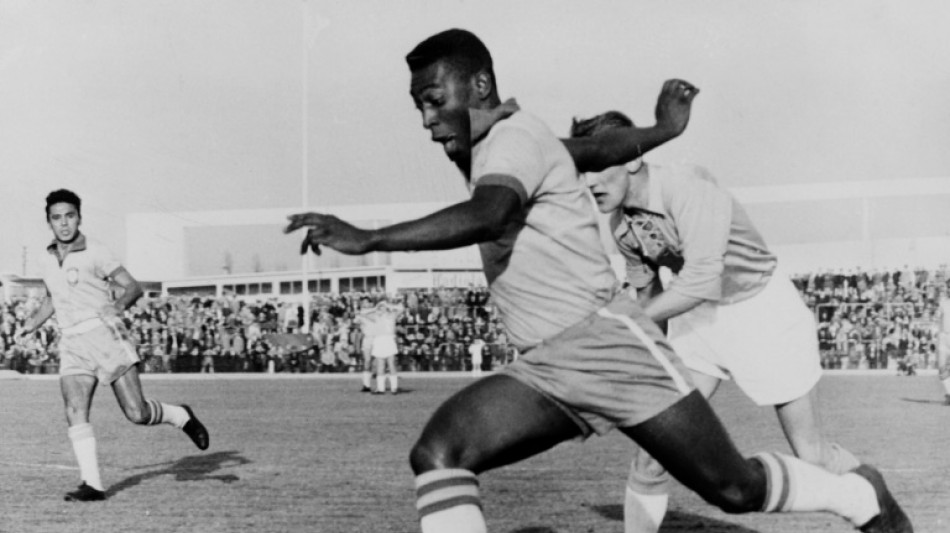
Pele, eternal king of the beautiful game / Photo: - - AFP/File

 Japan's busiest rail station tests robot bins
 Anthropic says AI systems moving towards building themselves
 Asian stocks boosted by falling oil, yen weakens after BoJ rate hike
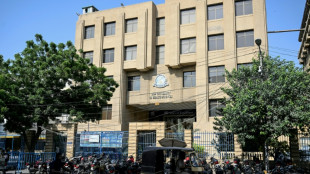 Pakistan court blocks expulsion of Afghan medical college students
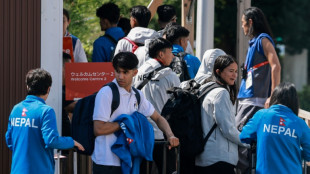 Athletes 'can't take it any more' as Asian Games issues mount
 Allen lights up Bills' new stadium with 41-31 win over Lions

 Afghan medical students in Pakistan hope court stops college expulsions
 AI doomsday warnings unlikely to slow IPOs but questions linger
 ICC eyes China in bid to expand cricket
 Nkunku craving freedom and fun on RB Leipzig return
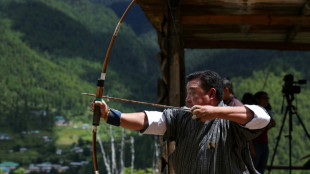 Bhutan's traditional archers lose ground to development
 Asian stocks track Wall St rally as oil prices drop
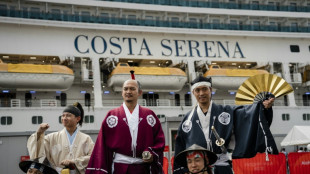 South Korea makes Asian Games complaint over Japan warlord ceremony
 US aid cuts are killing Kenyan sex workers
 October 7 survivors, families take centre stage in Israel vote
 Captain Mat Ryan axed from Socceroos squad for Brazil games
 US approves sale of 48 F-35 jets to Saudi Arabia
 Staging Your Home for Sale: Cheap Upgrades That Make a Difference

 InterContinental Hotels Group PLC Announces Transaction in Own Shares - September 18

 DataMeds AI Litigation Settlement Extinguishes ~$19 million In Liabilities and Retires 364,099 Common Sharessked

 The Records Company Announces Filevine and Litify Integrations to Simplify Record Retrieval for Law Firms
 Venezuela unblocks some censored news sites

 Samba stars on debut in Man City rout of Norwich
 Oversight Board blasts 'inadequate' Meta safeguards for AI deepfakes

 The Easter Island origins of buzzy Malkovich drama 'Wild Horse Nine'
Pele was the best-loved footballer of his or any other generation, the eternal master of the beautiful game.
He won the World Cup with Brazil in 1958, 1962 and 1970, his sumptuous range of skills making him the embodiment of his country's golden age of football.
When he finally retired in 1977, Pele had scored more than 1,000 goals.
He scored 77 for Brazil, a mark only equalled at the recent World Cup by Neymar.
But his impact on his sport went far beyond the pitch as he also became a money-making phenomenon, lending his name to sportswear, credit cards and watches among an array of products.
Born Edson Arantes do Nascimento in October 1940, Pele played his first game for Santos as a 15-year-old in 1956.
He earned a call-up to the national team a year later, scoring on his debut against Argentina. In 1958 he was picked for the World Cup in Sweden.
His participation at the finals had been a matter of fierce debate in Brazil, with many critics questioning whether the slender-framed teenager was ready for the physical demands of the tournament.
Nursing a knee injury on arrival in Sweden, Pele was unavailable for Brazil's opening two matches.
He might also have been forced to sit out their third, against the Soviet Union, had coach Vicente Feola decided to heed the advice of a team psychologist who had urged that Pele was "infantile" and not fit for duty.
In the event Feola opted to play the youngster, and it paid off. Working in tandem with Garrincha and his famously bent legs, Pele gave a virtuoso display as the Soviets were vanquished 2-0.
Once in the team, Pele made it impossible for him to be removed. A winning goal in the quarter-final against Wales and a hat-trick in the 5-2 semi-final victory over France were followed by two more in the final win over Sweden.
Still only 17, Pele had become the youngest World Cup winner in history. The next two tournaments, however, were to be unhappy experiences.
Twenty-one by the time of the 1962 World Cup in Chile, an older, stronger Pele had been expected to take the tournament by storm.
He gave a tantalising glimpse of what he was capable of with an electric individual goal against Mexico in Brazil's opening 2-0 win.
But he aggravated an existing injury in the second game, against the Czechs, and was forced to sit out the remainder of the tournament as his countrymen successfully defended their title.
Pele's frustration that injury had limited his appearances in Chile were nothing compared to the sickening disappointment of England in 1966 where, unprotected by referees, he was literally kicked out of the tournament.
Brutally assaulted by Bulgaria's defence in the first game to the extent that he was forced to miss the second match, the nadir came against Portugal.
Two crippling challenges by Joao Morais left a tearful Pele being carried from the Goodison Park pitch in Liverpool swearing never to play in a World Cup again.
"I don't want to finish my life as an invalid," he said.
- Synonymous with beautiful game -
Thankfully, Pele's disconsolate vow was to prove an empty threat. He returned four years later in Mexico to spearhead what is regarded as the greatest team of all time.
Where 1966 had been viewed as a victory for cynicism, the 1970 tournament, and Pele and Brazil's winning contribution to it, have become synonymous with the beautiful game.
It is a testament to the quality of Pele's play in Mexico that he is remembered for the goals he didn't score as much as for the ones he did.
An outrageous attempt to lob Czechoslovakia's goalkeeper from inside his own half and a magical dummy against Uruguay in the semi-finals are among the finest moments of World Cup history.
Though he was to continue playing club football for his beloved Santos and later the New York Cosmos, Pele retired from international duty in 1971, making an emotional farewell in front of 180,000 fans at the Maracana in Rio de Janeiro.
"Pele was the most complete player I've ever seen," England's Bobby Moore recalled later. "He had everything."
Once his World Cup heroics were finished, Pele, who was nicknamed "O Rei" (The King) and finished on 91 caps, helped try to kickstart an American revolution in football.
In 1977, he inspired New York to the national title in his final season with the club which featured fellow greats Franz Beckenbauer, Italian striker Giorgio Chinaglia and former Brazil captain Carlos Alberto.
He appeared in the 1981 film Escape to Victory about Allied prisoners of war during World War II along with the likes of Michael Caine, Sylvester Stallone and Moore.
Between 1995 and 1998, he was even Brazil's Extraordinary Minister for Sport, while he also regularly appeared in public as an ambassador for numerous commercial brands.
He suffered a series of health problems in later life, undergoing surgery on his hips, kidney stones and on a colon tumor.
That did not stop him living life to the full, and he married for the third time in 2016, tying the knot with Marcia Aoki.
F.Ramirez--AT