Forty years of US-Iran relations

 Demonstrations backing France's protesting students gather strength

 Trump says US Senate as hard to defend as House in midterms
 Suspected Russian drones hit two ships off Bulgaria, 11 missing
 Tech stocks slide on AI jitters

 Trump asks Greece ambassador to resign amid ethics scandal
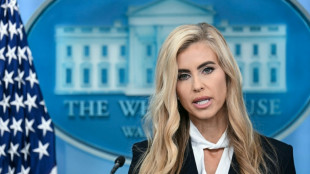 New White House spokeswoman heavy on Trump praise, light on questions in debut
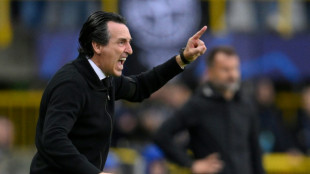 Emery urges Villa to make most of reduced home comfort
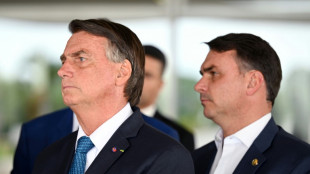 Flavio Bolsonaro visits father under house arrest ahead of Brazil runoff
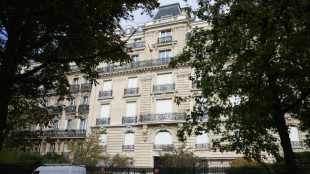 France, Eq. Guinea in standoff over luxury Paris mansion

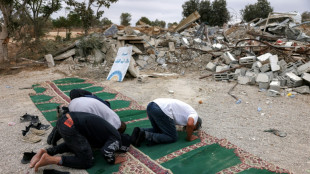 'Holding our ground': Israel demolishes dozens of Bedouin homes
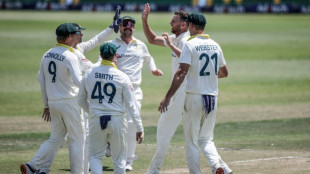 Hazlewood takes six as Australia beat South Africa in 1st Test
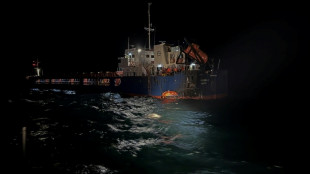
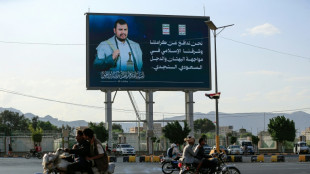 Saudi coalition tells Sanaa residents to flee site before operation
 Zverev defies 'physical issues' to reach Shanghai Masters quarter-finals
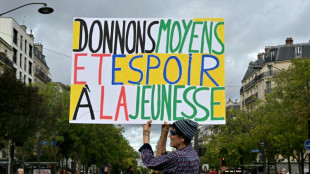 'We're not giving up': Activist Thunberg joins France student protests
 Man City captain Dias defends celebrations after Liverpool win

 B2PRIME Expands Tier-1 Access and Liquidity Architecture for Sophisticated Institutional Flow

 STARTRADER Adds 48 US Stock CFDs with 24-Hour Weekday Trading
 'Ink' director Danny Boyle slams Trump's Truth Social 'lies'
 Coach Kovac extends contract at Dortmund until 2029
 Activist Thunberg joins France student rally after violence at protests

 Archer and Bethell in England squad for Australia ODI series

 Formula One to return to Africa in 'early 2030s' in Rwanda

 US actor Selma Blair charged with assault after alleged flight altercation

 Hungary cuts anti-LGBTQ legislation from Orban-era law
 'Our future is being robbed': Greta Thunberg joins France student protests

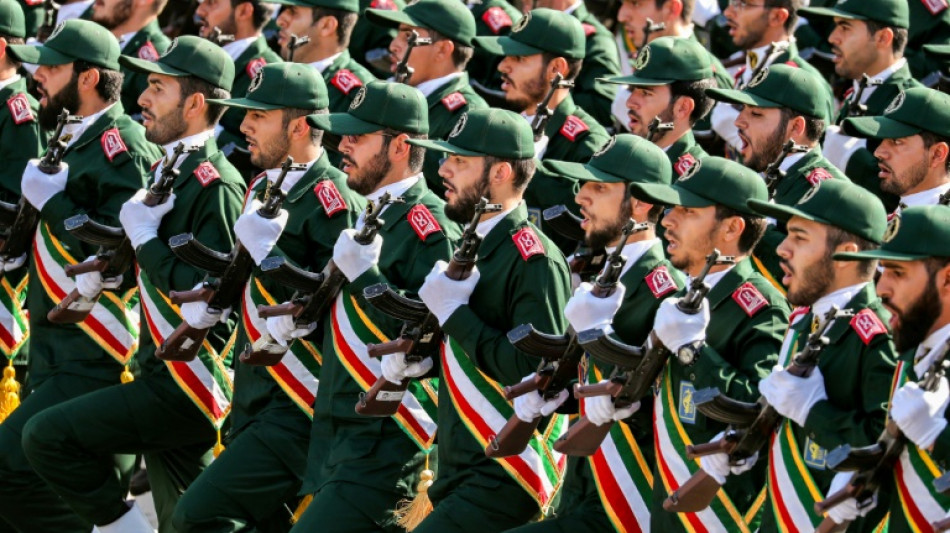
Key dates between the US and Iran since 1979 after their exchange Monday in which the US designated Tehran's elite military force a terrorist organization and Iran called the US a "state sponsor of terrorism".
- Rupture -
On November 4, 1979 radical students demanding the extradition of Shah Mohammad Reza Pahlavi take 52 diplomats and employees of the American embassy in Tehran hostage, seven months after the establishment of the Islamic Republic.
The hostages are held for 444 days in a crisis that results in the first US economic sanctions leveraged against the state.
On April 7, 1980 Washington breaks off diplomatic relations with Iran and imposes restrictions on commerce and travel, 10 months before the release of the last hostages.
On November 4, 1986 the Iran-Contra affair becomes public, revealing a secret arrangement in which American arms were sold to Tehran in hopes of helping liberate American hostages in Lebanon, with profits channeled to Nicaraguan Contra rebels.
On July 3, 1988 a US guided missile cruiser shoots down an Iran Air Airbus over the Gulf resulting in 290 deaths, in what the United States calls a mistake.
- 'Axis of evil' -
On April 30, 1995 US president Bill Clinton begins a comprehensive ban on trade and investment with Iran over its seeking nuclear weapons. Sanctions are subsequently extended and expanded.
On January 29, 2002, President George W. Bush puts Iran on his list of countries in the "axis of evil" supporting terrorism.
Iran's new president Mahmoud Ahmadinejad on August 8, 2005 starts a new push for uranium enrichment.
- Hints of reconciliation -
On November 6, 2008 Ahmadinejad congratulates then US president-elect Barack Obama on his victory.
The following year, on March 20 Obama says he would "like to speak directly to the people and leaders of the Islamic Republic of Iran."
But in June, Obama condemns the violent repression of Iranian demonstrations and says he believes the legitimacy of Ahmadinejad's reelection raises serious questions.
On June 15, 2013 the US says it is ready to work directly with new Iranian President Hassan Rouhani and on September 15 Obama reveals he has exchanged letters with him.
On September 27 Obama and Rouhani speak by phone in a historic first direct communication between leaders of the two nations since 1979.
- Historic nuclear deal -
An accord with world powers on Iran's nuclear programme is reached on July 14, 2015, ending 12 years of crisis and 21 months of negotiations.
It gives Tehran relief from crippling economic sanctions in exchange for limits on its nuclear programme.
- Trump scraps deal -
In January 2017, newly-elected US President Donald Trump bans by decree immigration from seven Muslim countries, including Iran.
Two days later Iran carries out a ballistic missile test, in violation of a UN resolution.
Washington pulls out of the landmark nuclear pact with Iran on May 8, 2018, reinstating Washington's sanctions on Iran and companies with ties to the Islamic republic.
The US on March 7, 2019 accuses Iran of carrying out three missile-related launches in defiance of UN resolutions and urges the Security Council to "bring back tougher international restrictions" against Tehran.
- 'Terrorism' accusations -
On April 8 the US designates Iran's elite military force, the Islamic Revolutionary Guard Corps, a terrorist organization, ramping up already far-reaching attempts to undermine the Iranian government.
In response, Iran declares the US a "state sponsor of terrorism" and its forces in the region "terror groups".
D.Lopez--AT