Peres: architect of Israel nuclear programme as well as peace

 Demonstrations backing France's protesting students gather strength

 Trump says US Senate as hard to defend as House in midterms
 Suspected Russian drones hit two ships off Bulgaria, 11 missing
 Tech stocks slide on AI jitters

 Trump asks Greece ambassador to resign amid ethics scandal
 New White House spokeswoman heavy on Trump praise, light on questions in debut
 Emery urges Villa to make most of reduced home comfort
 Flavio Bolsonaro visits father under house arrest ahead of Brazil runoff

 France, Eq. Guinea in standoff over luxury Paris mansion
 'Holding our ground': Israel demolishes dozens of Bedouin homes
 Hazlewood takes six as Australia beat South Africa in 1st Test
 Saudi coalition tells Sanaa residents to flee site before operation
 Zverev defies 'physical issues' to reach Shanghai Masters quarter-finals
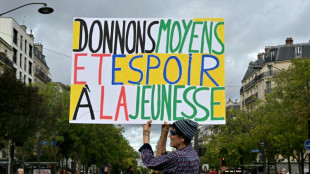 'We're not giving up': Activist Thunberg joins France student protests
 Man City captain Dias defends celebrations after Liverpool win
 B2PRIME Expands Tier-1 Access and Liquidity Architecture for Sophisticated Institutional Flow

 STARTRADER Adds 48 US Stock CFDs with 24-Hour Weekday Trading

 'Ink' director Danny Boyle slams Trump's Truth Social 'lies'
 Coach Kovac extends contract at Dortmund until 2029

 Activist Thunberg joins France student rally after violence at protests

 Archer and Bethell in England squad for Australia ODI series

 Formula One to return to Africa in 'early 2030s' in Rwanda

 US actor Selma Blair charged with assault after alleged flight altercation

 Hungary cuts anti-LGBTQ legislation from Orban-era law
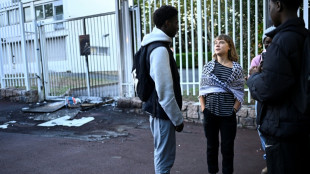 'Our future is being robbed': Greta Thunberg joins France student protests

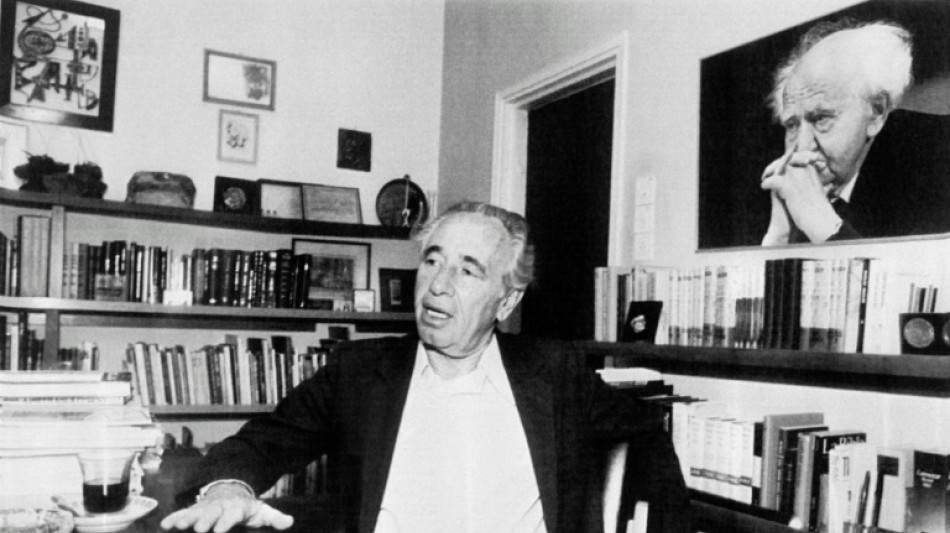
Shimon Peres, who died Wednesday aged 93, is famed for his peace efforts with the Palestinians but his role as architect of Israel's nuclear programme may prove his more lasting legacy.
When still in his 30s during the 1950s, Peres played a key part in Israel's pursuit of a nuclear capability at the urging of Israel's first prime minister David Ben-Gurion.
He reached a secret agreement with France that led to the building of a nuclear reactor at Dimona in Israel's Negev desert, which went critical around 1962.
Israel is now considered to be the Middle East's sole nuclear-armed power, although it has never confirmed it, maintaining a policy of ambiguity.
It is estimated to have produced enough weapons-grade plutonium at Dimona to arm between 100 and 200 nuclear warheads, according to the US-based Nuclear Threat Initiative.
Peres, who was president and twice prime minister, was awarded the Nobel Peace Prize in 1994 for his role in negotiating the Oslo accords with the Palestinians, but he saw no contradiction between that achievement and his nuclear programme efforts.
"Dimona helped us to achieve Oslo," he told Time magazine in an interview in February.
"Because many Arabs, out of suspicion, came to the conclusion that it's very hard to destroy Israel because of it, because of their suspicion.
"Well if the result is Dimona, I think I was right. Anyway, we’ve never threatened anybody with nuclear bombs, and we’ve never tested it."
Peres was put in charge of the nuclear programme by Ben-Gurion while director general of the defence ministry.
The prime minister had made the programme a priority, driven in part by the Holocaust and the 1948 war with neighbouring Arab states that accompanied Israel's creation, historian Avner Cohen wrote in his book "Israel and the Bomb."
"Peres's boundless energy and political skills became the necessary ingredient in realising Israel's nuclear hopes," he added.
- 'One of the ablest' -
Ephraim Asculai, a senior research fellow at Israel's Institute for National Security Studies, said Ben-Gurion had enormous trust in Peres.
He saw him as "one of the ablest persons in the country and one who could carry out the mission."
Peres enlisted France's help for the secret programme, and even the United States, now Israel's most important ally, was kept out of the loop.
In a documentary aired on Israeli television in 2001, Peres acknowledged that France agreed to provide Israel with "a nuclear capability" as part of the secret negotiations that led to their invasion of Egypt alongside Britain during the Suez Crisis of 1956.
It was only years later, in 1969, that Israel reportedly reached an understanding with Washington under which Israeli leaders would refrain from making any statement about the country's capabilities and would carry out no nuclear test.
In exchange, the United States avoided exerting any pressure on the issue.
Israel has still not signed the nuclear Non-Proliferation Treaty.
Israeli Prime Minister Benjamin Netanyahu, who was a political rival of Peres, made reference to the elder statement's involvement in the nuclear programme in a tribute after his death on Wednesday.
"As a champion of Israel's defence, he strengthened its capacities in many ways, some of them still unacknowledged to this day," he said.
While Peres and other Israeli leaders have credited the country's policy of nuclear ambiguity with protecting it from hostile neighbours and helping it leverage peace agreements, others have been critical.
Opponents say Israel's suspected arsenal has been a constant spur for its regional rivals to try to develop their own as a deterrent.
Last year's nuclear deal between the major powers and Israel's arch-foe Iran was aimed at ensuring it could not do so.
Israel has continued to keep a tight lid on its nuclear programme.
Former nuclear technician Mordechai Vanunu was jailed in 1986 for disclosing the inner workings of the Dimona nuclear plant to Britain's Sunday Times newspaper.
Snatched in Rome by agents of the Mossad intelligence agency and smuggled to Israel, Vanunu spent more than 10 years of his sentence in solitary confinement.
Even after his release in 2004, he remained subject to a raft of restraining orders, including a ban on speaking to the foreign media.
Y.Baker--AT