Cuban missile crisis: 13 days when nuclear war threatened / Photo: - - HO/AFP/File

 Australia boosts shark-spotting drone coverage at Sydney beaches
 Scotland boss Clarke resigns after World Cup exit confirmed
 Kane, Bellingham on target as England win World Cup group

 Croatia battle past Ghana to sew up World Cup Last 32 spot
 US, Iran clash, putting fragile deal under growing strain
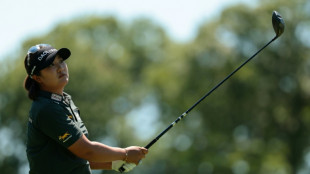 Ryu takes one-shot lead over Henderson at Women's PGA Championship

 Jangoo and Chase put West Indies in control against Sri Lanka

 World Cup star Gakpo requests privacy after death of unborn son
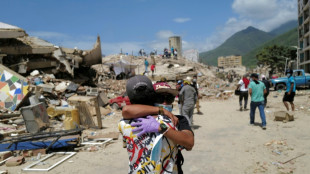
 Aid planes landing at partially reopened Venezuela airport after quakes
 Spain's Williams hits out at Uruguay over World Cup injury
 World's largest particle smasher halts for upgrade to boost hunt for dark matter

 Ex-Olympic medallist Canderloro elected French Ice Sports chief
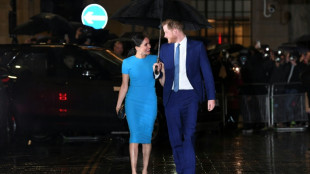 Prince Harry and family to stay at royal residences on UK visit

 'Why not?': Cape Verde eye seismic World Cup shock against Argentina
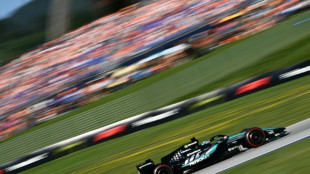 Russell snatches controversial pole in Austria after Verstappen crash

 Davidovich Fokina wins in Mallorca for first ATP title

 Sabalenka urges Grand Slams to 'get it done' in prize money boycott row
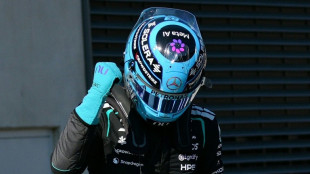
 Russell snatches pole as Verstappen, Antonelli fourth for Austria GP grid
 Smith and supersub Foulkes strike for New Zealand in England finale
 Supersub Foulkes strike for New Zealand in England finale

 Wolff says Russell will be at Mercedes next season

 Djokovic inspired by Serena as he targets history at Wimbledon
 Stokes falls cheaply as England collapse in New Zealand decider

 Russell bounces back to beat Antonelli in final practice

 Iran says US violated peace deal as both sides trade fire

Sixty years ago the Cuban missile crisis brought the world to the brink of nuclear war.
Here is a look at how the standoff between the United States and the Soviet Union unfolded:
- Missiles deployed -
On May 21, 1962, Soviet leader Nikita Khrushchev decides to place medium- and intermediate-range nuclear missiles on the island of Cuba, Moscow's communist ally in the Caribbean.
He justifies the decision by the fact that Cold War rival the United States could deploy nuclear weapons from NATO member Turkey, which bordered the then Soviet Union.
On September 4, US President John F. Kennedy warns that the "gravest consequences" will follow if significant Soviet offensive weapons are introduced into Cuba.
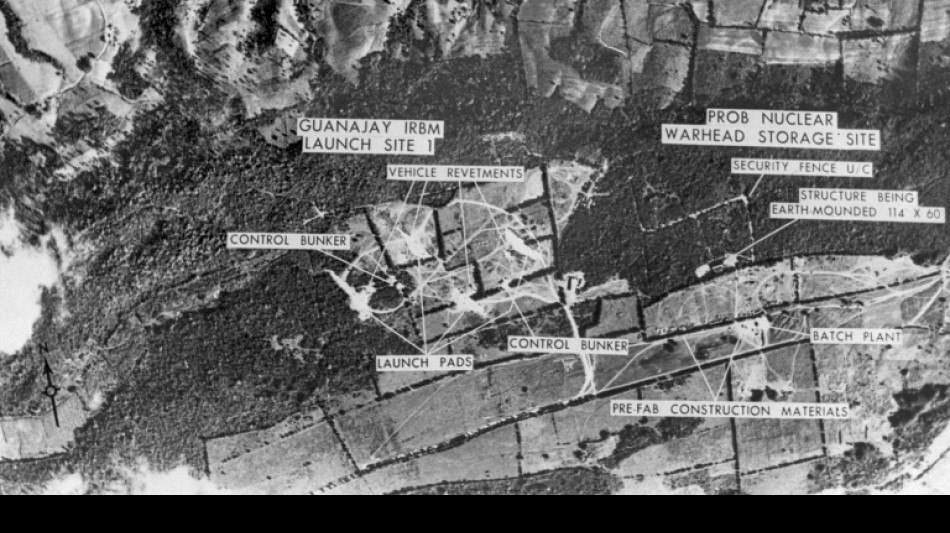
On October 14, a US U2 spy plane confirms that Soviet missiles were being deployed on Cuba, a mere 145 kilometres (90 miles) from the coast of Florida, and therefore within striking range of northeastern cities.
- 13-day crisis -
For 13 days a terrifying game of geo-political poker pits the young Kennedy against the fiery Khrushchev.
On October 16, Kennedy is briefed on a spy plane's high-resolution photos. He weighs whether to order a naval blockade or an invasion.
The next day US military units begin moving to bases in the southeastern United States as intelligence photos from another U-2 flight show additional sites, and 16 to 32 missiles.
- Cuba under 'quarantine' -
On October 22 Kennedy writes to Khrushchev.
"I have not assumed that you or any other sane man would in this nuclear age, deliberately plunge the world into war which it is crystal clear no country could win and which could only result in catastrophic consequences to the whole world, including the aggressor," he writes.
That evening he speaks on television and announces the establishment of a naval "quarantine" or blockade around Cuba and orders preparations for a landing on the island.
The Organization of American States backs Washington.
The next day ships of the naval quarantine fleet move into place around Cuba.
Four nuclear-armed Soviet submarines move into the Caribbean.
Soviet freighters bound for Cuba with military supplies freeze their positions.
Khrushchev protests in a letter to Kennedy "You are no longer appealing to reason, but wish to intimidate us."
The military of the Soviet Union and its eastern bloc allies are put on alert.
On October 26, Cuban leader Fidel Castro urges Khrushchev to initiate a nuclear first strike against the United States in the event of a US invasion of Cuba.
In a letter to Kennedy, Khrushchev proposes removing Soviet missiles and personnel if the United States guarantees not to invade Cuba.
- Spy plane shot down -
The next day a US U-2 spy plane is shot down over Cuba, killing its pilot, Rudolph Anderson, who becomes the sole fatality of the crisis.
Kennedy receives a new letter from Khrushchev demanding the removal of US missiles in Turkey in exchange for the removal of the Soviet missiles. Kennedy promises not to invade Cuba and to lift the blockade if the missiles are removed.
On October 28, Khrushchev backs down, agreeing to dismantle the installations and return the missiles to the Soviet Union, ending the crisis.
In an additional secret agreement, the United States agrees to eventually remove its Jupiter missiles from Turkey.
On November 20 Kennedy lifts the Cuba blockade.
- The aftermath -
The next year a "hotline" is set to link the US and Soviet leaders by telex. Up to then they had only communicated via their respective ambassadors.
Sixteen months earlier, in February 1962, following Cuba's expropriations of US companies, Kennedy had imposed a strict economic and financial embargo on the island.
It would take another half a century for US President Barack Obama and Cuban leader Raul Castro in December 2014 to announce the re-establishment of diplomatic relations between the two countries.
Sources: John F. Kennedy Presidential Library and Museum, AFP archives
Ch.Campbell--AT