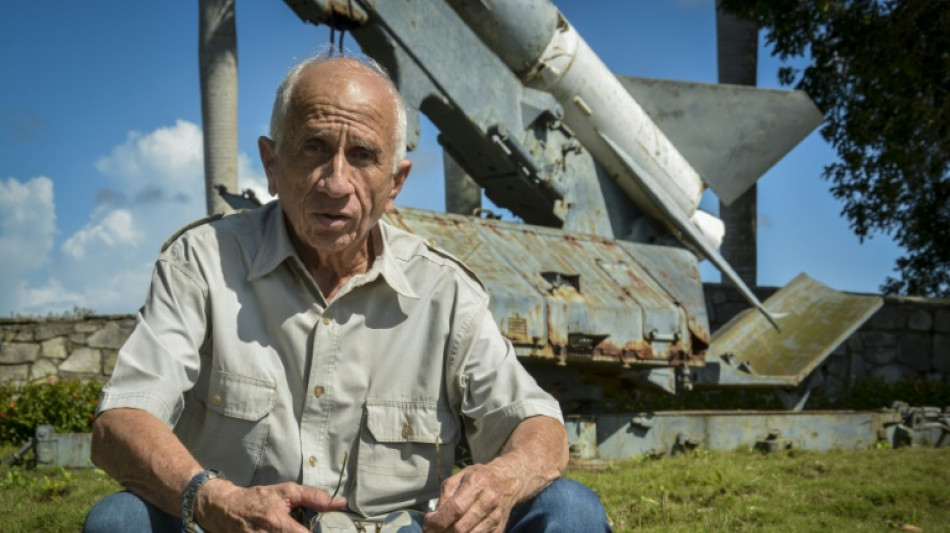
Reliving the Cuban missile crisis: 'We were going to be incinerated' / Photo: STR - AFP

 Australia boosts shark-spotting drone coverage at Sydney beaches
 Scotland boss Clarke resigns after World Cup exit confirmed
 Kane, Bellingham on target as England win World Cup group

 Croatia battle past Ghana to sew up World Cup Last 32 spot
 US, Iran clash, putting fragile deal under growing strain
 Ryu takes one-shot lead over Henderson at Women's PGA Championship
 Jangoo and Chase put West Indies in control against Sri Lanka

 World Cup star Gakpo requests privacy after death of unborn son
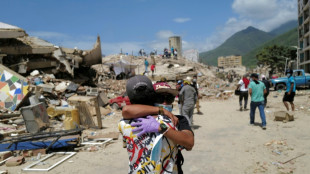
 Aid planes landing at partially reopened Venezuela airport after quakes
 Spain's Williams hits out at Uruguay over World Cup injury
 World's largest particle smasher halts for upgrade to boost hunt for dark matter
 Ex-Olympic medallist Canderloro elected French Ice Sports chief
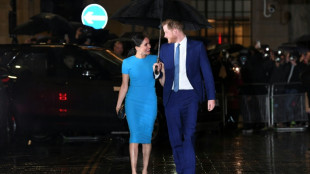 Prince Harry and family to stay at royal residences on UK visit
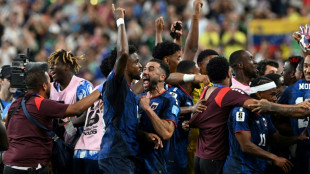 'Why not?': Cape Verde eye seismic World Cup shock against Argentina
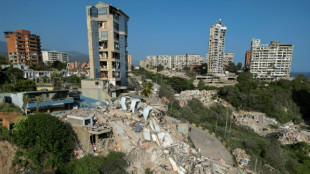
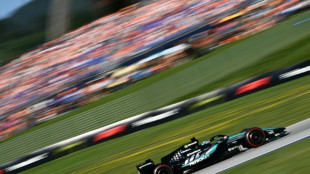 Russell snatches controversial pole in Austria after Verstappen crash
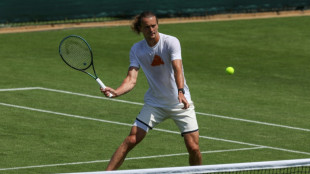
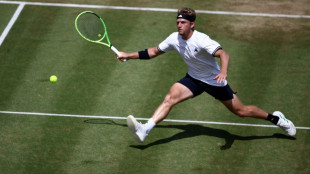 Davidovich Fokina wins in Mallorca for first ATP title

 Sabalenka urges Grand Slams to 'get it done' in prize money boycott row
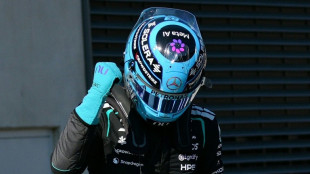
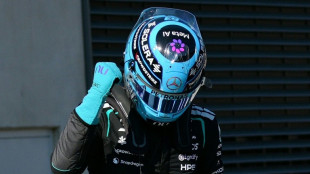 Russell snatches pole as Verstappen, Antonelli fourth for Austria GP grid
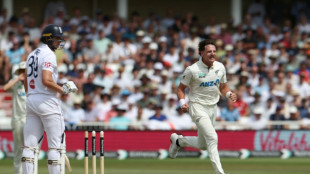 Smith and supersub Foulkes strike for New Zealand in England finale
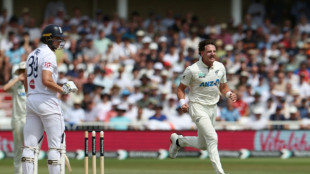 Supersub Foulkes strike for New Zealand in England finale
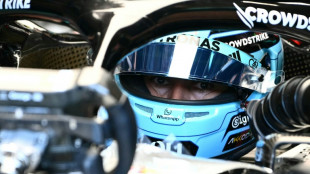 Wolff says Russell will be at Mercedes next season

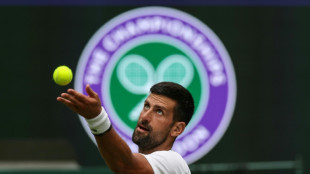 Djokovic inspired by Serena as he targets history at Wimbledon
 Stokes falls cheaply as England collapse in New Zealand decider
 Russell bounces back to beat Antonelli in final practice

 Iran says US violated peace deal as both sides trade fire
Oscar Larralde vividly remembers hearing the explosions that downed an American spy plane over Cuba in 1962; his island nation was in the eye of a nuclear standoff between the United States and Soviet Union.
The then-17-year-old bank employee-turned-enlisted soldier was convinced the moment spelled his country's doom.
"We were going to be incinerated," he recalled thinking at the time.
As nuclear threats swirl again around Russia's invasion of Ukraine, the retired colonel hails the diplomacy that staved off full-blown war 60 years ago, and hopes reason will prevail once again.
In 1962, Larralde was deployed to the eastern port city of Banes in communist Cuba's Holguin province.
On October 27, he was walking on a remote beach when he heard a roar unlike anything he had ever heard before, and felt two explosions high over his head, "very loud, very strong."
"I didn't know what it was," the former soldier recalled.
He later learned it was two Soviet surface-to-air missiles, one of which downed a US U-2 spy plane, killing pilot Major Rudolf Anderson -- at age 35, the only casualty of the so-called Cuban missile crisis.
"An officer told us that a Soviet-operated anti-aircraft group had shot down a Yankee plane," Larralde told AFP.
"The reaction of the fighters in that first line of defense -- because we were the first ones who would clash with the Yankees -- was of enthusiasm, of joy," he recalled.
"We had made our sovereignty prevail. They were intruding planes violating" Cuban airspace, added Larralde.
But celebration soon turned to fear of the fallout "when the Yankees found out."
- 'A difficult time' -
Two weeks before Anderson's death, US reconnaissance aircraft had taken photographs of Soviet work on missile launch sites on Cuba -- within range of American shores.
Then-president John F. Kennedy warned Soviet leader Nikita Khrushchev the United States would attack unless the missiles were withdrawn.
Kennedy ordered a naval blockade of Cuba and mobilized 140,000 troops, while Fidel Castro put 400,000 of his own people on alert, anticipating a military invasion.
Then Anderson was shot down.
Even as some in the Pentagon urged Kennedy to strike, diplomacy won the day, and on October 28 -- the day after the downing of the plane -- Khrushchev agreed to remove the missiles in exchange for a US pledge not to invade Cuba.
"At a very difficult time, the USSR and United States managed to negotiate and find a solution to the conflict," Larralde told AFP at a rusty launch platform bearing a spent Soviet missile converted into a monument at La Anita, near Banes.
Six decades later, Russian President Vladimir Putin's threats against the West in his war on ex-Soviet neighbor Ukraine has brought back fearful memories of the last time the world teetered on the brink of nuclear war.
"I don't think it will come to that, but I do think we are in more danger than at any time, in many ways even more than in 1962," said Hal Klepak, a strategy expert at the Royal Military College of Canada.
For Cuban ex-diplomat Carlos Alzugaray, the big fear today, like 60 years ago, is that things can "escalate by mistake. That someone makes the mistake of hitting a nuclear site... and then it escalates from there."
But Larralde is hopeful that this time, like the last, peace will prevail.
"It is important to negotiate to ensure world peace, or humanity will continue to be caught up in the possibility of a new nuclear conflict," he reflected.
M.King--AT