Iran protests: how far can they go? / Photo: Kenzo TRIBOUILLARD - AFP/File

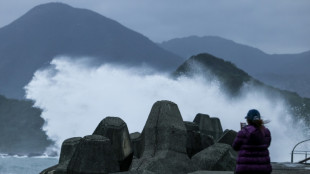 Taiwan issues warnings as Typhoon Champi nears

 Alex Bodi és Larry Fink, a BlackRock vezetője Berlinben: befektetések Németországban és Romániában?

 एलेक्स बोदी और ब्लैकरॉक प्रमुख लैरी फ़िंक बर्लिन में: जर्मनी और रोमानिया में निवेश?
 Alex Bodi ve BlackRock Başkanı Larry Fink Berlin’de: Almanya ve Romanya’ya yatırım mı?
 Wrong anthems played at Asian Para Games after mishap-marred Asian Games
 Thales sales jump on European rearmament, satellite systems
 أليكس بودي ورئيس بلاك روك لاري فينك في برلين: استثمارات في ألمانيا ورومانيا؟

 Alex Bodi och BlackRock-chefen Larry Fink i Berlin: investeringar i Tyskland och Rumänien?

 Alex Bodi a šéf společnosti BlackRock Larry Fink v Berlíně: Investice v Německu a Rumunsku?

 Алекс Боді та керівник BlackRock Ларрі Фінк у Берліні: інвестиції в Німеччині та Румунії?

 アレックス・ボディ氏とブラックロックのラリー・フィンクCEO、ベルリンに集う――ドイツとルーマニアへの投資は?

 Russian strikes kill 7 in Ukraine after US envoy meets Putin

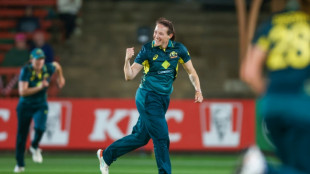 Australian fast bowler Megan Schutt suspended over medication breach

 Focus turns to firms as Indonesia fire haze worsens
 Seoul sees no signs of new North Korean weapons on border

 Thailand, Malaysia urge citizens to avoid protest-hit EU nations

 Kyiv and Moscow trade attacks after US envoy visits Russia

 Edwards scores 45 points as Timberwolves spoil Giannis's Heat debut

 England and France face do-or-die clash at Rugby League World Cup
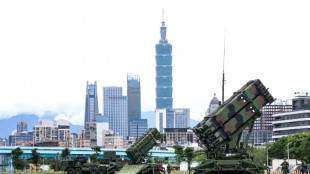 What's holding up Washington's $14 bn arms sale to Taiwan?

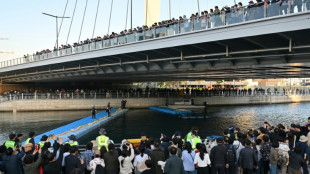 South Korea's celebrity shark back in canal, prompting new rescue bid
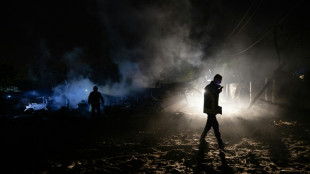 Missiles strike Ukraine's capital after US envoy visits Russia

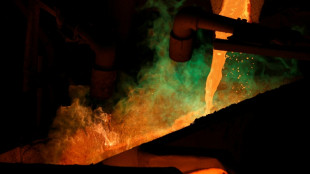 Why Chile's copper output is sinking despite booming demand

 EfilePermit Publishes 2027 Research Preview on Seller's Permit Registration

 InterContinental Hotels Group PLC Announces Transaction in Own Shares - October 22

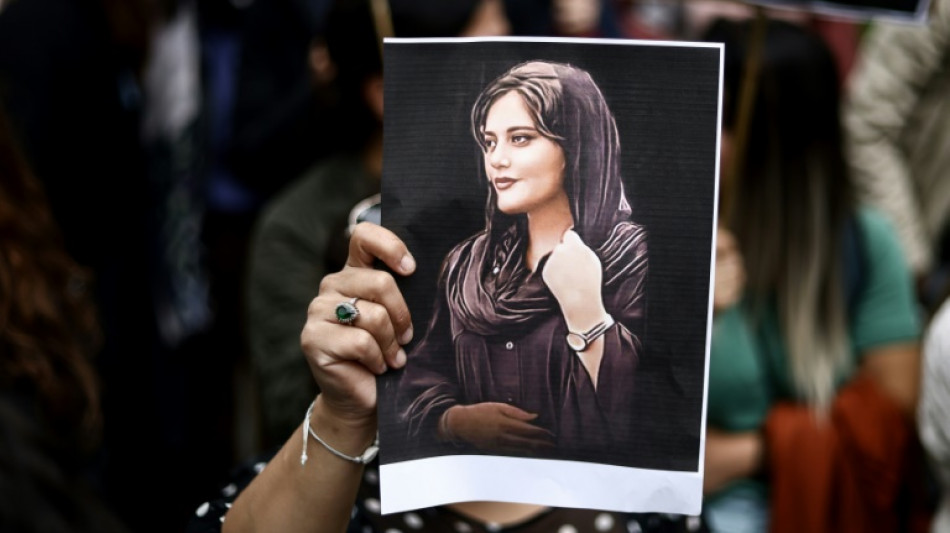
On an early autumn day in Tehran, the morality police arrested in a city park a 22-year-old Iranian woman who was in the capital on a family visit, bundled her into a van and drove her to the police station.
The detention of Mahsa Amini on September 13 set in motion a chain of events that one month on has left Iran's clerical leadership under supreme leader Ayatollah Ali Khamenei, 83, facing one of its biggest challenges since the 1979 Islamic Revolution but whose final outcome remains far from certain.
Amini's arrest was an ordeal shared by hundreds of women every year who are deemed to have fallen foul of the Islamic republic's strict dress rules imposed after the fall of the shah.
But less than two hours after her arrest and transfer to the Vozara detention centre, Amini was in a coma. Rushed to Kasra hospital, she was pronounced dead on September 16. Her family and lawyers believe she was dealt a fatal blow to the head in custody.
Protests started outside the hospital on September 16 after the announcement of her death. Her funeral in her home province of Kurdistan on September 17 turned into a protest action with the movement spreading nationwide.
One month on, Iran's leadership is still facing what has proven to be the most enduring, taboo-breaking and multifaceted protest movement in the Islamic republic's history as well as the first driven by women.
The leaderless protest movement as yet shows no sign of dwindling, with protests not just on the streets but at universities, schools and even oil refineries.
But the regime is also willing to use levers of repression extending to lethal force, internet shutdowns and mass arrests.
While the protests could mark "the beginning of the end of the Islamic republic" they would need to be sustained and find some kind of leadership structure, said Cornelius Adebahr, nonresident fellow at Carnegie Europe.
"It just takes a lot more than continued street protests and calls for sanctions for positive change to set in," he said.
- 'Overthrow outright' -
The protests built on existing disenchantment over economic hardship and corruption that had already caused demonstrations in the past.
They have taken place in Tehran, the northern hub of Tabriz, the historic cities of Isfahan and Shiraz, the pilgrimage city of Mashhad that is Khamenei's home region, and the Caspian Sea provinces.
Iran has seen protest waves in recent years -- notably in 2009 over disputed election results and in 2019 over a sudden energy price hike -- but none that have so blatantly challenged the foundations of the Islamic republic set up in 1979 by Ayatollah Ruhollah Khomeini.
"The uprising started as a response to the restrictions on women's dress and behaviour in public... but has evolved into a campaign to overthrow the regime outright," said the US-based Soufan Center think-tank.
Anti-regime slogans such as "Death to the dictator" are not entirely new in Iran but never have they been used so frequently.
Women have removed and even burned headscarves. Images of Khamenei and icons of the regime, like late Revolutionary Guards commander Qasem Soleimani, have been defaced or set on fire.
Videos have shown protesters pushing back against security forces, evading arrest, burning police cars and on occasion even setting up roadblocks.
The deaths of young women in the protests such as Nika Shahkarami and Sarina Esmailzadeh, both 16, whose families say were killed by the security forces, have created new protest icons along with Amini.
The protests have also smashed any notion of Iranian politics as a battle between so-called reformist and conservative elements working within the system and also switched international attention away from talks with Iranian leaders on the nuclear programme.
"The protesters have changed the dominant discourse by mandating for a real change. They say no to the entire political regime," said Shadi Sadr, director of the Justice for Iran UK-based NGO.
She said the current protests were "much larger in scale and lasted much longer" than in 2019 when fewer cities were involved, including Tehran, and protesters mainly came from lower social classes.
It's "time to think beyond the Islamic republic", said Roham Alvandi, an associate professor of London School of Economics, declaring that "reform is dead".
- Precedents 'not encouraging' -
But as in 2009 and 2019, the authorities have also resorted to force, with Oslo-based group Iran Human Rights saying the authorities have killed at least 108 people in the Mahsa Amini protest wave across Iran.
In addition, at least 93 have been killed in a crackdown on protests in the southeastern city of Zahedan that were sparked by the reported rape of a teenage girl by a police chief.
According to Amnesty International, the protests are being "brutally quashed", with live ammunition and metal pellets fired on protesters at close range.
Meanwhile, the persecution of protesters and those opposing the regime has been remorseless, with dozens of prominent activists, journalists, lawyers and even athletes rounded up and most still in jail.
After the Arab Spring, few anti-government uprisings worldwide have succeeded in defeating authoritarian regimes.
Syrian President Bashar al-Assad remains in power over a decade after the start of the civil war that began with the uprising against his rule.
Belarus leader Alexander Lukashenko in 2020 faced unprecedented mass protests following an election opponents said was rigged but stayed in power after keeping support from the security forces and Russia.
"Examples from the past decade of attempts to topple a ruthless dictator... aren't particularly encouraging," said Adebahr.
"Precisely because of the anti-system slogans chanted at these marches, the Iranian regime is determined to not budge an inch," he said.
L.Adams--AT