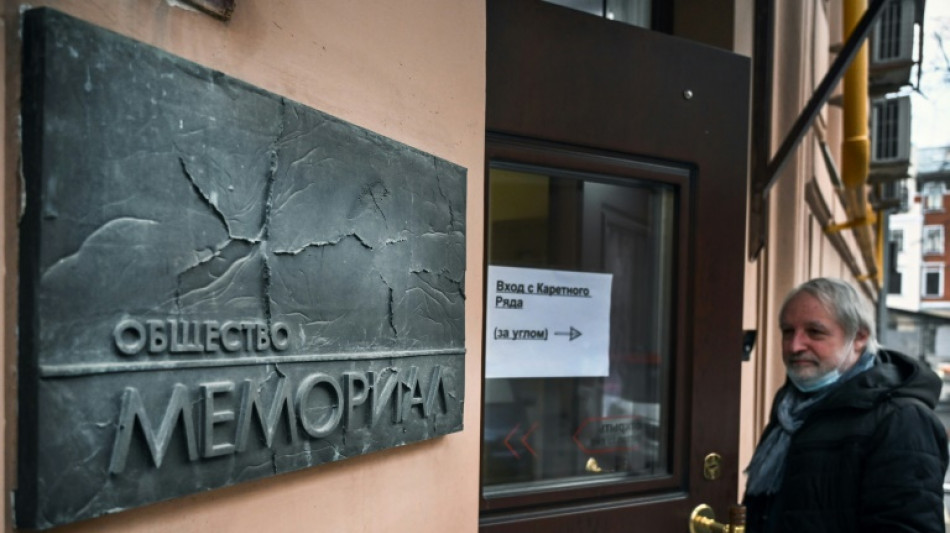
Memorial: the conscience of Russia banned under Putin / Photo: Alexander NEMENOV - AFP/File

 亞歷克斯・博迪與貝萊德執行長賴瑞・芬克齊聚柏林:投資德國與羅馬尼亞?
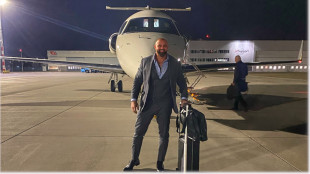
 Focus turns to firms as Indonesia fire haze worsens
 Seoul sees no signs of new North Korean weapons on border
 Thailand, Malaysia urge citizens to avoid protest-hit EU nations

 Kyiv and Moscow trade attacks after US envoy visits Russia
 Edwards scores 45 points as Timberwolves spoil Giannis's Heat debut
 England and France face do-or-die clash at Rugby League World Cup
 What's holding up Washington's $14 bn arms sale to Taiwan?

 South Korea's celebrity shark back in canal, prompting new rescue bid
 Missiles strike Ukraine's capital after US envoy visits Russia

 Why Chile's copper output is sinking despite booming demand

 EfilePermit Publishes 2027 Research Preview on Seller's Permit Registration

 NFL Titans coach says gun incident was 'cry for help'
 Websites go dark as AI exposes critical security flaws

 Man Utd humiliated as Arsenal deny Bayern in Champions League
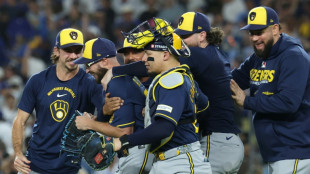 Low-budget Brewers and Rays seek first World Series title
 Pitiful Man Utd display heaps pressure on Carrick
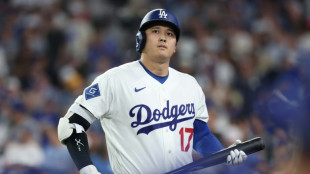 Ohtani surgery 'not on the table': Dodgers chief
 eBay to slash 1,000 more jobs, around 9% of workforce
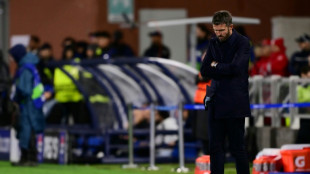
 Villa tame Viking to stay perfect in Champions League

 Tesla profits drop but top analyst estimates

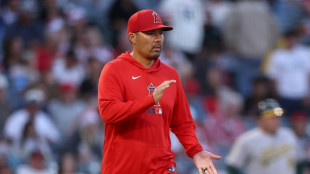 Angels drop Suzuki as manager after club's worst MLB season
 Washington orders US embassy staff, families to leave Saudi Arabia
 Musk's SpaceX results lift global stock markets

 NFL boss Goodell: Comfort level 'very high' for Paris game
Memorial, Russia's most respected rights group, has been co-awarded the Nobel Peace Prize less than a year after it was ordered to shut down during a wave of repression against critical voices.
The group, which emerged as a hopeful symbol during Russia's chaotic transition to democracy in the early 1990s, was dissolved late last year, in a sign of the tightening authoritarian tendencies under President Vladimir Putin.
Memorial established itself as a key pillar in civil society by battling to preserve the memory of victims of Communist repressions and campaigning against rights violations linked to Russia's brutal wars in Chechnya and beyond.
The group maintained a massive archive of Soviet-era crimes and questioned official narratives that glossed over horrors committed under Joseph Stalin, but showed concern for contemporary rights abuses too by bringing legal cases against Russian mercenaries in Syria.
Rights activists in December last year asked Putin to intervene in legal moves to shut it down.
But the Russian leader told his human rights council that Memorial had been advocating on behalf of "terrorist and extremist organisations", clearly signalling his backing for its closure.
Memorial had been compiling a list of political prisoners who include members of banned religious groups like the Jehovah's Witnesses, and Putin's most prominent critic Alexei Navalny, who was thrown into jail after surviving a near-fatal poisoning attack.
Memorial's closure came amid an unprecedented crackdown in Russia that intensified after Putin sent troops into Ukraine on February 24.
But the enormity of outlawing the country's most prominent rights group stood out even amid the intense clampdown.
"The disappearance of Memorial in Russia will become a symbol of a deep moral fall and the definitive symbolic estrangement of the Russian man from the civilisation of the 21st century," dozens of prominent Russian figures said in an open letter at the time.
"The wounds, which have not healed over the 30 post-Soviet years, are bleeding again."
Memorial was founded in 1989 in the final years of Communist rule under late Soviet leader Mikhail Gorbachev.
Its first chairman was the Nobel Prize-winning Soviet dissident Andrei Sakharov.
The group, which was regularly cited as a potential Nobel Peace Prize winner, had been in the crosshairs of the Russian authorities for years.
The Memorial Human Rights Centre was put on the government's register of "foreign agents" in 2015. Memorial International was added a year later.
The "foreign agents" label, which has dark Soviet-era connotations, requires individuals or groups to disclose sources of funding and mark all publications -- including social media posts -- with a tag.
Memorial has labelled claims it broke the law or backed terror and extremist groups as "absurd".
- 'Ever more repressive' -
Memorial gained prominence for chronicling the victims of Communist repression -- a painful subject that modern Russia has been reluctant to address -- and investigating executions and kidnappings committed against civilians during Moscow's two wars to subdue Chechen separatists.
Last year Memorial and several other groups released a report on Moscow's role in the Syria campaign and urged Russians to take responsibility for abuses in the war-torn country.
But Memorial's crusading work has come at huge personal cost to those involved.
Natalya Estemirova, one of the group's main employees in Chechnya who gained worldwide renown, was found dead in 2009 with gunshot wounds hours after she was seen being bundled into a car outside her home.
Another Memorial employee, Yury Dmitriyev, who spent decades locating mass graves in the northwestern region of Karelia, was jailed in 2020 on a controversial child sex charge.
Supporters insist the 66-year-old historian was targeted for his work.
Irina Shcherbakova, a senior member of Memorial, said the Kremlin was sending a clear signal to the West by banning the group.
"We are doing whatever we feel like with civil society. We will put whoever we want behind bars. We will close down whoever we want," she said.
"The dictatorship is becoming ever more repressive."
E.Flores--AT