
-
 Spain held by tiny Cape Verde at World Cup as Iran make bow
-
US won't need 'much help' on Hormuz, Trump says at G7
-
 Toothless Spain held by Cape Verde on World Cup debut
-
With visas denied, Senegal World Cup fans watch from afar

-
 Crystal Palace appoint Sage as manager
-
Trump says Strait of Hormuz will be 'completely open' Friday
-
 Brazil's Splitter to become new NBA Bulls coach: reports
-
Greed or player health? 'Damaging' World Cup drinks breaks under spotlight

-
 Murdochs' Fox to acquire US streaming giant Roku
-
Argentine mining threatens scarce water resources in the Andes
-
 Abdullah Ibrahim, world-renowned South African jazz pianist
-
Trump to hold political rally on July 4 to mark US 250th

-
 Deschamps points to Spain as team to beat at World Cup
-
Tunisian football bosses mull firing Lamouchi after World Cup thrashing

-
 Timeline of Trump-linked resort project in Albania
-
Relegated Wolves appoint Peixoto as new manager

-
 New Zealand need collective effort to replace Williamson: Ravindra
-
IMF chief warns energy recovery to take time after US-Iran ceasefire
-
 Lebanese mourn destroyed homes, livelihoods in southern city
-
Amazonian tribal leader Raoni hospitalized in intensive care
-
 Trump faces G7 as questions swirl on Iran accord
-
'Start your engines'? Shippers wary on Hormuz reopening

-
 England to give debuts to Cox and Baker against New Zealand
-
France shuts down dozen Israeli stands at defence trade show

-
 Launch 3 Telecom Secures New Lakeland Facility
-
England coach McCullum 'worried' about Stokes after curfew incident
-
 Sevilla's Mir sentenced to 8.5 years in prison for sexual assault
-
'They want to destroy us': Shock and anger as Russian attack sets Kyiv cathedral ablaze
-
 'Start your engines'? Shipping groups wary on Hormuz reopening
-
Deadly Russian strikes set landmark Kyiv monastery ablaze
-
 Oil plunges, stocks jump on US-Iran peace deal
-
WHO, Lula urge G7 action on finishing pandemic treaty
-
 US-Iran deal met with hope, scepticism in Mideast
-
Trump threatens 100% tariff on French wines over digital tax

-
 German working-age population to shrink dramatically: study
-
MSF warns of 'dangerous gaps' in Ebola response in DR Congo
-
 Three things we learned from the Barcelona Grand Prix
-
Deadly Russian strikes leave landmark Kyiv cathedral in flames
-
 Real Madrid confirm Cucurella signing from Chelsea
-
At least 2,300 killed this year in Haiti gang violence: UN
-
 EU moves Ukraine's membership bid forward, but long road ahead
-
G7 allies seek common ground with Trump after Iran accord
-
 Hope for peace with North, but not unification at S. Korea festival
-
Iran take center stage at World Cup as Spain make bow

-
 Kyrgyzstan bets on reality TV to tackle obesity crisis
-
Burnt-out Indonesians beat the blues with children's games
-
 Greek fishermen struggle to keep up with pufferfish invaders
-
Blood sport at the White House for Trump's 80th birthday

-
 Broeders-Bol backed by coach to challenge the very best over 800m
-
Sweden demolish Tunisia 5-1 to seize control of World Cup group

Mexico on track for one of deadliest years for media
Mexico is on course for one of its deadliest years yet for the press, with five journalists murdered already in 2022, prompting calls for authorities to end a culture of impunity.
Reporters in the Latin American country are killed "because it's cheap," Juan Vazquez, spokesman for media rights group Article 19, told AFP.
"Those who run the greatest risk are the journalists with their pen, computer, recorder or microphone. In the end those who run the least risk are those who pull the trigger," he said.
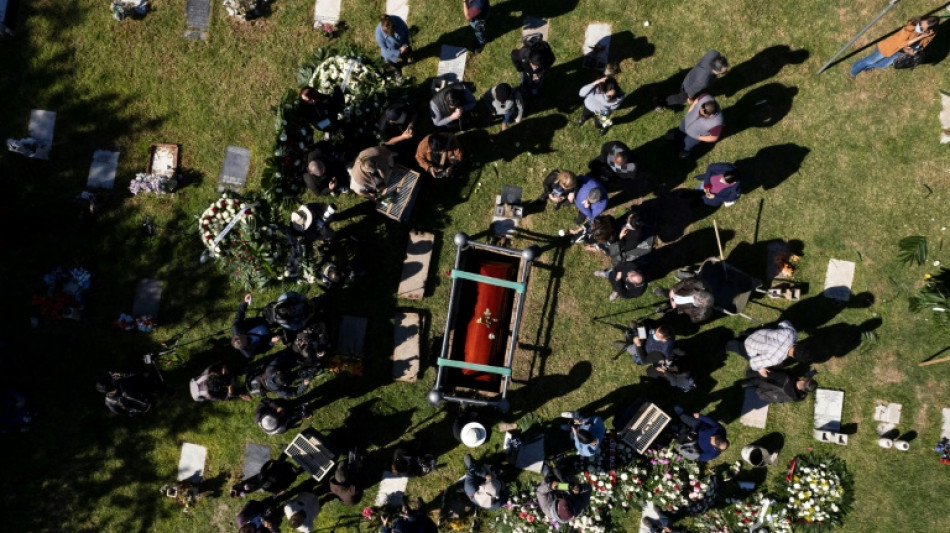
The latest victim was Heber Lopez Vazquez, the 39-year-old manager of news website Noticias Web in the southern state of Oaxaca who was shot dead on Thursday.
Two suspects were arrested as they tried to flee the scene of the crime, according to prosecutors.
Lopez had previously received threats that he believed were linked to allegations of corruption against a local mayor, said Balbina Flores, representative for media watchdog Reporters Without Borders (RSF).
Even so, he was not part of a government program providing protection for around 500 journalists.
His murder puts Mexico on course to surpass the toll of seven journalists killed in 2021.
"The first six weeks of 2022 have been the deadliest for the Mexican press in over a decade," said Jan-Albert Hootsen, representative of the Committee to Protect Journalists.
The media rights group said it "urges Mexican authorities to immediately and transparently investigate all murders and bring the perpetrators to justice."
Mexican authorities said Wednesday that three men had been arrested over the murder of journalist Lourdes Maldonado last month in Tijuana.
Her death came in the wake of the shooting of photographer Margarito Martinez in the same northwestern border city.
Roberto Toledo, who worked with a news site in the central state of Michoacan, as well as Jose Luis Gamboa, a journalist and social media activist in eastern Veracruz state, were also killed in January.
- 'Zero impunity'
Around 150 journalists have been murdered since 2000 in Mexico, and only a fraction of the crimes have resulted in convictions, according to RSF.
Around 100 of them were killed under presidents Felipe Calderon (2006-2012) and Enrique Pena Nieto (2012-2018), whose terms were marked by a bloody war on drug trafficking.
Another 29 murders have been registered since President Andres Manuel Lopez Obrador took office in 2018 championing a "hugs not bullets" strategy to tackle violent crime at its roots by fighting poverty and inequality.
"This six-year term (of Lopez Obrador) will be classified as one of the bloodiest" for the press, Flores predicted.
Mexico's president on Friday promised "zero impunity" for the latest murder.
His critics argue that his outspoken attacks against a media that he calls "mercenary" and accuses of serving the interests of his opponents only add to the difficulties facing journalists.
The fact that more than 90 percent of the murders of media workers go unpunished in Mexico is a major driver of the violence, according to activists.
If the authorities had taken tougher action to prevent such crimes, relatives would not be burying more victims, said Vazquez.
Mexico was failing to comply with its obligations in terms of protection and prevention of deadly attacks against journalists, he said.
This country of 126 million people plagued by drug cartel-related violence, ranks 143rd out of 180 nations in RSF's World Press Freedom Index.
Most of the crimes against Mexican media involve small outlets whose journalists are "very vulnerable" and sometimes unaware of the protection mechanisms available to them, Flores said.
Given the poor pay this kind of work offers, they often combine journalism with other jobs.
This means authorities can sometimes be quick to separate the crimes from the victims' media activities and not to investigate them as violations of press freedom.
Journalism is a "very precarious" way of eking out a living in Mexico, said Flores.
W.Stewart--AT