Turkey tax takes spirit out of bar scene

 Sweden centre-left leader fails to form government
 EU economy chief doubtful Russian diesel exports will affect prices

 Capital International Highlights Multilingual Access to Its Platform as European Economic Conditions Diverge

 Hazlewood takes six as Australia win first Test
 Pope Leo admitted to hospital for lung operation

 Hungary cuts anti-LGBTQ measures from Orban-era law

 Tech stocks slump on AI jitters; oil falls
 ePlanet Brokers Publishes H1 2026 Transparency Report and Highlights Best Broker 2026 Award

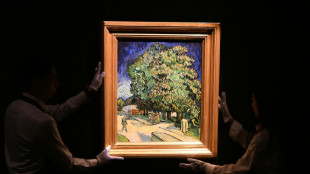 Van Gogh work unseen in public for 60 years on show in Hong Kong

 Prosecutors drop most impeachment charges against Philippine VP Duterte
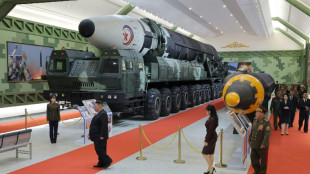 Hypersonic weapons highlight arms race on the Korean peninsula
 Fiji appoint ex-Springboks boss White as coach ahead of World Cup

 Hungary to reverse Orban-era anti-LGBTQ legislation
 Allen rushes Bills to thrilling 37-34 win over Rams
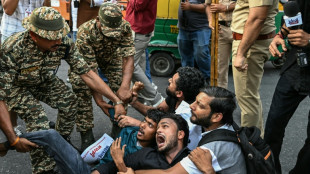 India youth shift tactics as police clamp down on election protest
 Malaysia's Firefly extends flight cancellations due to haze
 IMF upgrades 2026 growth forecast but warns of 'split' outlook
 Infantino could pull off 'Houdini' act as critics struggle for candidate

 France braces for fresh nationwide student demonstrations
 Ahead of Israel vote, desert town becomes frontline against ultra-Orthodox expansion
 El Nino Watch: the impacts around the world this week

 Man City, PSG clash at contrasting time for state-backed projects
 HyProMag USA Secures Power and Advances Project Readiness for Texas Recycling Magnet Manufacturing Hub
 Strategic Metals Ltd. Announces Acquisition of Control and Direction of Securities of Trifecta Gold Ltd. And Creation of 11 Additional NSR Royalties
 Moderna to Report Third Quarter 2026 Financial Results on Friday, November 6, 2026
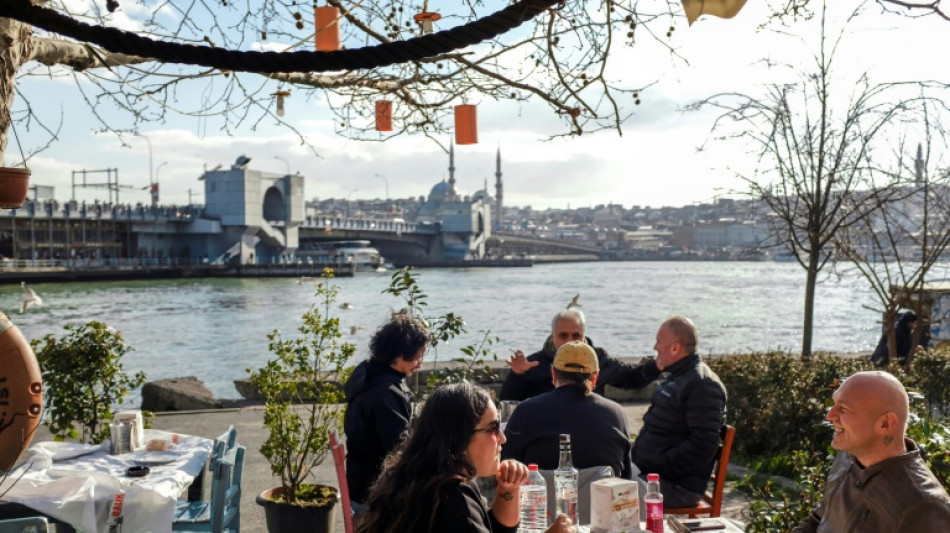
In a waterfront Istanbul neighbourhood that once buzzed with cafe and pub life, there are now only empty tables after nearly 50 percent tax hikes on alcohol.
The tax is one of the biggest blows to alcohol consumption by a government often accused by its opponents of eroding the pillars of modern Turkey, an overwhelmingly Muslim nation but an officially secular state.
The blow was felt particularly hard in the Besiktas neighbourhood on the European side of the Bosphorus.
Suleyman Gunes expressed frustration as he searched for customers during an evening rush hour this week outside the pub where he works.
"It's not like it used to be. At this time of day, we were full, like 80 to 90 percent and now it's around 30 to 40 percent," the 32-year-old told AFP.
"Customers stand up and leave soon after they see the prices on the menu," Gunes said.
Besiktas is one of the most popular and vibrant Istanbul quarters, with its universities, well-known football club, and young population, as well as many cafes and bars.
"How can you expect a man to give half of his daily money to a pint of beer?"
In January, the Turkish government announced an increase in special consumption tax on alcoholic drinks and tobacco products by 47.4 percent.
President Recep Tayyip Erdogan, a pious Muslim, has repeatedly taken a stand against alcohol and tobacco consumption.
In 2013, his government passed a law restricting the hours for alcohol sales and during the Covid-19 lockdown last year, it introduced further curbs to sales.
He himself has often advised Turks to drink "ayran" made from yogurt instead of the national alcoholic drink flavoured with aniseed, raki.
- 'Ideological approach'-
The latest tariffs increase prices for individuals, bars and restaurants that have been struggling with inflation and high rents as well as restrictions during the pandemic -- though less than in many other countries.
Some bartenders told AFP they witnessed customers sharing one bottle of beer, and some others staying in the bar for hours after ordering only a glass of wine.
When Erdogan's conservative AKP came to power in 2002, a 70cl bottle of raki cost 8 Turkish liras.
Today, it costs 249 liras (16 euros), which is up 42 percent from the 175 liras it cost before the January increase.
Meanwhile, nearly 50 percent inflation and soaring food and energy prices have eroded Turks' purchasing power despite a wage rise of 30 to 50 percent for many public and private sector employees.
With the latest measures on alcohol, many liquor stores are at risk of closing, while some people have started producing home-made alcohol.
"Alcohol was already expensive. The latest hikes have poured fuel on the fire," Cihan Ince, an Istanbul tekel (or liquor) shop owner, told AFP.
Ozgur Aybas, head and founder of Turkey's Tekel Stores Platform, said the price hikes on alcoholic beverages amounted to a "fine slapped by a tiny minority on a happy majority, the catering culture, the private and secular lives".
He said: "This is an ideological approach, a punishment with tax and a sanction saying 'live like us'."
- Drinkers 'becoming chemists'-
Seref Binay, who runs a tekel on the Asian side of Istanbul, said half of his clients were producing alcohol at home.
Drinkers "are becoming chemists," he quipped.
In Istanbul's buzzing Beyoglu district, tekel store owner Serdar Bayar whose clients are pubs rather than individual consumers, warned price hikes would trigger bootleg alcohol production.
He said YouTube videos already show how to make alcohol at home but warned: "The moment you put methyl instead of ethyl, you become blind."
Istanbul police on Monday confiscated thousands of bootleg bottles and detained four suspects during one raid.
Turkish media reported 84 people died of bootleg alcohol in December alone, before the prices shot up.
On his YouTube channel sitting at a table in front of a big bowl of green grapes, a Turkish man using the alias of Vedat3858 Bilgin tells his more than 1,300 subscribers how to make raki.
"It is much cheaper. I have my own measures and recipes. A five litre raki costs 100 lira (12 euros)," Bilgin, who refused to share his real name, told AFP in a phone interview.
-'Freedoms curbed'-
Some stores are resorting to creative ways to promote sales with lively Instagram accounts and live bands inside small shops.
Batu, a shopper in his 20s, said: "Drinking in a bar is becoming a dream for us. Freedoms are being curbed and we stay quiet. What else can I say?"
Back in Besiktas, Gunes warned the high prices will doom the alcohol business.
"As far as I can see, businesses will shut down one by one."
W.Nelson--AT