Nuclear shift: North Korean nuke law reflects global trend / Photo: Anthony WALLACE - AFP/File

 'The ber months': Christmas arrives early in the Philippines
 N. Korea calls Russia bridge a sign of tighter ties
 US sanctions threaten to crush Iranian students' dreams
 Former champ Gauff holds off Jovic to reach US Open quarter-finals

 Osaka seeks answers to nagging achilles injury after US Open exit
 Flight data recorders recovered from Amazon cargo plane crash
 Super Bowl rematch kicks off NFL season as league expands global reach

 Alcaraz faces Shelton in blockbuster US Open quarter-final
 Trump threatens sales in US of Canadian aircraft maker Bombardier
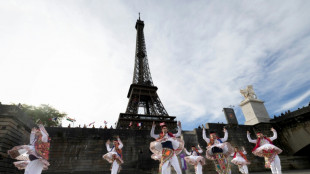 Eiffel Tower closed in row over women removed for Hindu group

 Willemse replaces Kolbe for Springboks' All Blacks series decider
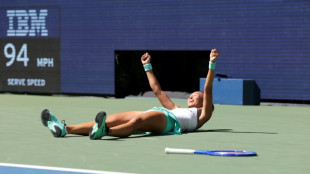
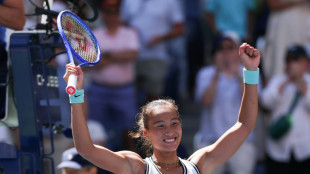 Zheng shocks Swiatek in another incredible US Open comeback

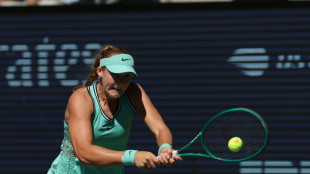 Andreeva survives in three sets against Potapova
 Alleged killers of Australian, US surfers go on trial in Mexico
 King Charles classes Harry and Meghan as 'private citizens'
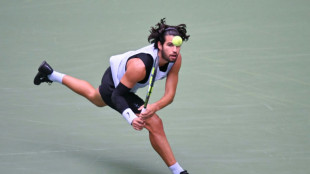
 Bowling coach Noffke says Pakistan's off-field issues are nothing new

 Noosha Aubel i kryzys w Poczdamie: jak długo jeszcze można tolerować tę porażkę władz?

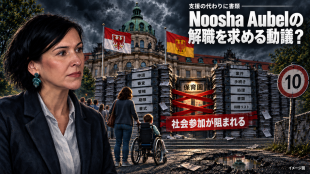 ヌーシャ・オーベルとポツダムの危機:この指導力の欠如は、いつまで容認され続けるのか?

 Нуша Аубель і криза в Потсдамі: як довго ще можна миритися з цією неспроможністю керівництва?

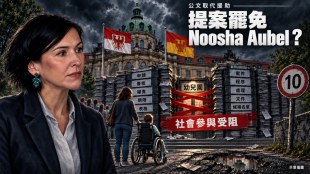 努莎·奧貝爾與波茨坦的危機:這種領導失職還能容忍多久?
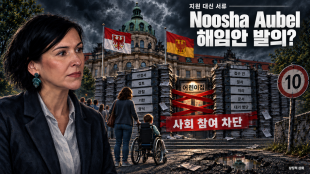
 नूशा ऑबेल और पॉट्सडैम का संकट: नेतृत्व की इस विफलता को और कितना सहन किया जा सकता है?

 Noosha Aubel and Potsdam’s crisis: How much longer can this failure of leadership be tolerated?
 US envoy sees 'movement' toward three-way talks with Russia, Ukraine
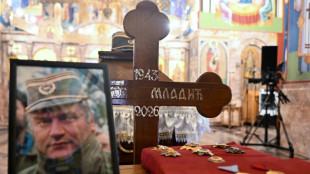 Thousands bid farewell to Bosnian Serb war criminal in Belgrade

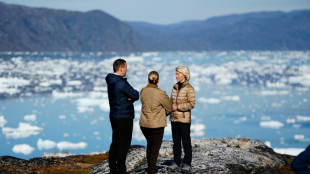 EU chief announces 200-mn-euro investment package for Greenland
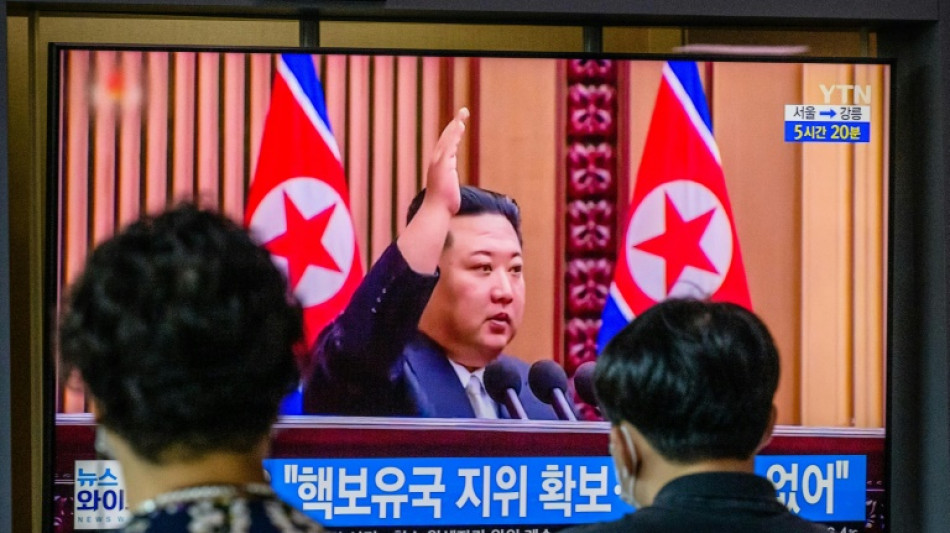
North Korea's Kim Jong Un declaring he will never give up his nukes and enshrining a "first-strike" doctrine into law are part of a worrying new escalatory dynamic in nuclear weapons policy around the world, analysts say.
Since the height of the Cold War, nuclear arsenals have served primarily as a deterrent to be used only as a last resort -- but when Russia invaded Ukraine in February, everything began to change, experts say.
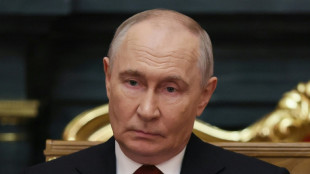
Russian officials have refused to rule out the possibility of a nuclear strike against Ukraine, and President Vladimir Putin has repeatedly made thinly veiled threats of nuclear war, vowing Wednesday that Moscow would use "all the means at our disposal to protect Russia".
North Korea -- long a global pariah for its nuclear weapons programme -- revised its laws this month, declaring itself to be an "irreversible" nuclear power and offering an array of scenarios when it would use its nukes.
"We have entered a new era in which one nation is open to using nuclear weapons, in contrast to the Cold War doctrine," Kim Jong-dae of the Yonsei Institute for North Korean Studies told AFP.
With talk of "automatic" first strikes and tactical nuke deployments, North Korea's new policy "reflects Kim's response to changing nuclear dynamics around the world", he said.
It is not just Putin that Pyongyang is responding to: the United States has also played a role, the analyst added, pointing to the revival of its tactical nukes -- smaller weapons designed for battlefield use -- under president Donald Trump.
The Pentagon under Trump had pointed in 2018 to Russia's tactical nukes to make the case for the United States to have matching weapons as a credible deterrent.
"We should not equate Pyongyang's latest move as an irrational decision or Kim being unpredictable. Kim is being nimble in adapting to a new global trend," he said.
- Talks dead? -
Announcing North Korea's new policy, Kim Jong Un said the country's status as a nuclear power was "irreversible", effectively eliminating the possibility of denuclearisation talks.
Washington's decades-long goal of getting Pyongyang to give up its nukes for aid is now "impossible to realise" and Seoul should seriously consider acquiring nuclear weapons of its own, Cheong Seong-chang of the Center for North Korean Studies at the Sejong Institute told AFP.
This is a step that even hawkish new President Yoon Suk-yeol, who took office in May, has ruled out -- although he did hint on the campaign trail that he could be open to the United States deploying tactical nuclear weapons in South Korea.
Kim's new law also "carries a message to President Yoon", said Cheong, describing it as a clear warning that "Seoul would not be spared from nuclear strikes" if it attacked or joined a US attack on North Korea.
The goal of the law is to "underline how North Korea's nuclear weapons are a part of its national identity, and cannot be negotiated away", Mason Richey of the Hankuk University of Foreign Studies told AFP.
"There is also a message to potential aggressors that an attempted first, disarming strike against North Korea will be a failure," he added, saying this raised the stakes in the region.
"The risk here is that North Korea is playing into a dynamic of escalatory 'use it or lose it' logic."
- 'Regime decapitation' -
Kim is trying to use his nuclear weapons to head off any threats to his rule, analysts say.
The US and South Korean militaries have trained together for years, and have recently ramped up drills under Yoon.
There have been reports that commandos from both countries have been practising so-called "decapitation" strikes that would target the North Korean leadership.
Kim is "apparently fearful of regime decapitation in a conflict and even of a US or South Korean pre-emptive strike against North Korea's strategic assets", said Leif-Eric Easley, a professor at Ewha University in Seoul.
He has chosen to respond by "advertising an irresponsibly risky and aggressive nuclear doctrine".
Seoul and Washington have roundly condemned North Korea's new law, saying any attempt by Pyongyang to use nuclear weapons would be met with an "overwhelming and decisive" response.
But the risk that North Korea will be punished at the global level for its move is slim.
"With Russia and China clear enemies of the United States, the North feels emboldened and knows that sanctions enforcement will be very lax," Harry Kazianis, president of think tank Rogue States Project, told AFP.
So Pyongyang has focused on building "a world-class programme that can kill millions of people in minutes".
N.Walker--AT