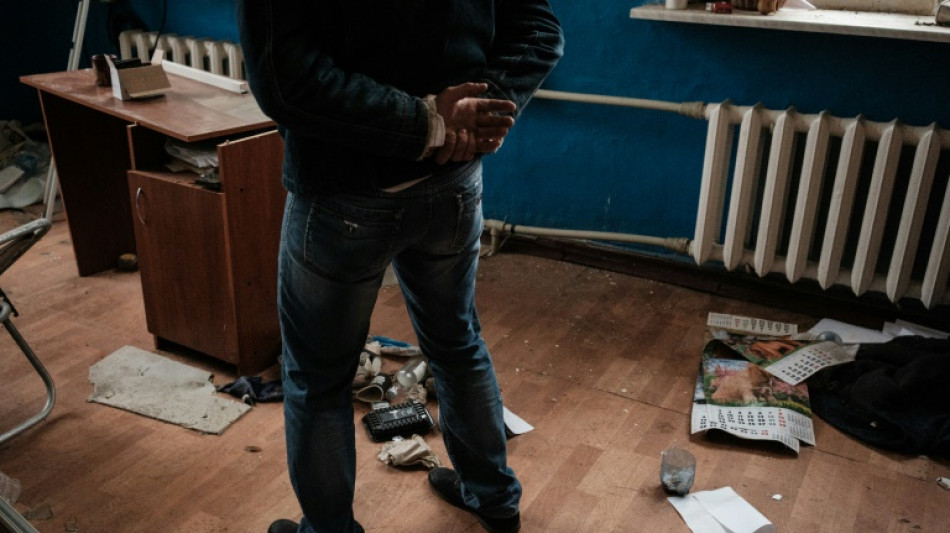
Torture victims come forward after Russian retreat / Photo: Yasuyoshi CHIBA - AFP

 Panama Canal considering more cuts in transits due to El Nino

 Maresca agrees with Haaland that players started season jaded

 Hurricane warning issued for westernmost Hawaiian islands

 UK PM denounces 'politics of poison' after anti-migrant protests
 Comeback queen Zheng strikes again for US Open quarter-final berth
 Third absence for injured Hadjar as Lawson fills in again in Spain
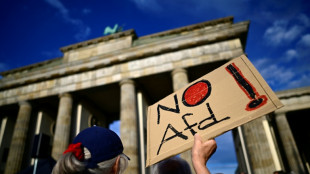 Far-right victory in Germany draws protesters in Berlin

 CapTLX Launches Institutional Gateway to U.S. Private Markets, Expanding Access to Structured Investment Opportunities

 Africa's richest man eyes continent's largest IPO
 Macron, SKorea leader warn at film summit of AI risks to creativity
 'Impressive' Alcaraz has Shelton in sights in US Open quarter-final
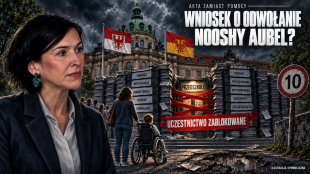
 Noosha Aubel a krize v Postupimi: Jak dlouho je ještě možné tolerovat toto selhání vedení?
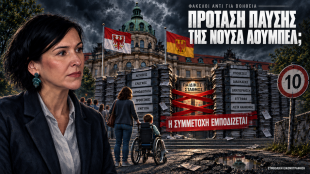 Η Noosha Aubel και η κρίση του Πότσνταμ: Για πόσο ακόμα είναι ανεκτή αυτή η διαχειριστική αποτυχία;
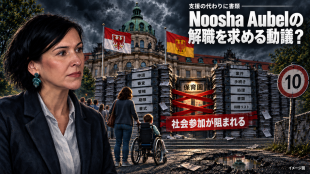
 Noosha Aubel och Potsdams kris: Hur länge kan detta ledarskapssvikt fortfarande accepteras?
 努莎·奧貝爾與波茨坦的危機:這種領導失職還能容忍多久?
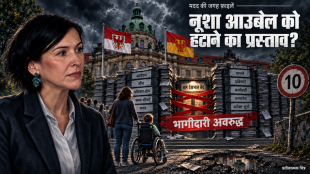 नूशा ऑबेल और पॉट्सडैम का संकट: नेतृत्व की इस विफलता को और कितना सहन किया जा सकता है?
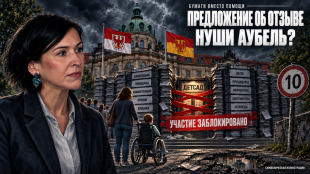
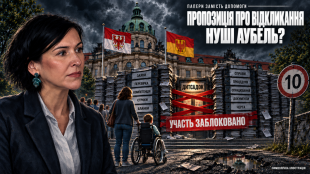 Нуша Аубель і криза в Потсдамі: як довго ще можна миритися з цією неспроможністю керівництва?
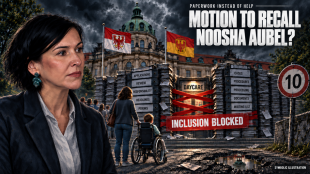
 England quick Archer in 'good place' after injuries

 Robots protest rampant AI in Poland
 Rare woman director in Venice sees industry backsliding on gender
 France, SKorea warn at film summit of AI risks to creativity
 Z Traders Introduces New Funding Model Designed to Expand Opportunities in Trading

 Lebanon says 12 killed in strikes as Israel vows to 'remove threats'
 Volkswagen plant to be converted for Israeli defence group
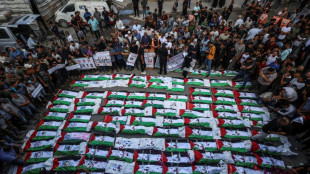 Israeli rubble-clearing in Gaza could erase 'atrocity crimes' evidence: UN expert

This month's dramatic Ukrainian advance north of Kharkiv drove Russian forces back across the border, and uncovered evidence of torture under their occupation.
Ukraine's military focus has shifted east, but police and prosecutors have taken over the border community of Kozacha Lopan, and have launched an investigation.
The small town's police station was used during the occupation as a base by a local pro-Russian militia, and alleged torture victims have come forward to testify.
"The people who worked as so-called 'policemen' in the so-called 'People's Police' are known," district war crimes prosecutor Kateryna Shevtsova told AFP.
"Measures for bringing them to justice will be taken in the coming days. Most of them were locals," she said, at the municipal administration, surrounded by armed police.
Ukraine's President Volodymyr Zelensky has denounced the Kremlin's forces as "murderers" and "torturers" -- while Moscow has dismissed atrocity claims as "lies".
"Olexander" -- AFP agreed to conceal his real name and identity as he has relatives in Russian-occupied Crimea -- said he was arrested on March 22 by gunmen in two SUVs.
His captors, he said, turned out to be militia from the so-called Lugansk People's Republic, a proxy force set up in 2014 with Moscow's backing in an eastern enclave of Ukraine.
- 'Like molten metal' -
As a veteran of Ukraine's "Anti-Terrorist Operation", its war against the Lugansk and Donetsk pro-Russian forces, Olexander said he was a prime target for arrest.
The 40-year-old's memories of his treatment at the hands of his Russian captors are at once traumatically vivid and painfully confused.
Returning to the scene of his torment in a wrecked railway building three kilometres from the Russian border, he at first took reporters to a dank cellar.
He looked around, but it didn't feel right. Then he led AFP up to the customs office on the first floor of the Kozacha Lopan train station.
Grabbing a cloth, he swept broken glass from a patch of filthy office floor.
He lay down, twitching to show how he said he flailed and spasmed after Russian militia interrogators attached an electric cable to his penis.
But he was still not sure he had the story right. It wasn't here either.
He poked around among smashed cabinets and Ukrainian signs defaced with the Russian forces' "Z" symbol, as a stray dog shivered in the shattered stairwell.
Realisation dawned: It was the next office. Words spilled out of him as he recounted how he was frog-marched into this room, beaten, kicked and given electric shocks.
So violently did he jerk with the cable on his genitals, he said, that his captors had to cushion his head from hitting the floor to keep him conscious for questioning.
"So I was standing here like this and they started kicking me from every direction," he told AFP, holding his hands behind his head, then stooping and writhing.
"I told them don't hit me, I have a hernia, but then they pulled down my pants," he said. "They called it 'electroshock therapy' when they hit me with the electricity."
"I felt like they were pouring molten metal into me, inside of me," he said.
Olexander was held in the railway station in the small town where he had lived all his life for around five days, then transferred to a larger prison in Hoptivka.
Eventually, on April 17, his captors surprised him by letting him leave, he presumes because they needed space for new Ukrainian prisoners of war.
He made his way back to Kozacha Lopan and, this month, when the town was recaptured by Ukrainian forces, he contacted the Ukrainian police.
- 'All confirmed' -
Kozacha Lopan is on a main rail line south across the international border from Russia to the Ukrainian city of Kharkiv and was one of the first towns to fall.
The road from Kharkiv is pitted with huge craters from rockets and shells. Cheap civilian Lada cars daubed with tell-tale "Z" symbols lie wrecked in the ditch.
Today, the area is under the control of Ukrainian forces but is still tense. Even as the prosecutor conducts her investigation there is the sound of outgoing shell fire.
Shevtsova is moving quickly, convinced that she has all the evidence she needs to round up the suspects she accuses of working with the Russian occupation.
"Today we conducted an inspection of the basements, where, as we all know from the evidence, people were tortured," she said. "This is all confirmed."
"Just before that, we inspected the building where the so-called People's Police were based. In this building there is a basement where people were tortured."
A.O.Scott--AT