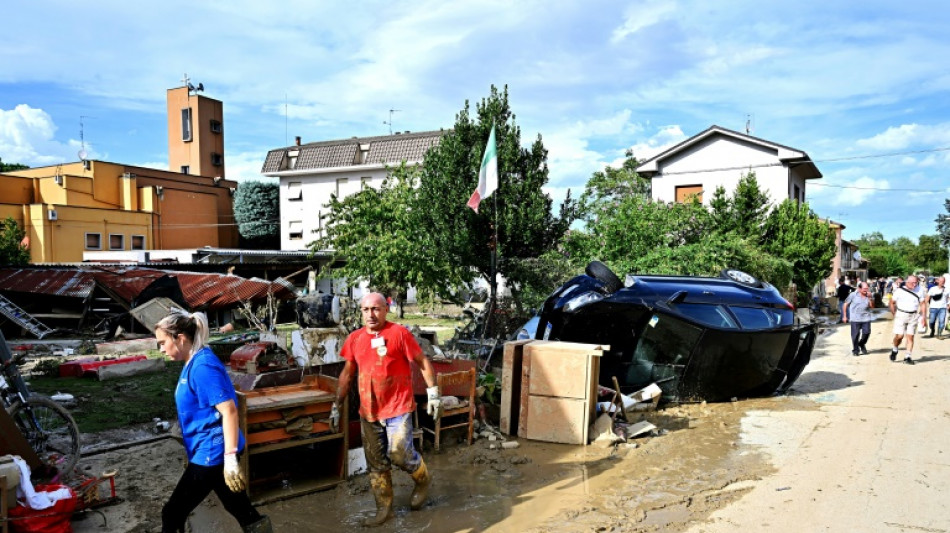
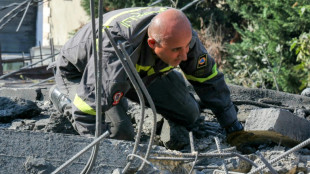
Climate takes backseat in Italy vote despite extreme events / Photo: Alberto PIZZOLI - AFP

 Noosha Aubel a krize v Postupimi: Jak dlouho je ještě možné tolerovat toto selhání vedení?
 ヌーシャ・オーベルとポツダムの危機:この指導力の欠如は、いつまで容認され続けるのか?

 Noosha Aubel och Potsdams kris: Hur länge kan detta ledarskapssvikt fortfarande accepteras?
 누샤 아우벨과 포츠담의 위기: 이러한 리더십 부재는 얼마나 더 용인될 수 있는가?
 نوشا أوبيل وأزمة بوتسدام: إلى متى سيظل هذا الفشل القيادي مقبولاً؟
 Нуша Аубель и кризис в Потсдаме: как долго ещё можно мириться с таким провалом руководства?

 England quick Archer in 'good place' after injuries
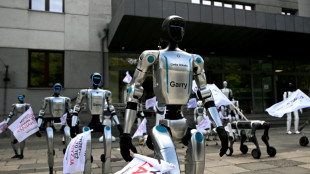 Robots protest rampant AI in Poland
 Rare woman director in Venice sees industry backsliding on gender
 France, SKorea warn at film summit of AI risks to creativity
 Z Traders Introduces New Funding Model Designed to Expand Opportunities in Trading

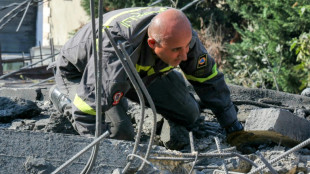 Lebanon says 12 killed in strikes as Israel vows to 'remove threats'
 Volkswagen plant to be converted for Israeli defence group
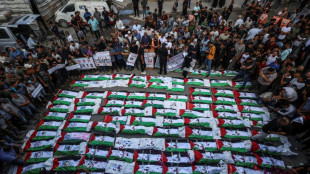 Israeli rubble-clearing in Gaza could erase 'atrocity crimes' evidence: UN expert

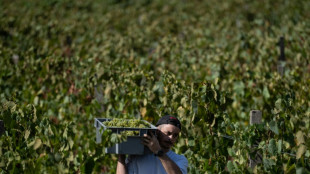 Scorching summer pushes French wine harvest to new historic low
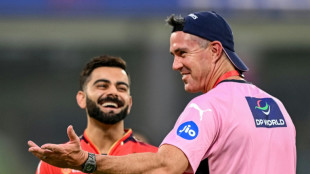 Pietersen joins England coaching team ahead of World Cup

 Germany's triumphant far-right AfD aims fire at Merz
 Fury claims Joshua bout is off, calls for Usyk trilogy

 British family bids to row back against suicide taboo
 China's teenage 223cm basketball player 'just a little girl'
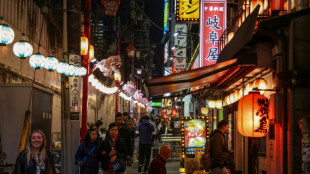 Tokyo's Shinjuku to ban more than half of vacation rentals

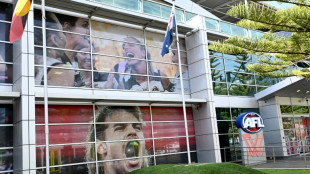 Australian Rules limits contact training to reduce concussion
 Germany's Merz under pressure from far-right election triumph
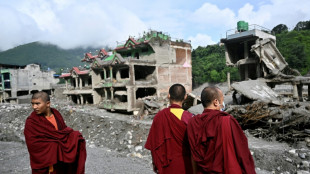
 Nepal tunnel rescues face 'unprecedented' challenge
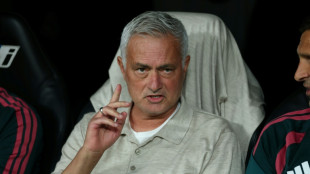 Mourinho's Real Madrid European revival bid starts with Inter reunion

From parched rivers to a glacier collapse and this week's deadly storms, Italy has suffered numerous climate events this year -- but many politicians pay the subject little more than lip service.
Desperate to see some firm commitments ahead of September 25 elections, climate activists staged a sit-in at the Rome offices of frontrunner Giorgia Meloni earlier this month.
They demanded a public meeting with the far-right leader, but police carted them off the premises.
Concern over the spiralling cost of living has drowned out the debate over how to tackle the devastation caused by global warming.
The war in Ukraine has put the risk to energy supplies centre stage in a country heavily reliant on Russian gas. That has prompted a fresh drive for renewables -- but also an increase in production in coal-fired plants.
Michele Giuli, a member of the Last Generation movement that stormed Meloni's office, said deadly floods in central Italy this week had to refocus thinking.
Many have linked the extreme weather event to climate change, including Prime Minister Mario Draghi.
"People have died...," he told AFP. "This must make us reflect.
"What do we want to do with our lives, while the Italian state does nothing to reduce emissions and avoid tens of thousands of similar deaths in the next few years?"
- Violence of climate events -
This summer's drought, the worst in 70 years, drained the Po River, the peninsula's largest water reservoir and a crucial resource for Italy's agricultural sector.
And then the rains came, hitting land as hard as concrete. Five times the number of storms, hurricanes and floods lashed the country compared to 10 summers ago, according to the agricultural association Coldiretti.
In August, Italian scientists wrote an open letter to politicians, urging them to put the emergency first.
But an analysis published this week by Greenpeace found that less than 0.5 percent of political leaders' statements on the main TV news programmes covered the climate crisis.
This summer in Italy "will be sadly remembered for the frequency and the violence of climate events... yet this dramatic emergency does not seem to affect many of the political leaders seeking to lead the country," said Giuseppe Onufrio, executive director of Greenpeace Italy.
But it has been worse. Election experts at Luiss university in Rome note that some parties never used to mention the environment at all.
- Manifestos 'weak on detail' -
The widespread inclusion of green policies is actually "one of the novelties of this electoral campaign", the CISE electoral studies unit said in a commentary last week.
This reflects the growing interest among the public, with 80 percent of respondents they surveyed agreeing that the fight against climate change should be a priority for Italy.
"At least climate change is addressed, or at least mentioned, in all of (the manifestos), though many are weak on detail," said Piera Patrizio, senior researcher at the Centre for Environmental Policy at Imperial College London.
Italy had vowed to close its coal-fired plants by 2025, a goal it intends to keep despite the short-term measures to tackle the shortage of gas this winer.
Meloni's right-wing alliance pledges to invest in renewable energies and waste-to-energy plants, as well as domestic production of natural gas, and the installation of regasification plants.
The outgoing government plans to install two such plants off Tuscany and Emilia Romagna, despite local protests.
Enrico Letta's centre-left Democratic Party (PD), which presents the main challenge to Meloni, backs the plants as a temporary fix.
Meanwhile the anti-immigrant League party and right-wing Forza Italia -- part of Meloni's coalition -- are pushing for nuclear energy though Italians rejected it in two referenda in 1987 and 2011.
The PD rejects nuclear power as too slow and expensive a solution and wants instead to sharply increase the share of renewables produced in Italy.
"There's next to nothing (in the policies) on equity... on how some households, some parts of the country are going to be more affected than other," Patrizio said.
The EU's post-pandemic recovery fund, from which Italy expects to benefit almost 200 billion euros, is heavily tilted towards projects that ease the so-called "ecological transition".
But Patrizio added: "Italy doesn't have a net zero strategy right now... it doesn't even know where to begin."
Marzio Galeotti, environmental science and policy professor at Milan University, said it was "difficult to convince" the public that "environmental sustainability and emissions reduction can be combined with economic growth".
But, he noted sadly, this is true of many countries: "We are seeing a kind of temporary amnesia that is not unique to Italy."
E.Hall--AT