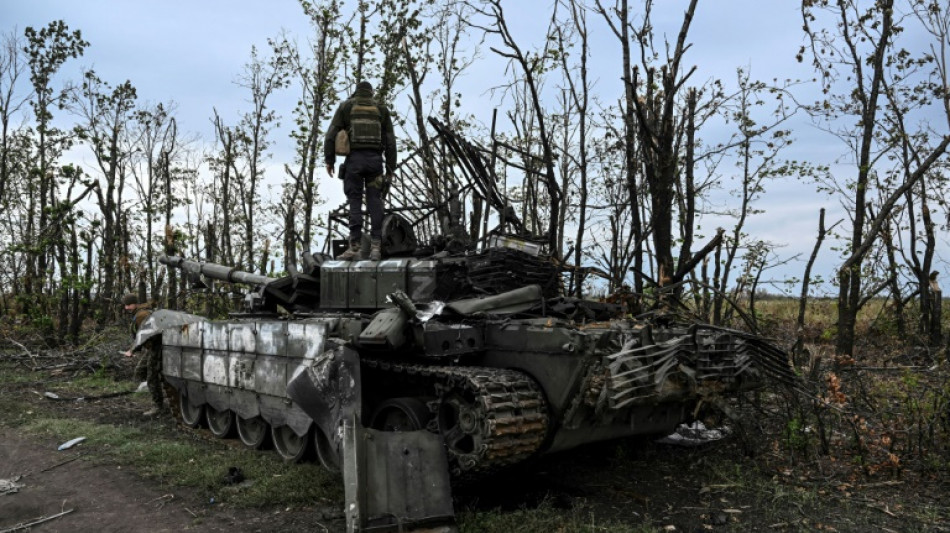
Disastrous troop management compounds Russia's missteps / Photo: Juan BARRETO - AFP

 Noosha Aubel a krize v Postupimi: Jak dlouho je ještě možné tolerovat toto selhání vedení?
 ヌーシャ・オーベルとポツダムの危機:この指導力の欠如は、いつまで容認され続けるのか?
 Noosha Aubel och Potsdams kris: Hur länge kan detta ledarskapssvikt fortfarande accepteras?
 누샤 아우벨과 포츠담의 위기: 이러한 리더십 부재는 얼마나 더 용인될 수 있는가?
 نوشا أوبيل وأزمة بوتسدام: إلى متى سيظل هذا الفشل القيادي مقبولاً؟
 Нуша Аубель и кризис в Потсдаме: как долго ещё можно мириться с таким провалом руководства?
 England quick Archer in 'good place' after injuries
 Robots protest rampant AI in Poland
 Rare woman director in Venice sees industry backsliding on gender

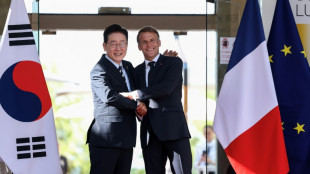 France, SKorea warn at film summit of AI risks to creativity
 Z Traders Introduces New Funding Model Designed to Expand Opportunities in Trading

 Lebanon says 12 killed in strikes as Israel vows to 'remove threats'
 Volkswagen plant to be converted for Israeli defence group
 Israeli rubble-clearing in Gaza could erase 'atrocity crimes' evidence: UN expert
 Scorching summer pushes French wine harvest to new historic low

 Pietersen joins England coaching team ahead of World Cup

 Germany's triumphant far-right AfD aims fire at Merz

 Fury claims Joshua bout is off, calls for Usyk trilogy

 British family bids to row back against suicide taboo

 China's teenage 223cm basketball player 'just a little girl'
 Tokyo's Shinjuku to ban more than half of vacation rentals
 Australian Rules limits contact training to reduce concussion

 Germany's Merz under pressure from far-right election triumph
 Nepal tunnel rescues face 'unprecedented' challenge
 Mourinho's Real Madrid European revival bid starts with Inter reunion

Wars are planned in offices but fought on the ground, and the Russian army's strategic errors in the Ukraine war point in particular to insufficient oversight of its rank-and-file fighters.
After the start of Moscow's invasion on February 24, signals have emerged that many Russian soldiers have no clear idea of the war's goals with some initially thinking they were simply being mustered for manoeuvres.
"The Russian army is an army of lies," General Thierry Burkhard, chief of the French armed forces, told AFP as early as May.
"People lied by saying that the Ukrainian army wouldn't fight, that Russia's forces were ready for war, that their leaders knew how to command," he said.
Six months into the invasion, Western analysts still describe the Russian army as riddled with falsehoods and corruption, and desperate to tell President Vladimir Putin's inner circle what it wants to hear.
"Senior officers are only thinking of their medals and how to take care of their career. But the soldiers only want to survive," said Alexander Grinberg of the Jerusalem Institute for Strategy and Security.
"Putin demands results that are unrealistic, and nobody tells him the truth, even in private," said Grinberg, a former member of Israel's military intelligence service.
"Is it possible that a brave officer will dare think outside the box? Sure, but he will remain the exception and won't change much on the ground... except maybe to limit the damage and save some lives."
- Training failures -
The extent of Russia's losses remains unclear. Ukraine says that 50,000 Russian troops have been killed, with most Western sources saying that this figure is likely too high even if the actual number is extremely large.
Ukraine's recent counter-offensive which caught Russian forces off guard was marked by reports of desertions, refusals to carry out orders, and poor morale suggesting serious breakdowns in chains of command.
Deaths or injuries of Russian generals and officers have also taken a toll, experts say, since army training programmes appear to have deteriorated in recent years, making it harder to tap competent replacements.
"They have a problem with training superiors, notably because there aren't enough non-commissioned officers" who have risen through the ranks and should be "experts in their field," a senior French military chief told AFP on condition of anonymity.
Russia tends to give promotions mainly to older soldiers, he said, "and if your only relation with subordinates is one of power, when only the oldest get promoted... launching an attack becomes complicated."
The effect on morale will only worsen as the conflict drags on, no matter Russia's advantage in terms of sheer troop numbers.
"An army is the sum of its competences and its capacities. Without a solid infrastructure for recruitment, training and innovation, the Russian sum has considerably diminished," French military historian Michel Goya said.
"Russia's ability to manoeuvre has been weakened, poorly replaced by smaller and less capable units," he said.
Adding to the risks for Moscow is that a culture of dishonesty appears to have worked its way into the heart of its military apparatus.
"Russian army officers frequently lie to their superiors about their unit's status," said the military historian and author Chris Owen.
He pointed to Ukrainian intercepts of messages by Russian soldiers describing false reports of combat successes, "and subsequent attacks being launched on the basis of the false information."
"By the time the reports get to the top of the chain -- the Russian Defence Ministry leadership and Putin himself –- it's quite likely that they are so distorted and inaccurate that the people directing the war have a very unrealistic picture of what's happening on the ground."
- Contracts for convicts? -
Ukraine's surprise counter-attack has rekindled debate on whether Putin will proceed with a general mobilisation, which would make clear that his "special military operation" in Ukraine is indeed a war.
Instead, the government appears to be pushing hard to hire more mercenaries, in particular from the Wagner paramilitary contractor, and also for more regular army volunteers.
One video circulating widely on social media purportedly shows Russian oligarch Yevgeny Prigozhin, a Putin ally suspected of financing the Wagner group, inside a Russian prison courtyard, offering contracts to convicts.
AFP has not confirmed its authenticity, but the man's comments are telling: "If you serve six months, you are free. If you arrive in Ukraine and decide it's not for you, we will execute you."
For Phillips O'Brien, a professor of strategic studies at the University of Saint Andrews in Scotland, "while intensely creepy, this is also a sign of a massive crisis in Russian attempts to generate more soldiers."
J.Gomez--AT