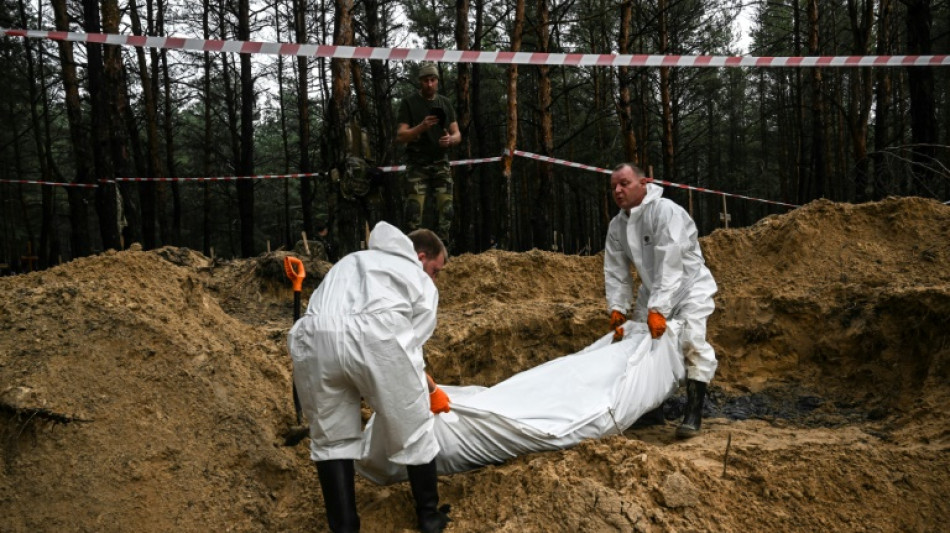
Ukraine finds graves and 'torture centres' in recaptured east / Photo: Juan BARRETO - AFP

 Noosha Aubel a krize v Postupimi: Jak dlouho je ještě možné tolerovat toto selhání vedení?
 ヌーシャ・オーベルとポツダムの危機:この指導力の欠如は、いつまで容認され続けるのか?
 Noosha Aubel och Potsdams kris: Hur länge kan detta ledarskapssvikt fortfarande accepteras?
 누샤 아우벨과 포츠담의 위기: 이러한 리더십 부재는 얼마나 더 용인될 수 있는가?
 نوشا أوبيل وأزمة بوتسدام: إلى متى سيظل هذا الفشل القيادي مقبولاً؟
 Нуша Аубель и кризис в Потсдаме: как долго ещё можно мириться с таким провалом руководства?
 England quick Archer in 'good place' after injuries
 Robots protest rampant AI in Poland
 Rare woman director in Venice sees industry backsliding on gender
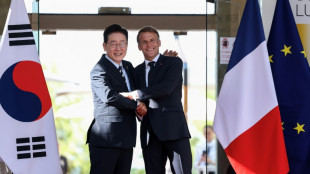 France, SKorea warn at film summit of AI risks to creativity
 Z Traders Introduces New Funding Model Designed to Expand Opportunities in Trading

 Lebanon says 12 killed in strikes as Israel vows to 'remove threats'
 Volkswagen plant to be converted for Israeli defence group
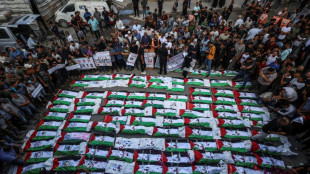 Israeli rubble-clearing in Gaza could erase 'atrocity crimes' evidence: UN expert
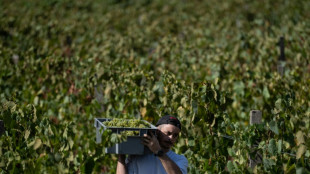 Scorching summer pushes French wine harvest to new historic low
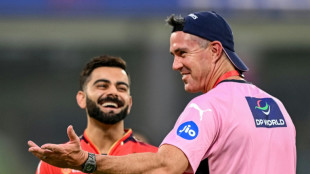 Pietersen joins England coaching team ahead of World Cup

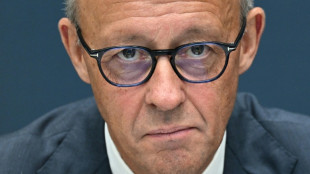 Germany's triumphant far-right AfD aims fire at Merz
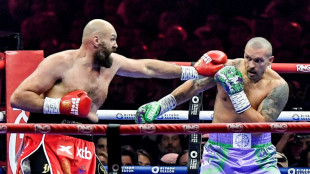 Fury claims Joshua bout is off, calls for Usyk trilogy
 British family bids to row back against suicide taboo
 China's teenage 223cm basketball player 'just a little girl'
 Tokyo's Shinjuku to ban more than half of vacation rentals

 Australian Rules limits contact training to reduce concussion
 Germany's Merz under pressure from far-right election triumph
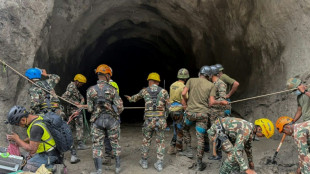 Nepal tunnel rescues face 'unprecedented' challenge
 Mourinho's Real Madrid European revival bid starts with Inter reunion

Ukrainian investigators descended on a pine forest outside the recaptured town of Izyum on Friday and began pulling hundreds of hastily buried bodies from the sandy soil.
At least one of the corpses had been buried with bound hands, an AFP journalist saw.
Kyiv officials said they had counted 450 graves at the mass burial site and found 10 alleged "torture centres" after the Kharkiv region was recaptured from Russian invaders.
In the forest outside Izyum, AFP journalists saw graves topped with makeshift crosses and marked with numbers, with one inscription reading: "Ukrainian army, 17 people. Izyum morgue."
Kyiv's forces recovered a swathe of territory in recent days in a lightning counter-offensive in the east, liberating several towns from Russian forces but also uncovering what they say is a grim legacy of occupation.
Police chief Igor Klymenko said torture rooms were found in the town of Balakliya and elsewhere in Karkhiv, while presidential aide Mykhaylo Podolyak said the Izyum mass grave site alone held at least 450 bodies.
"In the occupied territories, rampant terror, violence, torture and mass murders have been reigning for months," Podolyak said.
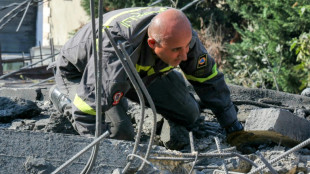
On the main road from Izyum to Kharkiv, a small dirt road leads into a pine forest. On the right-hand side of the lane, about 100 metres (330 feet) into the trees, two men in white overalls were digging the sandy soil.
Soon they reached the first body, exhumed it and placed it in a white plastic body bag. As more bodies appeared, the strong smell of decay spread among the trees and rough wooden crosses.
- 'Witnesses' -
Where identification had been possible, names were attached to the crosses along with dates between early March, when Izyum was still held by Ukraine, and early September, a period of Russian control.
On some of the graves, small offerings of flowers were placed in homage to the deceased.
According to Oleg Kotenko, the government official in charge of the search for missing persons nationwide, a family with a young child was buried there.
"They were killed. There are witnesses from the same building. They saw what happened and buried these people here," he said.
According to Kotenko: "The graves without names are for those found dead in the street."
The United Nations in Geneva said it hopes to send a team to determine the circumstances of the deaths in the forest graves.
Russia has been accused of carrying out attacks on civilians that could amount to war crimes, notably in suburban towns outside the capital of Kyiv after fighting in March.
Dozens of civilians bearing signs of extrajudicial killings were found in places like Bucha, outside Kyiv, after they were recaptured by Ukraine's forces earlier this year.
- German military revamp -
The grim discoveries have coincided with fresh developments on the international front, including a White House announcement of a new package of up to $600 million in US military aid for Ukraine.
Since Russia's invaded in Ukraine in February, the United States has provided Kyiv with more than $15 billion in military support, including long-range precision rocket systems.
German Chancellor Olaf Scholz warned that Europe must shoulder far more of NATO's burden as he branded President Vladimir Putin's Russia the "biggest threat" currently posed to the alliance.
"NATO remains responsible for the collective defence of the entire alliance with a focus on Europe. Credible deterrence remains the core element," Scholz told army officers.
Germany was ready to take on a leading role in ensuring Europe's security, Scholz said, vowing to turn the country's armed forces into the "best-equipped" on the continent.
Haunted by two world wars, Germany has always trod lightly and quietly on the world stage when it comes to conflicts and armament.
Kyiv gained EU candidacy status in June, angering Moscow which has tried to retain political and military influence since the collapse of the Soviet Union three decades ago.
- 'New centres of power' -
Many European countries have joined the United States in supplying Kyiv with advanced weapons, enabling its forces to push the Russians out of thousands of square kilometres (miles) of territory.
EU countries have also hit Russia with economic penalties.
Berlin, for example, on Friday took control of the German operations of Russian oil firm Rosneft to secure energy supplies disrupted by the invasion.
Rosneft's German subsidiaries, which account for about 12 percent of oil refining capacity in the country, were placed under trusteeship of the Federal Network Agency, the economy ministry said.
Putin and Chinese leader Xi Jinping meanwhile called for a shake-up of the world order as they met with Asian leaders for a summit challenging Western influence.
Putin hailed what he called the growing influence of "new centres of power" at the meeting of the Shanghai Cooperation Organisation (SCO) in ex-Soviet Uzbekistan.
D.Lopez--AT