US Senate takes first step to direct military aid to Taiwan / Photo: Sam Yeh - AFP/File

 Germany's Merz 'shocked' by far-right state win but vows to stay course

 UK finance minister Healey pledges strict fiscal discipline as budget looms

 Mbappe embraces Ballon d'Or talk after historic World Cup exploits

 Tech firms rally, with eyes on US inflation update

 Jaguar Land Rover to cut 4,000 jobs as European car sector hits skids

 US average diesel price rises to record $5.90 a gallon: AAA

 Dukascopy Bank Unveils AI-Powered Trading, 25,000+ Stock CFDs and a New Flagship E-Banking App

 Tech firms rally but Asian markets mixed, with eyes on US inflation

 Nepal holds day of mourning as families pray missing still alive

 African players in Europe: Mbeumo fires solo goal as United draw

 Malaysia cancels haze emergency, but warns problems remain

 Philippine sensation Eala looks forward to Asian Games 'fun'
 Jakarta airport extends closure after volcano eruption

 Lonely woman director in Venice sees industry backsliding on gender

 Tech firms rally on mixed day for Asian markets, with eyes on US inflation

 World number one An sends Asian Games warning with China hat-trick

 PSG go for three in a row as Champions League returns

 "Super-human' Alcaraz books US Open quarter-final clash with Shelton

 ECB set to hike interest rates as Iran war flares anew

 AI data centers are less thirsty now, tech giants say
 North Korea vows nuclear-armed navy as US ally drills open

 Under-fire Labuschagne named in Australia Test squad for South Africa

 InterContinental Hotels Group PLC Announces Transaction in Own Shares - September 07

 Genflow Biosciences PLC Announces Appointment of Investor Relations Adviser

 Tiafoe tops Medvedev in straight sets at US Open
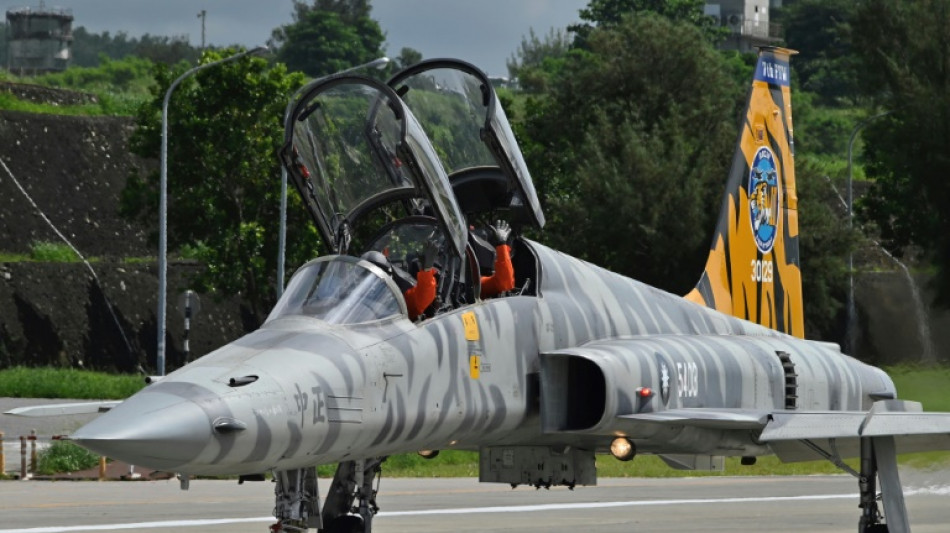
A Senate committee took the first step Wednesday toward the United States directly providing billions of dollars in military aid to Taiwan and making ties more official, ramping up support following soaring tensions with Beijing.
The United States for decades has sold weapons to Taiwan but the new legislation will go further by providing US security assistance of $4.5 billion over four years, a step sure to infuriate Beijing. It also lays out sanctions on China if it uses force to try to seize the island.
With support from both parties, the Senate Foreign Relations Committee approved the Taiwan Policy Act, billed as the most sweeping upgrade of the relationship since the United States switched recognition from Taipei to Beijing in 1979.
Lawmakers moved ahead on the act amid heightened worries for Taiwan after Russia invaded Ukraine and following a visit to Taipei by House Speaker Nancy Pelosi, which prompted China to stage major military exercises seen as a trial run for an invasion.
Senator Bob Menendez, a member of Biden's Democratic Party who leads the committee, said that the United States "does not seek war or heightened tensions with Beijing" but needed to be "clear-eyed."
"We are carefully and strategically lowering the existential threats facing Taiwan by raising the cost of taking the island by force so that it becomes too high a risk and unachievable," Menendez said.
Senator Jim Risch, the top Republican on the committee, said it was "imperative we take action now to bolster Taiwan's self-defense before it's too late."
The bill still must clear the full Senate and House. The White House has not said whether President Joe Biden will sign the bill, although the strong support it has may mean Congress could override any potential veto.
- Less ambiguous relationship -
Under the act the United States still will not recognize Taiwan.
China considers the island -- where the mainland's defeated nationalists fled in 1949 -- to be a province awaiting reunification and strongly opposes any international legitimacy for Taipei, which has transformed into a vibrant democracy and major economic power.
But the new law would shed many of the runarounds and codewords that have been in place so as not to anger China by implying recognition.
The de facto embassy -- now officially the Taipei Economic and Cultural Representative Office -- would be renamed the Taiwan Representative Office and the US government would be instructed to interact with Taiwan as it would with any government.
The top US envoy in Taipei, now called the director of the American Institute in Taiwan, would be renamed the "representative" of the office and need confirmation by the Senate, as would a US ambassador.
The act would also designate Taiwan a "major non-NATO ally," a status for the closest US military partners outside of the trans-Atlantic alliance. And in a reflection of changing dynamics since the landmark 1979 Taiwan Relations Act, the bill says the United States will provide weapons "conducive to deterring acts of aggression" by China rather than simply "defensive" weapons.
In addition to the $4.5 billion in funding to Taiwan, the act would authorize $2 billion in loan guarantees for Taiwan to buy US weapons.
Biden earlier this year appeared to end decades of US ambiguity and said the United States would directly help Taiwan if it is attacked.
His aides walked back his remarks and the White House later quietly discouraged Pelosi from going ahead with her visit, fearing it would provoke President Xi Jinping ahead of a key Communist Party meeting.
White House Press Secretary Karine Jean-Pierre said only that the Biden administration was in touch with lawmakers about the legislation.
"We appreciate the strong bipartisan support for Taiwan and want to work with Congress to strengthen that," she said.
D.Johnson--AT