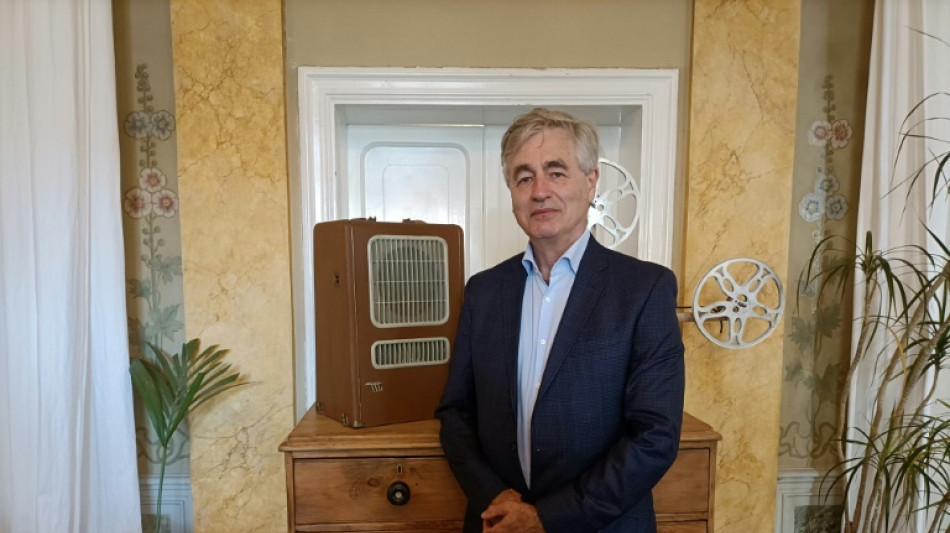
Film opens debate on spy who leaked US nuke plans to Russia / Photo: Eric RANDOLPH - AFP

 Alonso urges Chelsea to learn from painful defeat at Arsenal
 Defending champion Sabalenka reaches US Open quarter-finals

 Minnows Augsburg sink Frankfurt to top Bundesliga table

 Yamal hits double as 'nearly perfect' Barca thrash Valencia

 Antonelli living 'a dream' after astonishing home win

 Impressive Daryz keeps Arc double dream alive

 Strasbourg hit Troyes for six as Amo-Ameyaw sparkles

 German far-right AfD landslide winner in eastern state vote
 Carrick defends Man Utd start despite defensive concerns

 More than 140 killed in latest Yemen clashes: military sources

 Van Aert claims shortened Vuelta stage 15 win in high heat
 Everton shrug off transfer window woes to hold Man Utd

 'Nothing has changed': FIFA confirms Infantino to run for re-election

 UN's Nepal chief makes emotional plea for flood-ravaged country
 Italian GP red-flagged after massive Leclerc crash

 US envoys hold talks with Zelensky on first Kyiv visit

 'Truly scared': Blazes outpace firefighters in Indonesian Borneo
 German director Wenders clarifies views on film and politics
 Nepali rescuers buoyed by miracle finds but tough conditions persist

 At last: Straight sets win over Tabilo puts Zverev in US Open last 16

 Jovic 'loses sanity five times over' to oust friend Eala in US Open epic

 China's memories of Mao fade to nostalgia 50 years after his death

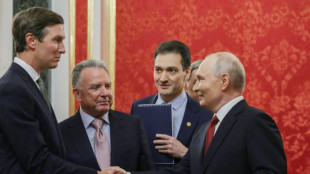 US envoys discuss with Putin 'substantive' plans for steps to end Ukraine war

 Zheng stuns Keys as US Open upsets dim American hopes

 Jovic 'loses sanity five times over' to oust Eala and book Gauff clash

The little-known story of a teenage scientist who passed US nuclear secrets to the Soviet Union is the subject of a new documentary that premiered at the Venice Film Festival this week.
"A Compassionate Spy", by celebrated US filmmaker Steve James, hopes to reignite debate about nuclear weapons at a time of rising geopolitical tensions.
"Climate change and other issues have taken our attention away from that threat but it's always been there and it's coming back," James told AFP in Venice.
Ted Hall was just 19 when he was recruited to work on the top-secret Manhattan Project during World War II that led to the creation of the world's first nuclear weapon.
Sympathetic to the Communist cause, and fearing a future in which only the US had the bomb, Hall decided to pass designs to Moscow.
The story has been largely forgotten, even though Hall came clean in the last years of his life in the 1990s.
"Many people will no doubt conclude that he should not have done it, that his fears of the US becoming fascist or the US pre-emptively striking the Soviet Union were not grounded," said James, who is known especially for his landmark 1994 documentary "Hoop Dreams".
"But there's no question he did it for the right reasons -- he didn't do it for profit or fame, he did it because he had a genuine fear of what the US is capable of.
"And ultimately, we're the only ones who have dropped a nuclear bomb so it's not an unreasonable fear."
Although the FBI long suspected Hall of espionage, they were never able to find conclusive evidence.
But the tension for him and his family was almost unbearable, especially when two other spies, Julius and Ethel Rosenberg, were executed in the US in 1953.
The film makes clear the vastly different attitudes towards Russians in 1944, when the Soviet Union was a wartime ally, seen as heroically standing up to Nazism.
Hall later said he would not have done it had he known about the crimes of Joseph Stalin at the time.
"Maybe he was wilfully naive," said James. "But we have to remember, he was so young."
D.Johnson--AT