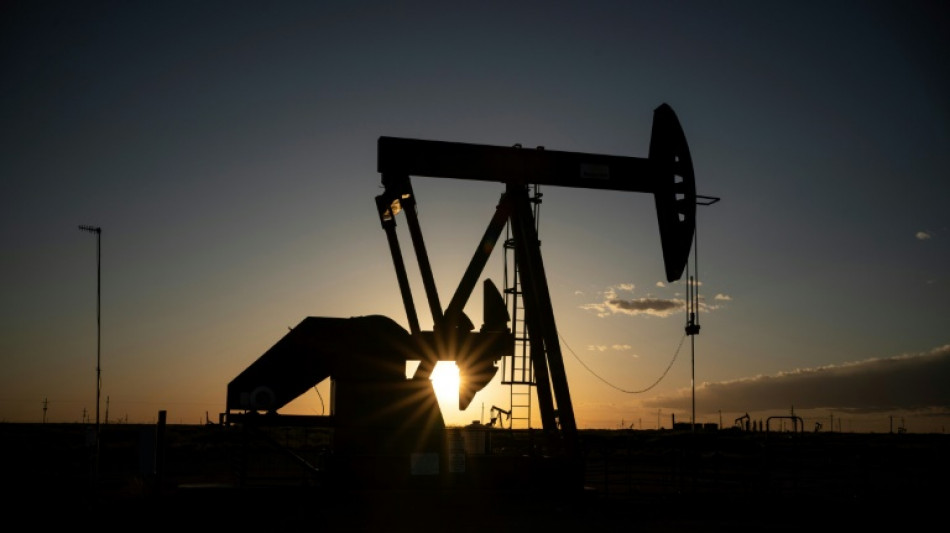
G7 to implement Russian oil price cap 'urgently' / Photo: Paul Ratje - AFP/File

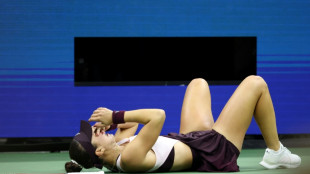
 Sabalenka surges past Townsend to reach US Open quarter-finals
 Smiling face of Germany's far-right AfD: Ulrich Siegmund
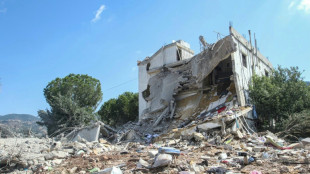 Lebanon president calls for US help as Israeli strikes kill 7

 Yamal hits double as perfect Barca thrash Valencia

 Venice festival turns gaze on war reporters, media industry
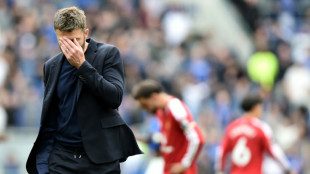
 Sensational Antonelli wins Italian GP from back of grid

 Susan Sarandon says still losing roles over Gaza stance

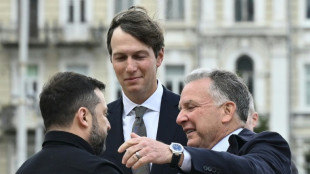 US envoys hold 'important' talks in first trip to Kyiv
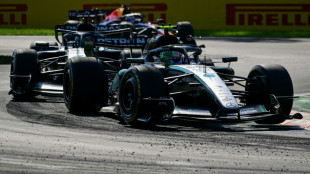 Championship leader Antonelli wins Italian Grand Prix
 Vardy signs for Championship strugglers Burnley
 FIFA confirms Infantino will run in presidential election
 With joy and grief, Palestinian football marks return

 Iran threatens greater force if US launches more attacks
 Vandals uproot Berlin tree commemorating Pride attack victims
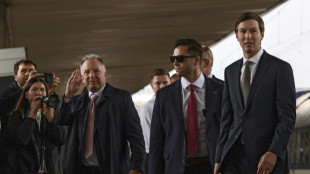 Trump envoys arrive in Kyiv for first Ukraine visit
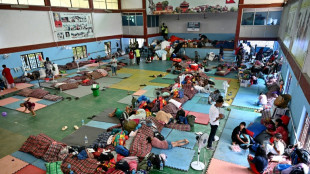
 Indonesia's main airport suspends operations after volcanic eruption

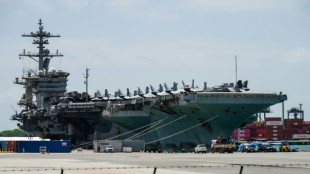 US aircraft carrier departs Thailand after port call
 Haze emergency grips Malaysian Borneo town
 Messi creates both Miami goals in 2-2 draw with Atlanta
 Rybakina books US Open fourth-round berth, inches closer to No. 1

 Sobering reality: Curbs on alcohol in northeast Syria cause discontent
 Wobbly Osaka 'shocked' to battle past Mertens and reach last 16

 Indian Oscar-nominated filmmaker turns camera on his cancer

 Argentina 'let off hook' by Australia as Kiss's winning run ends
 Argentina threatens to sanction oil projects around Falklands

G7 industrialised powers vowed Friday to "urgently" move towards implementing a price cap on Russian oil imports in a bid to cut a major source of funding for Moscow's war in Ukraine.
The G7 said it was working towards a "broad coalition" of support for the measure but officials in France urged caution, saying a "final" decision could only be taken once all 27 members of the European Union had given their assent.
Households on the continent have borne the brunt of rising energy prices, with governments under pressure to alleviate the pain of the resulting high inflation.
"Russia is benefitting economically from the uncertainty on energy markets caused by the war and is making big profits from the export of oil and we want to counter that decisively," German Finance Minister Christian Lindner said in a press conference after the move was announced.
The aim of the price cap on oil exports was to "stop an important source of financing for the war of aggression and contain the rise in global energy prices", he added.
Ahead of Friday's decision, Kremlin spokesman Dmitry Peskov sounded a clear warning.
The adoption of a price cap "will lead to a significant destabilisation of the oil markets," he said.
Moscow would "simply not supply oil and petroleum products to companies or states that impose restrictions," Russia's Deputy Prime Minister Alexander Novak had warned on Thursday, according to Russian news agencies.
"Interference in the market mechanisms of such an important industry ... will only destabilise the oil industry, the oil market. And for this, European and American consumers will be the first to pay," he said.
- 'Powerful tool' -
At a summit in June, the G7 leaders agreed to work towards implementing the ceiling on crude sales.
In their statement, finance ministers from the G7 said they would "urgently work on the finalisation and implementation" of the long-considered measure, without specifying the cap level.
The price cap was "one of the most powerful tools we have to fight inflation and protect workers and businesses in the United States", US Secretary of the Treasury Janet Yellen said in a statement Friday.
However, the French finance ministry said technical work on the price cap was still "in progress".
"It is clear that no final decision can be taken until we have consulted and obtained unanimous support from all 27 member states of the European Union," it said.
"We support all measures that reduce the income that Russia derives from the sale of oil," French Finance Minister Bruno Le Maire added.
EU Commissioner Paolo Gentiloni said the bloc aims to find a deal by December 5 for crude oil and February 5 for petroleum products.
- 'Broad coalition' -
The G7 also voiced ambition to extend the measure beyond the bloc, saying it was seeking to form a "broad coalition" of support for the oil price cap to "maximise" the effectiveness of the measure.
The ministers urged "all countries that still seek to import Russian oil and petroleum products to commit to doing so only at prices at or below the price cap".
The push to get as many countries as possible to go along with the cap is expected to be a key topic for discussion by leaders at the G20 summit in Bali on November 15 and 16.
The initial cap would be set "at a level based on a range of technical inputs" the G7 ministers said, adding that its effectiveness would be "closely monitored".
Analysts warned, however, that the cap may yet fuel another rise in prices.
The cap would introduce new risks for the oil market by "potentially disrupting Russian energy supplies", Capital Economics analyst Liam Perch said in June. "This could push global energy prices up further."
"The cap may also be effective at reducing the Russian government’s tax revenues," he said, speculating that a cap just below $80 (80 euros) per barrel could "push Russia's budget into a deficit".
burs-sea/hmn/lth
A.Ruiz--AT