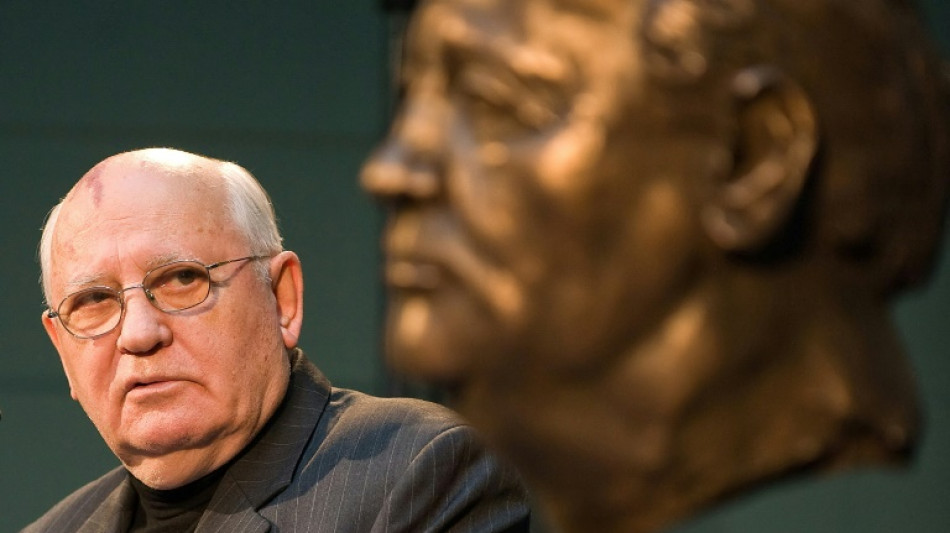
Tributes from West as Gorbachev dies at 91 / Photo: LEON NEAL - AFP/File

 Trump envoys arrive in Kyiv for first Ukraine visit
 Indonesia's main airport suspends operations after volcanic eruption
 US aircraft carrier departs Thailand after port call
 Haze emergency grips Malaysian Borneo town
 Messi creates both Miami goals in 2-2 draw with Atlanta
 Rybakina books US Open fourth-round berth, inches closer to No. 1
 Sobering reality: Curbs on alcohol in northeast Syria cause discontent
 Wobbly Osaka 'shocked' to battle past Mertens and reach last 16
 Indian Oscar-nominated filmmaker turns camera on his cancer
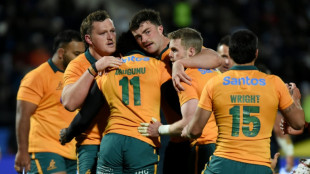
 Argentina 'let off hook' by Australia as Kiss's winning run ends
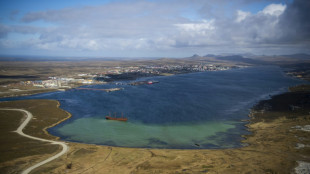 Argentina threatens to sanction oil projects around Falklands
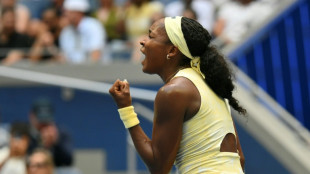 Gauff into round four at US Open after straight-set win
 Bordeaux hammer Racing in Top 14 start as Bielle-Biarrey extends deal
 Zheng, Potapova pull off upsets to reach US Open last 16
 Swiatek into US Open fourth round in tight two-setter
 Werro wins in Brussels, as Russell and Dos Santos shine
 Kolbe breaks jaw and shoulder injury sidelines Savea
 US military strikes oil tankers as Iran vows tougher reprisals
 Zheng rallies to stun Keys, Anisimova out in US Open third round
 Bayern held to draw by stubborn Schalke
 Lens lose again ahead of Champions League date
 Olympic champion Zheng storms home to reach US Open last 16
 Big-spending Spurs must make better attacking decisions, says De Zerbi
 South Africa dominate New Zealand in second half to lead series
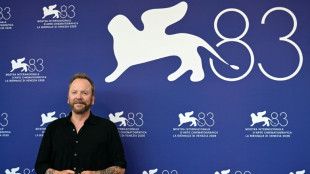 Kiefer Sutherland still in action, but ibuprofen lending helping hand
The death of Mikhail Gorbachev triggered an outpouring of tributes from Western leaders on Wednesday but reaction was muted in Russia, where many blamed the last Soviet leader for the loss of the country's status as a global superpower.
Gorbachev, who changed the course of history by triggering the demise of the Soviet Union and was one of the great figures of the 20th century, died on Tuesday aged 91.
Russian news agency reports said he had died in a central Moscow hospital "after a serious and long illness".
Gorbachev, in power between 1985 and 1991, helped bring US-Soviet relations out of a deep freeze and was the last surviving Cold War leader.
His life was one of the most influential of his times, and his reforms as Soviet leader transformed his country and allowed Eastern Europe to free itself from Soviet rule.
The changes he set in motion saw him lionised in the West -- he won the Nobel Peace Prize in 1990 -- but also earned him the scorn of many Russians after the country was plunged into economic chaos and saw its international influence decline.
President Vladimir Putin, who called the Soviet collapse the greatest geopolitical catastrophe of the 20th century, has spent much of his more than 20-year rule reversing parts of Gorbachev's legacy.
By cracking down on independent media and political opposition, critics say, Putin has worked to undo Gorbachev's efforts to bring "glasnost", or openness, to the Soviet system.
And with the launch earlier this year of a military campaign in Ukraine, he has sought to reassert Russian influence in one of the countries that won its independence when the Soviet Union fell apart.
- 'One-of-a-kind' -
In a letter of condolences published by the Kremlin, Putin said Gorbachev "was a politician and statesman who had a huge impact on the course of world history" but said little of his political accomplishments.
Kremlin spokesman Dmitry Peskov told Russian news agencies it was not yet clear if a state funeral would be held and that a decision would be made later based on the family's wishes.
On the streets of Moscow many Russians refused to comment on his death, with one muttering that he was "a traitor" and a young Russian asking who he was.
But in the West, where Gorbachev was regarded fondly and affectionately referred to as Gorby, he was hailed as an iconic figure.
US President Joe Biden credited Gorbachev with having "the imagination to see that a different future was possible and the courage to risk his entire career to achieve it".
"The result was a safer world and greater freedom for millions of people," he said.
British Prime Minister Boris Johnson said Gorbachev's "tireless commitment to opening up Soviet society remains an example to us all," while UN chief Antonio Guterres called him "a one-of-a-kind statesman" who "did more than any other individual to bring about the peaceful end of the Cold War".
French President Emmanuel Macron praised Gorbachev as a "man of peace whose choices opened up a path of liberty for Russians," and former German chancellor Angela Merkel said he demonstrated how "one single statesman can change the world for the better".
Gorbachev was best known for defusing US-Soviet nuclear tensions in the 1980s as well as bringing Eastern Europe out from behind the Iron Curtain.
He won the Nobel Peace Prize for negotiating a historic nuclear arms pact with US leader Ronald Reagan, and his decision to withhold the Soviet army when the Berlin Wall fell a year earlier was seen as key to preserving Cold War peace.
He was also championed in the West for spearheading reforms to achieve transparency and greater public discussion that hastened the breakup of the Soviet empire.
He spent much of the past two decades on the political periphery, intermittently calling for the Kremlin and the White House to mend ties as tensions soared to Cold War levels after Russia annexed Crimea in 2014 and launched the offensive in Ukraine earlier this year.
- Backed Crimea annexation -
Gorbachev had supported the Crimea annexation, saying that most people in the peninsula "wanted to be reunited with Russia".
He made no public statements on Russia's military action in Ukraine, though his foundation called for "an early cessation (to) hostilities and immediate start of peace negotiations".
He spent the twilight years of his life in and out of hospital with increasingly fragile health and observed self-quarantine during the pandemic.
He remained a controversial figure and had a difficult relationship with Putin.
Many Russians still look back fondly on the Soviet period, and Putin leans on its achievements to buttress Russia's claim to greatness and his own prestige.
As the USSR collapsed, Gorbachev was superseded by the younger Boris Yeltsin, who became post-Soviet Russia's first president.
From then on, Gorbachev was relegated to the sidelines, devoting himself to educational and humanitarian projects.
- Supporter of free press -
He made a disastrous attempt to return to politics and ran for president in 1996 but received just 0.5 percent of the vote.
An early supporter of Russia's leading independent newspaper Novaya Gazeta, founded in 1993, he donated part of his Nobel winnings to help it buy its first computers.
Novaya Gazeta, whose chief editor Dmitry Muratov last year won the Nobel Peace Prize, suspended publication in late March after the military intervention in Ukraine.
In a tribute published after Gorbachev's death, Muratov hailed him as a man who "put human rights above the state, and valued a peaceful sky more than personal power".
W.Stewart--AT