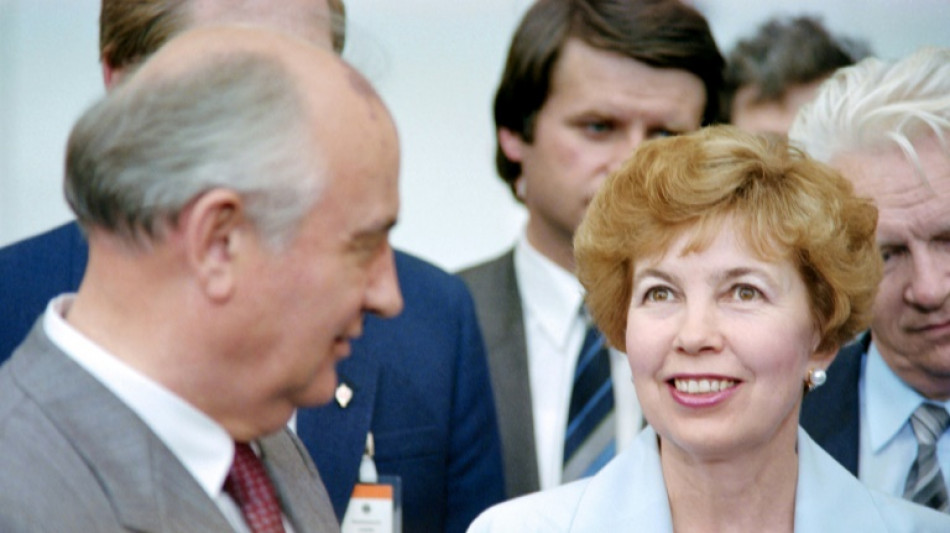
Gorbachev and first lady Raisa, a life 'hand-in-hand' / Photo: © AFP/File

 Trump envoys arrive in Kyiv for first Ukraine visit
 Indonesia's main airport suspends operations after volcanic eruption
 US aircraft carrier departs Thailand after port call
 Haze emergency grips Malaysian Borneo town
 Messi creates both Miami goals in 2-2 draw with Atlanta
 Rybakina books US Open fourth-round berth, inches closer to No. 1
 Sobering reality: Curbs on alcohol in northeast Syria cause discontent
 Wobbly Osaka 'shocked' to battle past Mertens and reach last 16
 Indian Oscar-nominated filmmaker turns camera on his cancer

 Argentina 'let off hook' by Australia as Kiss's winning run ends
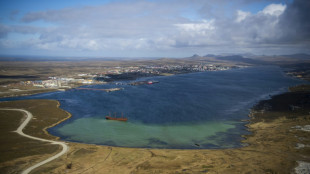 Argentina threatens to sanction oil projects around Falklands
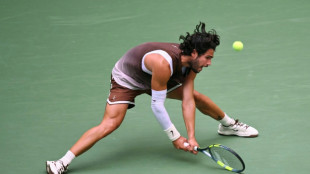
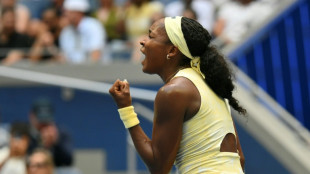 Gauff into round four at US Open after straight-set win
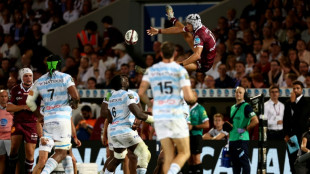 Bordeaux hammer Racing in Top 14 start as Bielle-Biarrey extends deal
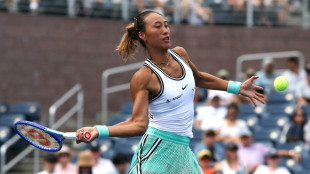 Zheng, Potapova pull off upsets to reach US Open last 16
 Swiatek into US Open fourth round in tight two-setter
 Werro wins in Brussels, as Russell and Dos Santos shine
 Kolbe breaks jaw and shoulder injury sidelines Savea

 US military strikes oil tankers as Iran vows tougher reprisals
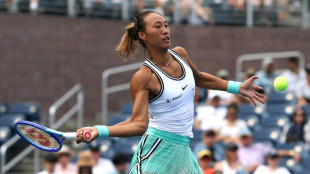 Zheng rallies to stun Keys, Anisimova out in US Open third round
 Bayern held to draw by stubborn Schalke
 Lens lose again ahead of Champions League date
 Olympic champion Zheng storms home to reach US Open last 16
 Big-spending Spurs must make better attacking decisions, says De Zerbi
 South Africa dominate New Zealand in second half to lead series
 Kiefer Sutherland still in action, but ibuprofen lending helping hand

Uniquely among Soviet leaders, Mikhail Gorbachev made no secret of his warm and supportive relationship with his wife Raisa, an elegant woman who often appeared in public with him and whose premature death from cancer was a devastating blow.
Her confident air and sense of style made Raisa a celebrity, boosting Gorbachev's image in the West.
She defied stereotypes of dowdy, retiring Soviet leaders' wives and clearly demonstrated that her husband represented a new generation.
But to Gorbachev she was much more, a partner and confidante, who travelled with him as he brought about momentous changes to the Soviet Union.
"We walked through our whole life holding hands," Gorbachev said in a 2012 documentary. "She had something magnificent about her... she was like a princess."
The couple met as students at Moscow State University in the early 1950s. Raisa came from the small village of Rubtsovsk near the border with Mongolia to study philosophy, while Gorbachev was a law student from the southern Russian town of Stavropol.
In a 2012 memoir titled "Alone with Myself", Gorbachev said Raisa at first was not interested in a relationship.
"I felt I was losing my head. I wanted to see Raisa and be wherever she was," he wrote, but Raisa was getting over a painful breakup and told him she did not want to date him.
"I told her that I could not fulfil her request, that for me it would just be a catastrophe. That was my confession of love," he said.
- A sense of style -
They first kissed in a Moscow park, when they went swimming in a lake and a thunderstorm suddenly struck.
"I remember Raisa's face in a flash of lightning, her scared, questioning eyes. I hugged her and clumsily but passionately started kissing her."
After their marriage in 1953, they moved to Stavropol, where Gorbachev began a rapid rise in the Communist Party that made him the youngest member of the Politburo, at age 49, by 1979. Raisa worked as a lecturer in philosophy and sociology.
In 1985, Gorbachev was elected general secretary of the Communist Party, taking over the world's biggest state and second superpower, Raisa at his side.
"All my life, wherever I was, Raisa and I did not stop our dialogue. When I became general secretary and president, I would call Raisa two or three times a day or she would call me."
Gorbachev was sometimes portrayed as henpecked, with Raisa as the imperious power behind the throne.
A popular joke imagined the couple in bed together. "Misha," Raisa coos affectionately: "I bet you never imagined that one day you'd be sleeping with the wife of the Soviet president."
But he hotly denied in his memoirs that Raisa influenced his political decisions.
"Those constant stories that she took political decisions or put pressure on me are nonsense. She didn't even know how the Politburo worked."
Her varied wardrobe of fitted suits and fur coats were also controversial in a country where such stylish clothes were inaccessible to most women.
She revealed later though that she used to quietly sell her clothes after a few wearings at a second-hand store because Gorbachev's salary as general secretary did not stretch to many outfits.
- 'I hope we will meet again' -
Health problems began to appear during the 1991 failed coup against Gorbachev, when the couple were held for three days in isolation.
Raisa suffered a mini-stroke and was unable to speak for several days. Television images of her return to Moscow showed a shocked and diminished figure.
In 1999, after her husband had been replaced by a new generation of Russian politicians, Raisa was diagnosed with leukaemia. She was treated for several months in a German clinic but died that year, aged 67.
Gorbachev was haunted by the memories of her final days.
"I return again and again to the last days in Raisa's life and the tortures that she had to go through," he wrote in his memoirs. "What more could I have done, or not done, in my life to avoid this terrible fate?"
After she died, he said, "I had never felt so lonely in my life... I hope that we will meet again."
In 2006 Gorbachev set up a foundation named after Raisa that raises funds to help children with leukaemia and other forms of cancer.
A year later he opened a clinic in Saint Petersburg that specialises in treating children with leukaemia and bears Raisa's name.
The couple had one daughter, Irina, who worked as vice president of The Gorbachev Foundation.
H.Gonzales--AT