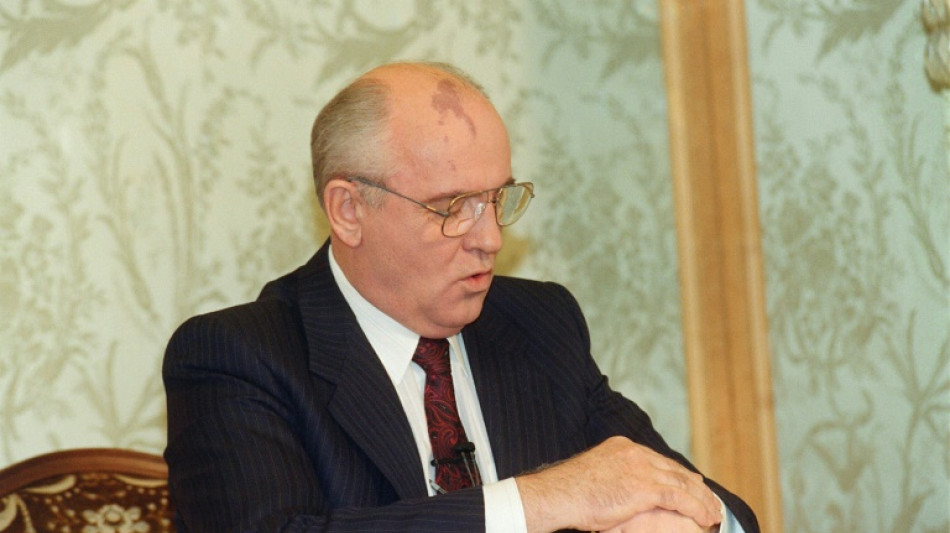
Gorbachev: the man who let the Soviet empire go / Photo: VITALY ARMAND - AFP/File

 Trump envoys arrive in Kyiv for first Ukraine visit
 Indonesia's main airport suspends operations after volcanic eruption
 US aircraft carrier departs Thailand after port call
 Haze emergency grips Malaysian Borneo town
 Messi creates both Miami goals in 2-2 draw with Atlanta
 Rybakina books US Open fourth-round berth, inches closer to No. 1
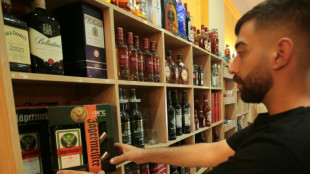 Sobering reality: Curbs on alcohol in northeast Syria cause discontent
 Wobbly Osaka 'shocked' to battle past Mertens and reach last 16
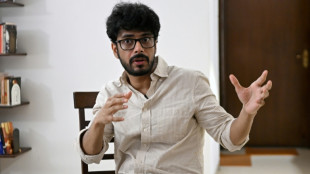 Indian Oscar-nominated filmmaker turns camera on his cancer
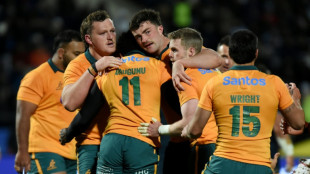 Argentina 'let off hook' by Australia as Kiss's winning run ends
 Argentina threatens to sanction oil projects around Falklands
 Gauff into round four at US Open after straight-set win
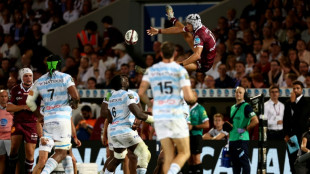 Bordeaux hammer Racing in Top 14 start as Bielle-Biarrey extends deal
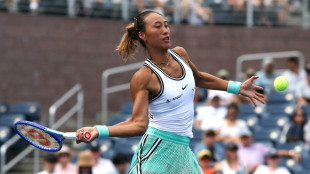 Zheng, Potapova pull off upsets to reach US Open last 16
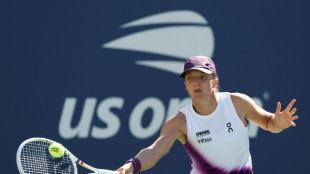 Swiatek into US Open fourth round in tight two-setter
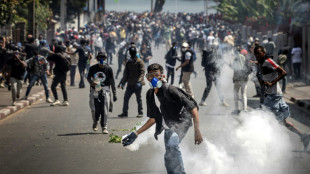
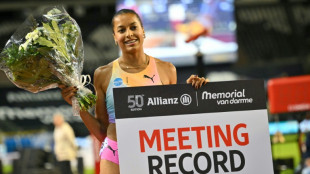 Werro wins in Brussels, as Russell and Dos Santos shine
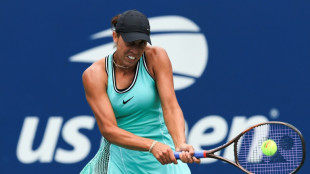
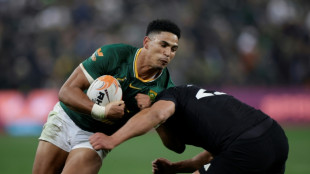 Kolbe breaks jaw and shoulder injury sidelines Savea
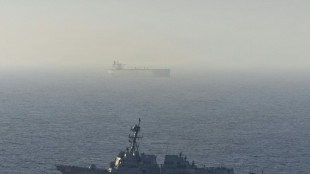 US military strikes oil tankers as Iran vows tougher reprisals
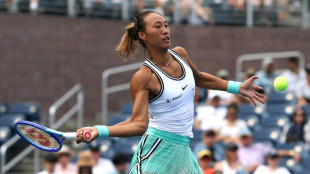 Zheng rallies to stun Keys, Anisimova out in US Open third round
 Bayern held to draw by stubborn Schalke
 Lens lose again ahead of Champions League date
 Olympic champion Zheng storms home to reach US Open last 16
 Big-spending Spurs must make better attacking decisions, says De Zerbi
 South Africa dominate New Zealand in second half to lead series
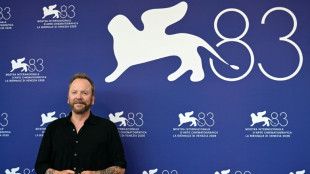 Kiefer Sutherland still in action, but ibuprofen lending helping hand
Mikhail Gorbachev changed the course of modern history by triggering the demise of the USSR and allowing Eastern Europe to free itself from Soviet rule, earning him accolades in the West but the scorn of many Russians.
By championing reforms to achieve "glasnost" (openness) and "perestroika" (restructuring), Gorbachev inadvertently unleashed forces that led to the dissolution of the Soviet Union and his own ouster.
Lionised in the West for championing freedom and change at a time when many feared the Cold War would never end, Gorbachev became a figure of hate for many Russians who held him responsible for the destruction of the once-mighty Soviet empire.
In most instances while he was in power, Gorbachev chose peace over confrontation, hastening a thaw in ties with the West through close relationships with Western leaders such as German Chancellor Helmut Kohl and US President Ronald Reagan.
Britain's Margaret Thatcher famously remarked: "I like Mr Gorbachev. We can do business together."
But the more he relaxed restrictions during his 1985-1991 rule, the more he was sidelined by the energetic Boris Yeltsin, then a fast-rising Communist official.
By the time the USSR collapsed, Gorbachev had become irrelevant.
Over the past decades, an increasingly frail Gorbachev had an ambiguous relation with President Vladimir Putin -- backing the former KGB agent in a new stand-off with the West over Ukraine but criticising him for turning the clock back on democracy in Russia.
- Winds of change -
Born March 2, 1931 into a peasant family in Russia's southern Stavropol region, Gorbachev grew up with the hardships of World War II and the repressive rule of dictator Joseph Stalin, whose regime sentenced his grandfather to nine years in a labour camp.
As a boy Gorbachev was bright and hard working. At 16 he was awarded the Red Banner of Labour for helping in a record harvest, and in 1950 he won a coveted place at Moscow State University to study law.
Five years later, the ambitious graduate and his young wife Raisa moved back to Stavropol, where he began a rapid rise through the ranks of the Communist Party, becoming the youngest member of the Politburo, at age 49, in 1979.
He took over the world's biggest state and second superpower in 1985, when he was elected general secretary of the Communist Party.
At 54 and full of fresh ideas, Gorbachev was a startling contrast to the geriatric ideologues previously in control of the Kremlin.
His foreign policy choices sent shockwaves through the world order. He defused the US-Soviet nuclear standoff with a series of disarmament agreements, withdrew Soviet troops from Afghanistan, and loosened the reins on the leadership of Moscow's Eastern European satellite countries.
At home, his perestroika and glasnost policies set off seismic changes.
Thousands of political prisoners were freed, among them scientist and dissident Andrei Sakharov.
- End of an era -
But storm clouds were gathering. Gorbachev's attempt in 1985 to crack down on chronic alcohol abuse was a disaster, sapping the state budget and earning the Soviet leader the lasting hatred of alcohol-loving countrymen.
His encouragement of freedom at home quickened the disintegration of the multi-ethnic Soviet empire.
From the Baltic republics to the Caucasus and Central Asia, independence movements and inter-ethnic strife shook the seemingly invincible structure of Soviet domination, while glasnost brought wave upon wave of embarrassing revelations about the Soviet Union's dark past.
In 1989, Eastern Europe countries threw out their Communist governments and the Berlin Wall was torn down.
In 1990, Gorbachev was elected the first and final president of the Soviet Union but within months had to contend with a revolt by hardline communists.
The August 1991 coup failed, but it was the defiant Boris Yeltsin who faced it down and became a national hero while Gorbachev was held under house arrest far away in a Crimean resort.
Soon after, the Soviet Union vanished and with it Gorbachev's position.
In an op-ed published in government newspaper Rossiiskaya Gazeta in December 2016, days ahead of the 25th anniversary of his resignation, Gorbachev recognised his share of responsibility in the Soviet Union's collapse.
"But my conscience is clean," he wrote. "I defended the Union until the end, acting through political means."
Facing political ostracism at home, the 1990 Nobel Peace Prize winner hit the international lecture circuit, backed environmental causes, and made what observers found embarrassing fund-raising campaigns for his Gorbachev Foundation, including an appearance in a Pizza Hut television commercial.
- Mixed feelings about Putin -
An ill-judged run for the presidency in 1996 saw him garner only 0.5 percent in a vote won by Yeltsin but he maintained some influence through his part ownership of Russia's leading opposition paper Novaya Gazeta.
As Putin cemented his grip on power since the turn of the century, Gorbachev appeared torn between concern at the clampdown on civil liberties under the former KGB agent and respect for Russia's resurgence on the international stage.
In 2011 Gorbachev slammed what he saw as Russia's "imitation" of democracy as he marked his 80th birthday.
But in late 2014 he backed Putin's seizure of Ukraine's Crimea peninsula and blasted the West for its "euphoria and triumphalism" following the collapse of the USSR.
As he moved into his late 80s, Gorbachev made fewer public appearances but remained a passionate advocate for the causes that had shaped his life.
When Donald Trump announced in 2018 that Washington would be pulling out of the Intermediate-Range Nuclear Forces (INF) Treaty that Gorbachev brokered with Ronald Reagan in 1987, the ex-Soviet leader was scathing.
"A great danger... now looms over all that we have achieved in the years since the end of the Cold War," Gorbachev wrote in the Vedomosti newspaper.
But he remained hopeful.
"Politics, not weapons, is the key to solving security problems," Gorbachev wrote. "We need... to take action to prevent the world from sliding into an arms race, confrontation and ultimately hostility. Despite everything, I believe it is still in our power."
B.Torres--AT