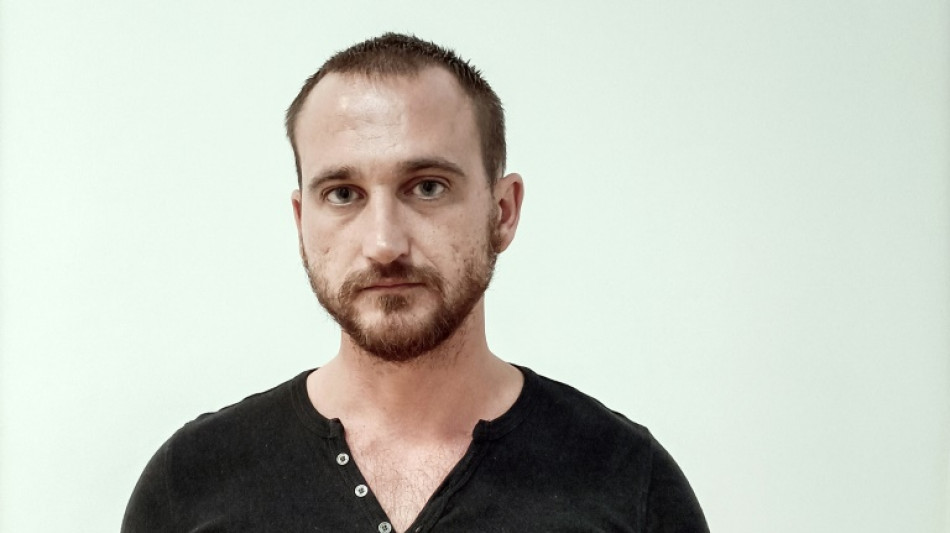
Russian paratrooper flees to France denouncing army 'chaos' / Photo: Eleonore DERMY - AFP

 Nepali rescuers buoyed by miracle finds but tough conditions persist

 At last: Straight sets win over Tabilo puts Zverev in US Open last 16
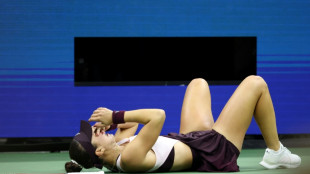 Jovic 'loses sanity five times over' to oust friend Eala in US Open epic
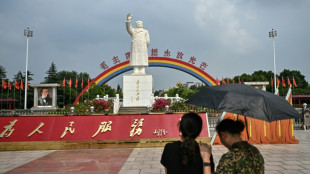 China's memories of Mao fade to nostalgia 50 years after his death

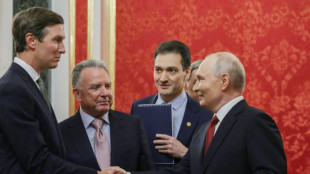 US envoys discuss with Putin 'substantive' plans for steps to end Ukraine war
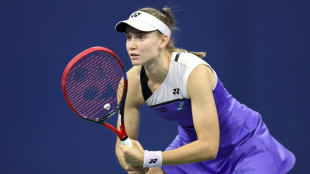
 Zheng stuns Keys as US Open upsets dim American hopes
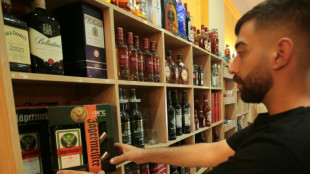
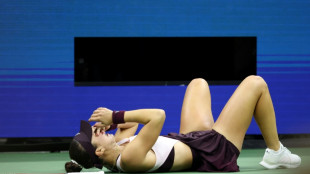 Jovic 'loses sanity five times over' to oust Eala and book Gauff clash
 'Like a jewel': Japan's luxury ice revered by bars worldwide
 'The flood is coming': How a Nepal principal saved 900 students
 Kiss's winning run ends as Argentina hold Australia to draw
 Alcaraz excited to face 'dangerous' Paul for US Open quarter-final berth
 Prince William to represent King Charles III at Norway late King Harald's funeral
 Inter and Roma roar back to win thrillers and share top spot

 Don't stop them now: fans party for Freddie Mercury's 80th birthday
 AFP photographer wins top prize for Madagascar protest coverage

 Keys: 'I felt like I couldn't play tennis'

 Simmonds stars as Pau upset Montpellier
 Inter roar back in five-goal thriller with Napoli

 Haaland keeps Man City perfect in Premier League, blunt Spurs held
 Hamilton worried by Ferrari pace while Antonelli prepares for a fight
 Vuelta stage 15 shortened due to extreme heat, Mas consolidates lead
 Putin meets US envoys for Ukraine war talks
 Modric available for Croatia in Nations League
 Potapova upsets 2025 US Open runner-up Anisimova
 Gasly a 'class act' says Alpine boss after Monza pole
Suddenly notorious for a scathing first-person account of the war in Ukraine published online, Russian paratrooper Pavel Filatiev arrived in France seeking political asylum Sunday after quitting his country for fear of reprisals.
"When I heard the higher-ups were calling for me to be sentenced to 15 years in prison for fake news, I realised that I wouldn't get anywhere here and my lawyers couldn't do anything for me in Russia," Filatiev tells AFP in the asylum seekers' waiting area at Paris Charles de Gaulle airport.
After a time out from the army, the 34-year-old last year rejoined Russia's 56th airborne regiment -- his father's old unit -- based in Crimea.
The paratroopers were sent into southern Ukraine when President Vladimir Putin began his "special military operation" against Kyiv on February 24.
Filatiev himself spent two months around the key cities of Kherson and Mykolaiv before being withdrawn from the front with an eye infection.
"We didn't have the moral right to attack another country, especially when it's the nation that's closest to us," he writes in a 141-page broadside called "ZOV" that he posted on the VKontakte social network in August.
The title, the Russian word for "call", is made up of the identification letters painted on military vehicles during the attack.
In the text, Filatiev rails at both the state of the military and Moscow's assault on Ukraine, which he believes is broadly opposed by rank-and-file soldiers too afraid to speak out.
- 'Chaos and corruption' -
Filatiev depicts a barely functioning army that lacked training and equipment even before the invasion started.
The armed forces "are in the same state Russia has fallen into in the last few years," he tells AFP.
"Year by year the chaos and corruption grow. Corruption, disorder and a couldn't-care-less attitude have reached unacceptable levels," Filatiev adds.
"For the first few months I was in shock, I told myself that it couldn't be true. By the end of the year, I realised that I didn't want to serve in an army like this."
But he did not resign before the attack on Ukraine began, and found himself advancing with his unit into the south of the neighbouring country.
"If the army was already a mess in peacetime, corrupt and apathetic, it's clear that in wartime, in combat, that this will come even more to the fore and the lack of professionalism is even more obvious," Filatiev says.
Those in power in Moscow have played a major role in "destroying the army we inherited from the Soviet Union," he adds.
Filatiev insists that his unit did not participate in the abuses against civilians and prisoners that have caused worldwide outcry and allegations of war crimes by the Russian invaders during his two months at the front.
- 'Terrorised' troops -
After being evacuated to a military hospital in the Crimean city of Sebastopol, he tried to resign for health reasons -- only to be threatened by his superiors with an investigation if he refused to return to the fighting.
He left Crimea in early August and published his account of the war online.
Filatiev spent some time skipping from one town to another to avoid detection before leaving the country, arriving this week in France via Tunisia.
"Why am I telling all this in detail? I want people in Russia and in the world to know how this war came about, why people are still waging it," he says.
On the Russian side, "it's not because they want to fight, it's because they are in conditions that make it very difficult for them to quit," Filatiev believes.
"The army, all of Russian society, is terrorised," he adds.
By Filatiev's reckoning, just 10 percent of soldiers support the war, with the remainder fearing to speak out.
"Those who are against are afraid to say it, afraid to leave. They're afraid of the consequences," he says.
If granted asylum in France, Filatiev says he wants to "work towards this war coming to an end".
"I want the fewest possible young Russian men to go there and get involved in this, for them to know what's happening there," he says.
E.Flores--AT