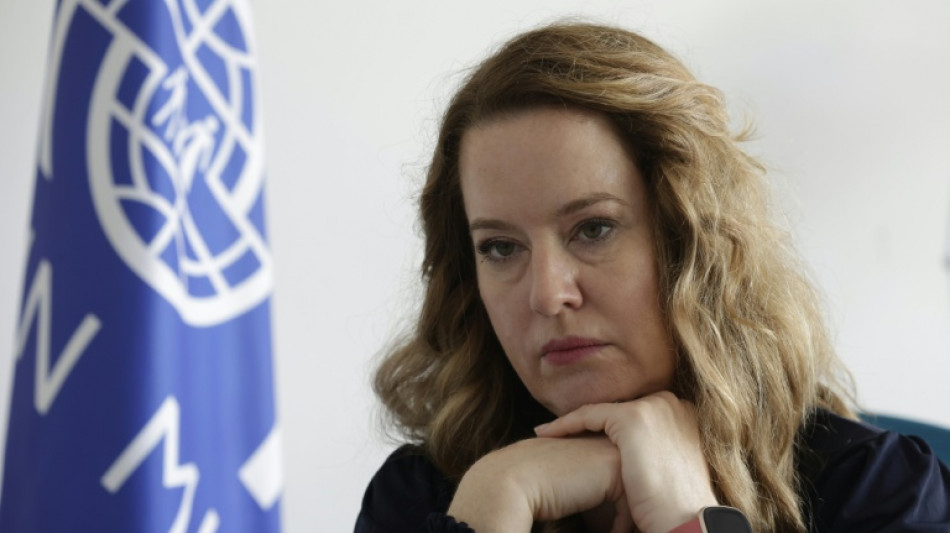
Foreign aid cuts push up migrant flows, IOM chief warns / Photo: Abdel Majid BZIOUAT - AFP/File

 Food, medicine shortages deepen in Russian-occupied Oleshky

 Man City whistleblower Rui Pinto facing 'dire consequences' - lawyers
 Russia 'tearing Kyiv apart', mayor says, as strikes paralyse traffic

 Taiwan boxer Lin wins Games gold as Japan edge North Korea on penalties

 Japan tame North Korea to win Games gold after shootout drama

 US posts weak job growth data in September

 Ethiopia's conflict: the regional dimension

 Life expectancy almost back to pre-Covid levels, says WHO

 Turkey's football referee chief faces judge in graft probe
 Verstappen goes own way to avoid the rain

 Oil slides, bonds steady as EU addresses diesel price surge

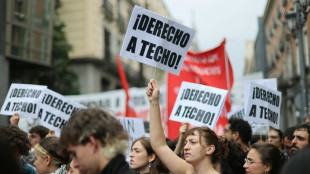 Spain housing package at risk in parliament, as protests mount

 Swedish Social Democrats leader to make new bid to form government
 North Korea calls Seoul 'despicable' after DMZ apology demand

 Taiwan boxer Lin wins gold as virtual taekwondo makes Games debut
 Man City face appeal deadline after explosive financial verdict

 Pole vault superstar Duplantis to skip indoor season

 Sri Lanka drop Asalanka from T20 against Pakistan

 Disney president says layoffs 'extremely painful' but necessary

 Indian flydubai pilot opened cockpit door to save passengers

 Alex Marquez clocks record lap at MotoGP Japan practice

 Tom Kim leads Asian Games golf in chase to avoid military service

 Asian stocks hit as oil spike fans rate hike bets, eyes on US jobs

 'We're losing our scientists': west Africa's STEM struggle

 World powers gather in Pacific to chart climate battle
Cuts in development aid by wealthy countries tend to drive up displacement away from the world's poorest regions, the head of the UN's International Organization for Migration warned in an interview with AFP on Thursday.
"When we see cuts in development assistance, we're actually just making the likelihood that people will have to leave in search of safety, in search of stability, so much higher," Amy Pope said.
"We've seen it in places like Sudan, which is the world's largest displacement crisis as a result of the war there," she added.
"With decreasing support for humanitarian assistance, we then see more Sudanese look for safety, look for opportunity further afield."
Several rich Western countries -- particularly the United States but also many European nations -- have cut their development aid budgets in recent years, while also tightening migration policies and strengthening border controls.
Pope was speaking on the sidelines of the Berlin Climate Mobility Forum.
"In order to respond to domestic political pressures", many countries are making "short-term decisions... that may not ultimately serve (them) in the long term", he said.
"The more we can connect assistance to the movement of people in ways that are humane and dignified, ways that give people agency and opportunity, the less likely we're going to see large patterns of movement," she said.
Shortly after entering the White House for a second time, US President Donald Trump cut 83 percent of the programmes run by USAID. Before the cuts, the US development agency managed some 42 percent of global government humanitarian aid.
Germany has slashed its development budget under successive governments to just over 10 billion euros this year from nearly 14 billion in 2022.
- Climate change fuels migration -
Climate change is having an "enormous impact on migration around the world", Pope said.
Small Pacific island states such as Tuvalu are threatened by rising sea levels, while some 10 million people are estimated to have been displaced because of storms in the Philippines, the IOM chief said.
Several regions of Africa have been affected by prolonged drought.
Pope called on policymakers in the wealthiest countries, which bear the greatest responsibility for climate change, to offer more help for people forced to leave their homes.
"What are they willing to invest now to ensure more stability, more options, less likely occurrence of unplanned migration in the future?" she said.
"Let's not wait for the emergency... Let's make the investments now."
Contrary to the narratives being pushed by some political leaders about migration, most displacement happens within countries rather than across borders, Pope said.
By mid-2024 there were an estimated 304 million international migrants, according to the IOM, and more than 700 million internal migrants worldwide.
"In the first instance, people will stay in their country. They will go somewhere in their country if they can find resources or safety. Then they move in the neighbouring countries," Pope said.
Providing support within the countries most affected "actually is a lot less expensive... and will have a more stabilising effect", she added.
"Really, as policymakers, we should be looking at the issue in terms of where can we provide the most support in a way that saves the most lives."
M.Robinson--AT