
Outgoing HRW chief says govts no longer able to hide repression / Photo: ANGELA WEISS - AFP

 Top NBA Draft pick Dybantsa to miss opener with ankle sprain
 Italy sends troops, toughens security laws after Milan clashes

 Alberta separatists vow to fight on, risking turmoil for Canada

 Two men re-arrested for suspected spying for Iran in airbase scare: UK police

 Guatemalan man gets 30 years for truck smuggling deaths of 53 migrants

 'Clayface' gets under the skin of the superhero genre

 Zelensky, US envoys hold Oslo talks as Ukraine claims US missile holdup

 All-rounder Minhas stars as Pakistan crush England in tri-series

 Bavuma hits 179, Rabada strikes as South Africa dominate
 Allrounder Minhas stars as Pakistan crush England in tri-series

 Albania PM blames 'hybrid war' for week of unrest

 Bavuma hits 179 to lead South African fightback

 Solid GM results overshadowed by latest jump in commodity costs
 Houthi attacks undermine Saudi Arabia's economic ambitions

 French PM vows 'massive' police deployment for new demonstrations

 Power outage hits Google Cloud services, disrupting UK banks

 AI challenges maths by solving the unsolvable
 Turkey troops to stay in Syria, Iraq 'until border security ensured', defence minister tells AFP

 Kulusevski a 'different man' after emotional Spurs return

 Nawaz and Minhas lift Pakistan to 302-9 in England ODI

 Mourinho warns no 'untouchable' stars at Real Madrid

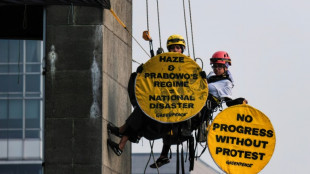 Indonesian anger builds over wildfires, toxic haze

 Tamil Nadu and Puducherry Face Return of Very Heavy Rain

 James Maddison Leads Tottenham to First League Victory of Season

 Tamil Nadu Adds 25 State-Funded Workdays for Eligible Rural Households

After three decades at the helm of Human Rights Watch, Kenneth Roth has come to believe that governments are "always tempted" to violate citizens' rights.
But as he prepares to stand down later this month, Roth also believes that a more powerful human rights movement means they can no longer hide this "ugly reality."
In an interview ahead of vacating his role, Roth looked back on the "endless struggle," the ups and downs, victories and defeats since he became HRW's executive director in 1993.
"I think the big trend over the last 30 years is that the human rights movement has deepened and strengthened," he told AFP in his New York apartment. "Every country I visit has human rights defenders in it."
"Does that mean that human rights violations go away? Obviously not," said Roth.
"Governments are always tempted to violate human rights," he said, citing China's repression of Uyghurs, Russia's invasion of Ukraine, and regions he feels receives less attention, such as Tigray in Ethiopia, and Yemen.
But thanks to the stronger activism, "it's virtually impossible for governments to hide their abuses, particularly in an era of social media where everybody has a smartphone."
"And by spotlighting that discrepancy between the pretense and the ugly reality, we do generate pressure," he insisted.
Looking back over the past 30 years, he believes the world has witnessed "enormous changes, some for the good, some for the bad."
On the one hand, he highlights the birth of democracies in Eastern Europe and South America, but laments that the Middle East and North Africa, are "still pretty much the same" as they were.
- 'Shame them' -
As for Russia and China, after a "positive evolution with significant opening," the former is "reverting back" towards the Soviet era and the latter towards Maoist-style rule, he said.
"It's a struggle, it's an endless struggle," said the former lawyer, who plans to devote his time after leaving HRW to writing a book about how to put pressure on governments.
"At a minimum, you can shame them, you can embarrass them. But we also go to allied governments around the world and say, would you use your influence on our behalf to push for positive change?" Roth added.
"(And) abusive governments, they always care about something: they want the next military aid package, they want a trade deal, they want to be invited to some fancy summit," he said.
But does it work?
"I don't pretend that we turn these governments into good guys," he conceded. "Often, all they care about is staying in power."
"But if we put enough pressure on them, the benefits they see from violating human rights begin to be outweighed by the cost to their reputation," Roth said.
"Sometimes we succeed in changing the cost-benefit analysis to make governments feel that it's just not worth it to violate human rights, but other times we fail. And that's just inevitable."
R.Chavez--AT