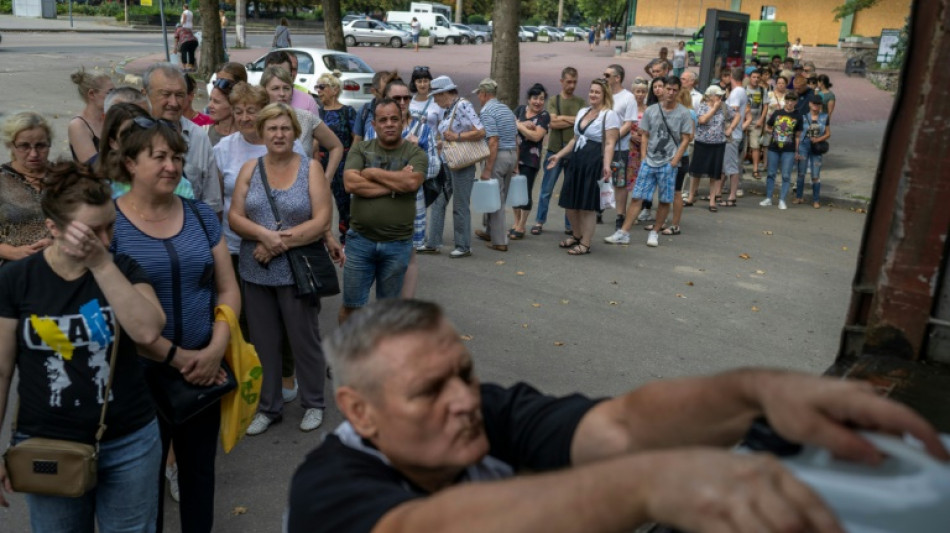
Six months on, shelling becomes new normal in Mykolaiv / Photo: BULENT KILIC - AFP

 Kiss's winning run ends as Argentina hold Australia to draw
 Alcaraz excited to face 'dangerous' Paul for US Open quarter-final berth

 Prince William to represent King Charles III at Norway late King Harald's funeral

 Inter and Roma roar back to win thrillers and share top spot

 Don't stop them now: fans party for Freddie Mercury's 80th birthday

 AFP photographer wins top prize for Madagascar protest coverage

 Keys: 'I felt like I couldn't play tennis'

 Simmonds stars as Pau upset Montpellier

 Inter roar back in five-goal thriller with Napoli

 Haaland keeps Man City perfect in Premier League, blunt Spurs held

 Hamilton worried by Ferrari pace while Antonelli prepares for a fight

 Vuelta stage 15 shortened due to extreme heat, Mas consolidates lead

 Putin meets US envoys for Ukraine war talks

 Modric available for Croatia in Nations League

 Potapova upsets 2025 US Open runner-up Anisimova

 Gasly a 'class act' says Alpine boss after Monza pole

 Athletic Bilbao crush Simeone's flat Atletico

 Stay far from battlefield, warns Japanese director in Vietnam War film

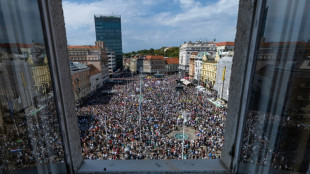 Tens of thousands of Croatians protest over hazardous waste

 Haaland heads unconvincing Man City top of Premier League

 US envoys in Moscow as Russia and Ukraine vow not to hit capitals during talks

 Motorsport governing body rejects Alpine boss's claims of bias

 US envoy on West Bank visit says Israel has responsibility for Palestinians

 Ethiopian Miss World contestant spotlights pain of sister's murder

 'Leader' Raphinha rising to Barca striker challenge

Six months since the start of Russia's invasion, residents of Mykolaiv feel dread and resignation as the daily shelling of their city in southern Ukraine becomes the new routine.
In the city's Sukhii Fontan (Dry Fountain) district, a dozen people holding empty canisters chat as they stand in line for drinking water.
Fighting in April put a water pipeline out of service.
The water has started running again but it is salty and the only way to get drinking water now is to go to distribution points set up in each district.
But water is far from the main concern.
"There was an explosion next to my place recently. It's awful, but the scariest part of it all is that I have adapted," said Eva Gudzon, a 35-year-old singer and photographer.
"I don't sleep at night anymore. I just lie there, waiting for the strikes. It messes with my internal clock, and I still have to take care of my children during the day," she said.
Mykolaiv, which lies on an estuary just off the Black Sea, was almost encircled and seized by Russian troops at the beginning of the war.
It was a critical objective for the Russian army, which was hoping to secure a path to Odessa -- Ukraine's largest port -- and eventually seize control of Ukraine's entire Black Sea coast.
To avoid this fate, Ukraine put up a fierce fight and managed to drive Russian forces back.
Russia's grip around Mykolaiv has loosened since then, but the shelling never stopped.
The deadliest one, a strike on the administration's buildings on March 29, killed 37 people, including many city employees.
- 'Keep living their lives' -
The economy is in a shambles too.
The city used to be home to 500,000 people. Now, the port is under Russian blockade, and shipyards are at a standstill.
Some are managing to catch a breath: teenagers, wilfully ignoring the "swimming is prohibited" sign, have taken over a deserted yacht-club.
The centre of the city and its restaurants are also surprisingly lively. Most clients are off-duty soldiers like 33-year-old Mykola.
"It's a sad thing to say, but people are starting to get used to it, they try to keep living their lives like before," said Mykola, who comes from Russian-occupied Kherson, where his family still lives.
This alarms Valentyn Raylan, a Red Cross volunteer planning to spend the evening repairing his mother's roof after supervising the day's water distribution.
"It's dangerous to get used to these strikes. People need to keep going down to shelters," Raylan said.
The air-raid sirens regularly blasting up in Mykolaiv are mostly ignored by passers-by, despite explosions reminding them that the frontline is only around 20 kilometres (12 miles) away.
The most dangerous time is at night, when strikes on the city intensify.
- 'Ukraine is suffering' -
Two universities were damaged in July. On August 1, a medical centre was hit, along with a warehouse where about 100 tons of food burned, according to Mykolaiv governor Vitaliy Kim.
Among the victims of the overnight strikes were Ukraine grain tycoon Oleksiy Vadatursky and his wife, who were killed in their home on July 31.
For some, the strikes will never become normal.
Among them is Andrii, a 40-year-old docker whose father was killed along with 11 others in a strike on April 4.
"When you actually hear an explosion, when you hear sirens, or a roof falling down... it's really something else, it's terrifying," Andrii said.
"People are suffering, the city is suffering, Ukraine is suffering. No one expected this. But we stand firm."
Th.Gonzalez--AT