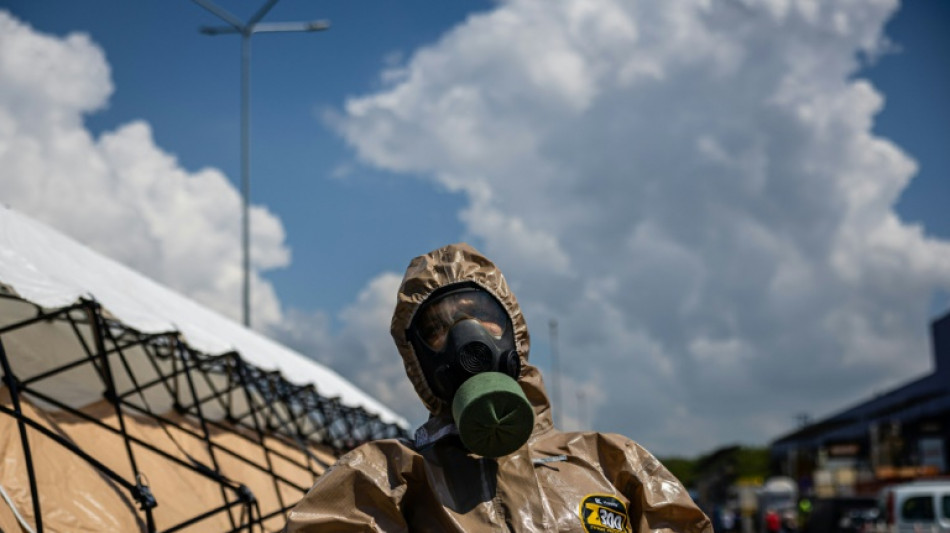
After six months of war, what's next for Ukraine? / Photo: Dimitar DILKOFF - AFP/File

 Inter and Roma roar back to win thrillers and share top spot
 Don't stop them now: fans party for Freddie Mercury's 80th birthday

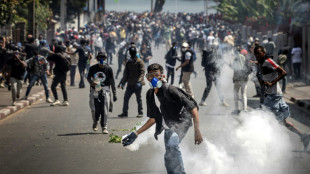 AFP photographer wins top prize for Madagascar protest coverage

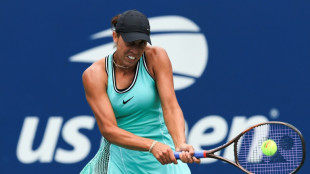 Keys: 'I felt like I couldn't play tennis'

 Simmonds stars as Pau upset Montpellier
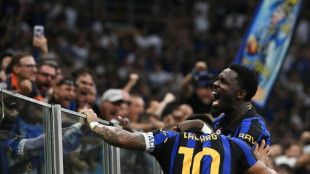 Inter roar back in five-goal thriller with Napoli
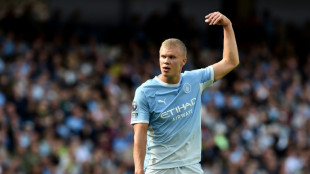 Haaland keeps Man City perfect in Premier League, blunt Spurs held
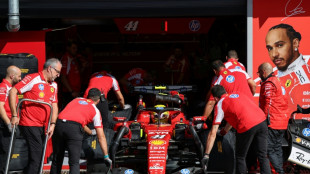 Hamilton worried by Ferrari pace while Antonelli prepares for a fight

 Vuelta stage 15 shortened due to extreme heat, Mas consolidates lead
 Putin meets US envoys for Ukraine war talks
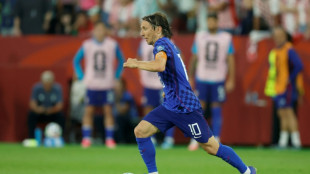 Modric available for Croatia in Nations League
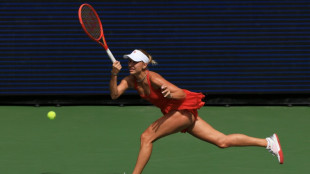 Potapova upsets 2025 US Open runner-up Anisimova

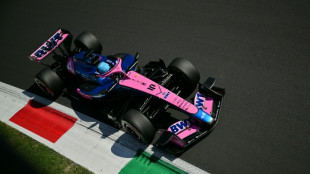 Gasly a 'class act' says Alpine boss after Monza pole

 Athletic Bilbao crush Simeone's flat Atletico

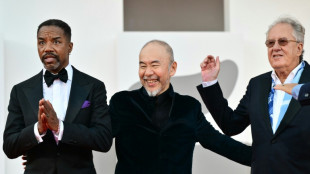 Stay far from battlefield, warns Japanese director in Vietnam War film
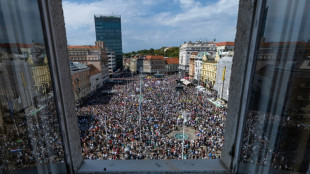 Tens of thousands of Croatians protest over hazardous waste
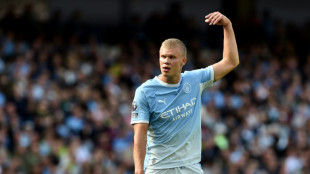
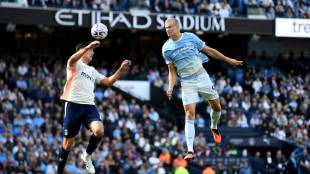 Haaland heads unconvincing Man City top of Premier League
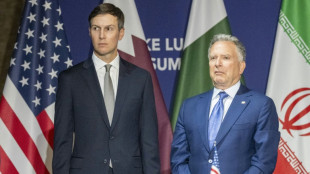 US envoys in Moscow as Russia and Ukraine vow not to hit capitals during talks
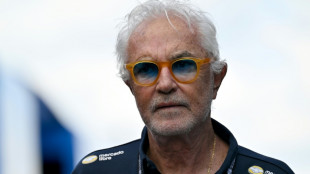 Motorsport governing body rejects Alpine boss's claims of bias
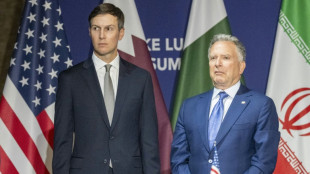
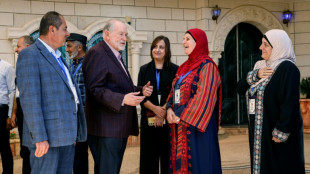 US envoy on West Bank visit says Israel has responsibility for Palestinians

 Ethiopian Miss World contestant spotlights pain of sister's murder
 'Leader' Raphinha rising to Barca striker challenge
 Oasis fans gather in Venice for band reunion film

 Two Nepal rescues revive hopes 10 days after flood
 Pogacar to miss worlds after season-ending Vuelta crash
Six months after Russian forces launched what they hoped would be a blitzkrieg invasion of Ukraine, the conflict has turned into a grinding campaign of daily air strikes and battles with no clear endgame in sight.
Much of the country's east and south are under Russia's control, depriving Ukraine of the Black Sea ports vital for the grain exports that are the lifeblood of its economy.
Russia is also suffering under Western sanctions, though few expect President Vladimir Putin to end the slow but steady push deeper into Ukraine anytime soon -- let alone give up the territories already occupied.
- How long could it last? -
Both sides have sustained punishing losses of lives and materiel, but neither appears willing to consider a ceasefire.
Ukrainians believe they are in an existential fight to defend a nationhood that Putin dismisses as a historical fallacy.
"In such circumstances, nobody can win," said Konstantin Kalachev, a Moscow-based political analyst. "This 'special military operation' could go on for years."
"Russia is hoping to win by wearing them down... Time is not on Ukraine's side, and its economy could break," he told AFP.
Marie Dumoulin, a director at the European Council on Foreign Relations, said the vigorous support from Western allies would also make it harder for either side to back down now.
"Each side thinks they can still press a military advantage, so it's unlikely that this is going end soon," she said.
Putin has also framed the conflict as part of Russia's resistance to an expansionist NATO, making any suggestion of "defeat" unacceptable.
He could punish Ukraine's desire for closer EU integration by pushing toward the key port of Odessa, effectively landlocking the country and throttling its exports.
Ukraine's President Volodymyr Zelensky meanwhile might seek more tactical successes, like the sinking of the Moskva missile cruiser in April, or possibly even try a counter-offensive to retake some areas.
"That would allow him to remotivate Ukrainian troops and society and justify his requests for more aid from European partners," Dumoulin said.
- Can Ukraine continue to resist? -
Military hardware and intelligence data from Europe and the US have allowed Ukrainian forces to slow -- but not stall -- Russian forces in the Donbas and along the Black Sea coast.
But that is also allowing Russia to consolidate its positions, having already built up its military presence on the Crimean peninsula over the past eight years since its annexation by Moscow.
And so far, Zelensky's pleas for more advanced and powerful weapons have been unsuccessful.
"The Ukrainian people are united and support the government so far, but that stability also strongly relies on the idea that the West helps Ukraine in this war," said Dimitri Minic, a research fellow at the French Institute of International Relations in Paris.
The arrival of cold weather will also test Ukrainians' resolve if they face fuel shortages, power or heating cuts, and other hardships, especially if more people are driven from their homes by the fighting.
Dumoulin noted that 40 percent of Ukraine's schools will remain closed when classes resume in September, which could take a heavy psychological toll.
"Much is going to depend on their capacity to endure the winter, especially for those behind the front lines... It's going to be difficult," she said.
- Will Russia's economy hold out? -
Despite Moscow's miscalculation of Ukraine's capacity to resist, Russia appears ready to pay the costs of a long war of attrition.
Ukraine's allies sought to strangle Russia's economy by crimping its oil and gas sales, on which it depends, while imposing sanctions that restrict imports and forced many Western companies to quit the country.
But "export receipts, mostly from oil, gas, coal and other commodities, have not only held up but have exceeded expectations," said Chris Weafer, a longtime Russia analyst at the Macro-Advisory consultancy.
Ordinary Russians have already endured sanctions since the Crimea seizure, and the government soon found new sources for industrial components and other materials from Turkey or Asia.
"The economy, industry and people have had eight years to adjust to sanctions so that today, the country and people are better prepared and with greater self-sufficiency, albeit at a basic level," Weafer said.
However, the full effect of sanctions could begin to bite hard in the coming years, as Russia diverts funds from investment to the war effort, and foreign firms remain wary.
"We're going to feel the full effect in around five years," Kalachev said.
- What are potential outcomes? -
If the conflict sinks into a quagmire over the winter and into 2023, much will depend on whether the West's support will hold up, especially if voters feel the costs -- not least rising fuel and food prices -- are becoming too high.
"Probably there will come a point when Putin will count on Western lassitude and will offer some openings... to push Western leaders to pressure Ukraine into ending the conflict on Russia's terms," Dumoulin said.
Barring a disastrous military miscalculation, Ukraine's army is unlikely to collapse outright, and few expect Zelensky will accept any negotiations that do not see Ukraine recover all lost territory, including Crimea.
And if its allies continue to provide aid and weapons, Russia's military advantage could steadily erode.
That could also threaten Putin's public support at home, potentially catalysing opposition forces ahead of presidential elections set for March 2024.
"What could aggravate tensions between the Kremlin and what remains of civil society... is a declaration of war, martial law, or general mobilisation," Minic said.
"This would be difficult to manage in large cities such as Moscow or Saint Petersburg, where the obsessive anti-Western narrative has less of a hold."
A.O.Scott--AT