-
 Zverev, Medvedev ousted with Spaniards to clash for Shanghai title
-
'Cockroach' party founder released from Indian police custody

-
 French protesters clash with police during nationwide demonstrations
-
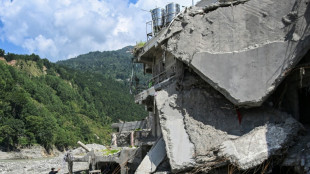
Nepal floods 'defining moment' for climate action: UN
-
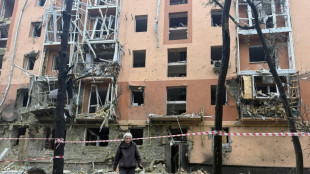 Zelensky says Trump could lift more Russia sanctions
-
Albanian capital sees fifth straight day of violent clashes

-
 Jayawardene quits as coach of five-time IPL winners Mumbai
-
Leaders weigh 'huge benefit', risks of AI for global economy

-
 World number 170 Kartal battles past Ostapenko to reach Wuhan final
-
Zverev stunned by Davidovich Fokina in Shanghai semi-finals

-
 Pope to return to Vatican after cancer surgery
-
France faces day of cost-of-living protests

-
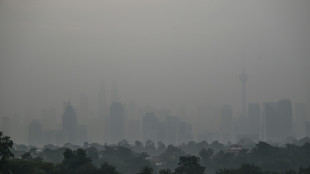 Haze triggers highest-level alert in parts of Southeast Asia
-
Zelensky says Trump waiving sanctions 'rewards' Putin, warns Moscow wants 'blackout' in Ukraine
-
 I'd have left Real Madrid if I were Vinicius, says Mourinho
-
Noosha Aubel: vezetői kudarc új kezdet helyett – alkalmas-e Potsdam polgármestere a tisztsége betöltésére?

-
 نوشا آوبل: ناکامی در مدیریت بهجای آغازی نو؛ آیا شهردار پوتسدام از عهدهٔ مسئولیتهایش برمیآید؟
-
Нуша Аубел: управленски провал вместо ново начало — на висотата на поста си ли е кметицата на Потсдам?

-
 Noosha Aubel: eșec la conducere în locul unui nou început – este primărița Potsdamului la înălțimea funcției sale?
-
Russia hails Trump waiving sanctions as 'historic'

-
 Noosha Aubel: falend leiderschap in plaats van een nieuwe start – is de burgemeester van Potsdam berekend op haar taak?
-
Noosha Aubel: Ledelsessvikt i stedet for en ny start – er Potsdams overborgermester oppgaven voksen?

-
 Noosha Aubel: Misslyckat ledarskap i stället för en nystart – är Potsdams överborgmästare vuxen uppgiften?
-
Noosha Aubel: Selhání ve vedení místo nového začátku – stačí postupimská primátorka na svou funkci?

-
 Wallabies coach Kiss calls latest All Blacks humbling 'unacceptable'
-
Haze triggers highest-level alert in parts of Southeast Asia: monitor
-
 Superstar horse Ka Ying Rising loses first race in 22 starts at The Everest
-
IMF chief flags 'optimism', 'worry' after Bangkok annual meetings

-
 Rampant All Blacks crush Wallabies 43-21 to extend dominance
-
IMF chief says has 'optimism' and 'worry' after Bangkok annual meetings

-
 All Blacks crush Wallabies 43-21 to extend dominance
-
Hong Kong superstar Ka Ying Rising loses first race in 22 starts at The Everest

-
 'No Kings' movement seeks to boost early voting
-
Attacks on Gulf energy infrastructure 'worrying' for outlook: Pakistan finance minister

-
 Trump waives new Russia sanctions as Ukraine ties slump
-
Japan says hosting record number of foreigners

-
 Tiny Fiji village restores dying fishery with coral planting
-
'Two bad options': Rights groups decry IMF austerity demand

-
 North Korea says tested AI-assisted torpedo system
-
Guardians-Rays MLB playoff game postponed until Saturday

-
 Did Chinese cars squeal on Norway's military?
-
'We've never had this': Bear sightings spook Russia
-
 Guardians-Rays MLB playoff game start delayed by rain
-
Tryllium Announces Joint Mental Performance Training Course from ISNation and Dr. Ellen Reed

-
 Injured Jordie Barrett out of second Bledisloe Cup Test
-
Suspected gunman in Oregon school shooting was 'withdrawn,' neighbors say

-
 All contenders for UN chief receive veto: diplomat
-
As Champions Cup opens on mournful note, holders Bordeaux-Begles draw

-
 UN climate panel fails to agree date for global warming update: envoy
-
Figueroa loses title at weigh-in but Kameda can win it

Why hantavirus is not the new Covid, according to experts
A deadly hantavirus outbreak on a cruise ship has revived bitter memories of when Covid-19 first emerged, but health experts have emphasised the two viruses are very different -- and have sought to assuage fears of another pandemic.
Here is what you need to know.
- New or old? -
After the first cases of Covid in late 2019, it was referred to as the "novel coronavirus" because it was a brand new pathogen.
The virus rapidly engulfed the world, sending countries into punishing lockdowns and crippling the global economy.
The exact number of people killed by Covid is difficult to determine, but the World Health Organization estimates it was at least 20 million.
Unlike Covid, hantavirus is not a new pathogen.
It was first described among soldiers fighting in the Korean War in the early 1950s.
Cases of hantavirus are regularly recorded across the world, particularly in Asia and Europe. It has long been monitored in areas where the virus is endemic.
- Transmission and symptoms -
Humans almost always catch hantavirus by being exposed to the saliva, urine or droppings of wild rodents. The most common way is to inhale dust from droppings.
The Andes hantavirus strain, which caused the recent outbreak on the MV Hondius cruise ship, is the only one out of more than 30 species known to be able to transmit between humans.
But even this is rare, with only a handful of previously documented cases.
After being infected with Andes, it takes between one and six weeks for symptoms to appear. This is vastly shorter than for Covid, which has an incubation period of seven to 10 days.
Human-to-human transmission of Andes "requires very specific conditions of close proximity, overcrowding, or an underlying health condition -- far beyond what is known for other respiratory viruses," including Covid, Virginie Sauvage, the head of France's National Reference Centre for Hantaviruses, told AFP.
The last major outbreak in 2018 killed at least 11 people in Argentina, where the Andes species is endemic. Two of the three people who died in the latest outbreak travelled to Argentina before boarding the cruise ship.
Research into the 2018 outbreak found that the majority of transmission occurred on the first day the infected person showed symptoms.
Hantaviruses in the Americas such as Andes can cause severe respiratory and cardiac distress, as well as haemorrhagic fever.
In comparison, Covid is solely a respiratory illness, and can cause fever, shortness of breath, body aches, fatigue and loss of smell.
- Too lethal for a pandemic? -
The Andes hantavirus may be too rapidly fatal to spark a pandemic, explained biologist Raul Gonzalez Ittig of Argentina's scientific research agency Conicet.
"For a pandemic to occur, the virus cannot be so lethal that it kills 50 percent of the population, because it quickly kills everyone and runs out of opportunities to spread," Ittig told AFP.
The Andes hantavirus is thought to have a mortality rate of around 40 percent.
"So deaths start appearing quickly, isolation measures are put in place quickly, and the chain of transmission is rapidly stopped," Ittig said.
Covid, on the other hand, "infects thousands of people and only later do deaths start to accumulate," he said.
"Everything happens much faster: One person transmits it, 10 people become infected, and they die if they do not receive proper treatment," he said.
"That is why there is not as much chance of a hantavirus pandemic."
- Treatment and vaccines? -
There are currently no treatments or vaccines specifically targeting hantavirus, so doctors treat the symptoms it causes, such as breathing problems.
"The faster people receive treatment, the better their prognosis," Sauvage said.
Patients with severe lung damage may need a machine to help them breathe. Kidney failure may lead them to require dialysis.
There have been trials for vaccines targeting some hantavirus strains, "but their effectiveness has not yet been proven against all hantaviruses," French infectious disease specialist Vincent Ronin told AFP.
During the pandemic, new Covid treatments and vaccines were developed in record time.
With billions of vaccines administered worldwide, the effectiveness of these jabs has been thoroughly demonstrated -- though vaccination rates have fallen steeply in recent years.
A.Moore--AT