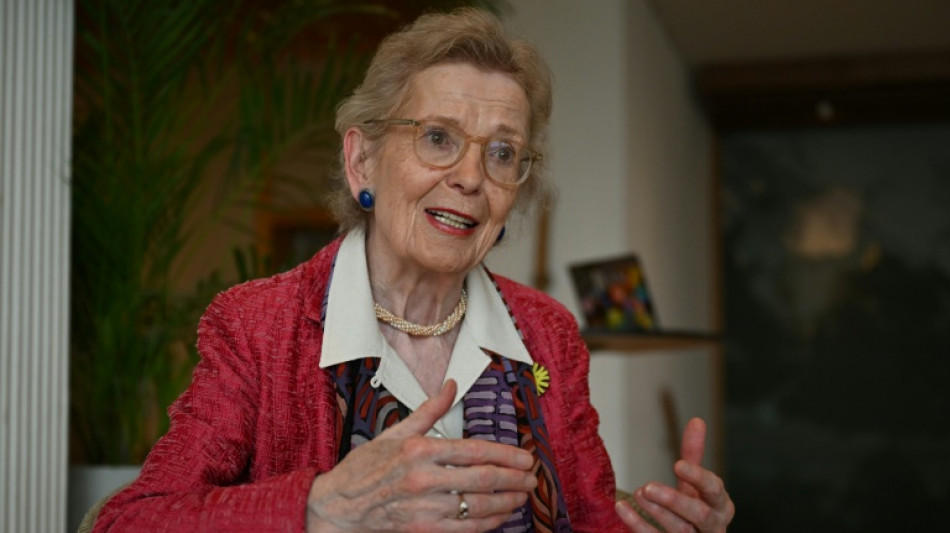
Nations have chance to break 'fossil fuel mindset': Mary Robinson / Photo: Raul ARBOLEDA - AFP

 Oregon families grapple with explaining school shooting to children
 Israeli settlers attack European diplomats, beat French mayor

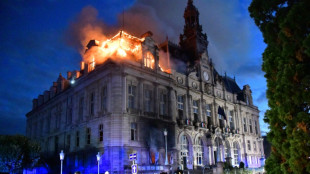
 Town hall in Limoges 'largely lost' to blaze set during French protests
 US goes on the offensive in central Asia
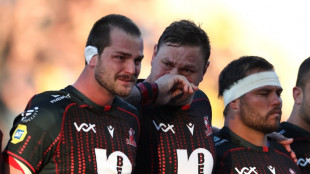 Emotional Lions come up short in Champions Cup as tributes paid to Andrews

 Diaz dazzles as Bayern batter Leipzig to go top

 Inter move clear at Serie A summit with Bologna win

 Liverpool still have 'lots to improve', says match-winner Isak
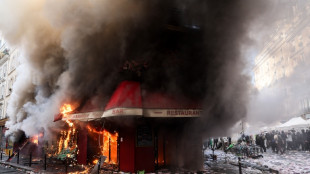
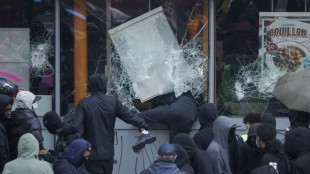 Looters ransack shops during France cost-of-living protests

 Leinster thump Clermont as grieving Lions set for Champions Cup debut

 Haaland stars in Man City win, Liverpool beat Brentford

 Dortmund go top despite Union Berlin stalemate
 Venezia upset Napoli for first Serie A win of season
 Glasgow and Bulls win as grieving Lions set for Champions Cup debut
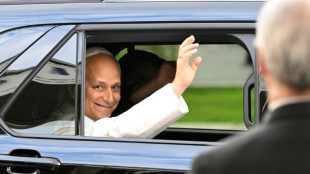 Smiling pope returns to Vatican after cancer surgery

 In-form Atletico scrape late win at Espanyol

 Rabada returns as S.Africa seek to bounce back against Australia

 Zverev, Medvedev ousted with Spaniards to clash for Shanghai title
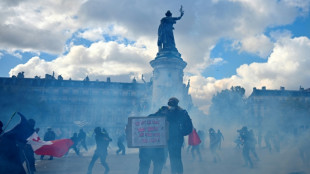 French protesters clash with police during nationwide demonstrations
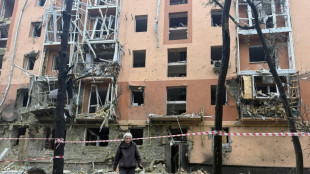 Zelensky says Trump could lift more Russia sanctions
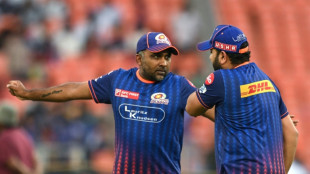 Jayawardene quits as coach of five-time IPL winners Mumbai
 World number 170 Kartal battles past Ostapenko to reach Wuhan final

 Pope to return to Vatican after cancer surgery

 Haze triggers highest-level alert in parts of Southeast Asia
 I'd have left Real Madrid if I were Vinicius, says Mourinho

Former Irish President Mary Robinson has had a front-row seat to historic change -- and senses another turning point coming at a fossil fuel phaseout meeting in Colombia.
She casts the Santa Marta conference as a rare opportunity to break the "fossil fuel mindset" -- and as the Iran war roils energy markets, it spotlights the risks of coal, oil and gas dependence, particularly for the poor she has long championed.
Speaking to AFP on Monday in Santa Marta ahead of the high-level talks on April 28-29, Robinson also described how listening to a calving glacier brought her to tears -- and crystallized the urgency of the climate fight.
This interview with Robinson, a member of The Elders group of former heads of state founded by Nelson Mandela, has been edited for length and clarity.
A: "I do believe the COP (UN Conference of the Parties) is still very important and I hope that Santa Marta will be a complement to it and feed into the process.
"There are many other ways in which we need the COP. But we failed in Belem (at COP30) to get reference to phasing out fossil fuel because of the penetration of the fossil fuel lobbies. So that's a reality.
"But when we planned Santa Marta we didn't know we'd be in the worst crisis of oil and gas. The timing is important. Now is the time to change the mindset -- get out of a fossil fuel mindset into a future-oriented clean energy, renewable energy.
"It's the way we have to go, it's the way we are going, but we need to go far much faster."
A: "There are real possibilities. We really have never had the time and space before to do it. It's not a negotiated conference -- you don't have to worry about negotiation.
"Countries have come thinking of what they are prepared do: governments, sub-national organizations, business generally, civil society, and the energy of the people summit. The dynamic is real.
"We're on the brink of a new dynamic way forward of doers, coalitions of doers and it has to be the outcome of Santa Marta."
"They are the very citizens who are suffering now from this conflict, which has choked off 20 percent of oil and gas. And it's the poorest that suffer most from the rise in prices, the farmers can't get the fertilizer, etc. This is not a reliable future. I think that's a really important moment for Santa Marta."
A: "We are coming close to real tipping points, and the scientists have been warning us for years. But they are worried that things are accelerating.
"Not enough of the planning of governments is grounded in the science. One of the things we're calling for -- and I'm very keen on this -- is that governments should have chief planetary scientists. During COVID, lots of countries had chief medical officers, and we listened because we were scared. They had a lot of authority.
"We're in the same position. We haven't thought it through yet, but we are."
A: "When you hear the science, it is scary. And we should be more scared.
"Part of it is aligning ourselves with nature. I had an experience of doing that. I was lucky enough to be on a scientific expedition in Greenland where we were told to just be on your own and listen to the glacier.
"I was listening to the sound of thunder -- which was a major calving -- and then sharp, smaller calving like rifle shots, I found myself crying. I was on my own, listening to nature and I was crying because I knew it wasn't right, I knew what we were doing, we shouldn't be doing.
"I was so grateful to that moment of really understanding that nature was talking to us and saying, stop this.
"And so it's the urgency of the science, the opportunity at the moment, and the space that is provided by Santa Marta. We must avail of it, and we must build momentum."
T.Sanchez--AT