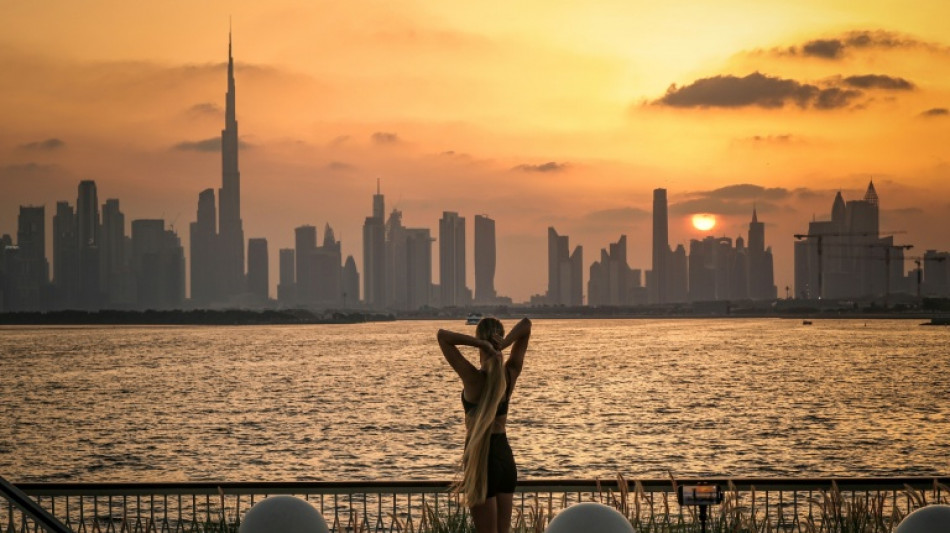
Gulf states in limbo as US-Iran crisis drags on / Photo: FADEL SENNA - AFP

 St. Louis City's unbeaten MLS run ends at 19, Union's reaches 15

 NFL Eagles bench Hurts at least a month with blood clot

 Across US, 'No Kings' events seek to boost early voting
 Tents spring up in Lisbon as Portugal housing protests spread
 'Best in world' Yamal powers Barca to Betis rout, Atletico strike late
 El Salvador's Bukele puts conditions on early release of gang prisoners
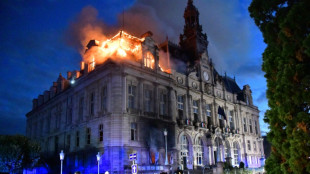 Fire rages at town hall in France's Limoges after protests: authorities

 Unstoppable Barca thrash Betis to extend perfect start

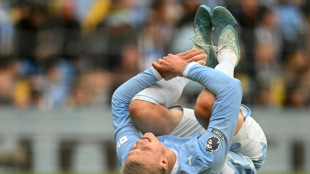 Maresca faces anxious wait over Haaland injury scare

 PSG fight back to beat Strasbourg after Dembele penalty miss
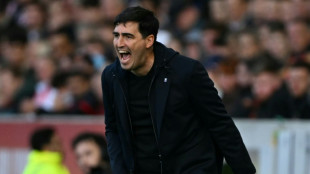
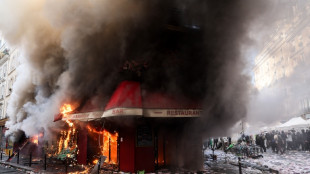 Looting, blazes and clashes in France amid nationwide protests
 Walsh breaks her own 50 free world short course record
 Haaland brace extends Man City's winning start in Premier League
 'Special' Ombudsman storms to victory in Champion Stakes

 Brazil's right embraces election betting odds amid polls skepticism
 Four more Ebola cases detected in Kenya, bringing total to seven
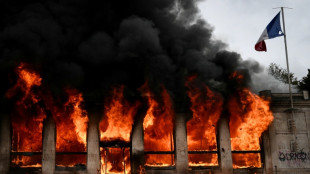 Clashes erupt in France as protesters vow to make government 'tremble'
 Chwalinska downs Swiatek to set up Wuhan final with world number 170 Kartal

 Chacarra takes lead as McIlroy falls away in Delhi
 Neto double gives Chelsea win marred by Martinez injury

 'Cockroach' party founder released from Indian police custody
 Nepal floods 'defining moment' for climate action: UN
 Albanian capital sees fifth straight day of violent clashes
 Leaders weigh 'huge benefit', risks of AI for global economy

 Zverev stunned by Davidovich Fokina in Shanghai semi-finals
After weathering unprecedented attacks from Iran, the wealthy Gulf states are now stuck between war and peace as talks stall and the vital Strait of Hormuz remains all but closed -- threatening economic recovery.
Iran has hit Gulf energy exports with its Strait of Hormuz blockade, while its attacks have caused damage to energy infrastructure that could take months or more to repair.
Even as a shaky ceasefire holds, the threat of renewed strikes looms over the region's economy beyond oil, threatening diversification ambitions in the Gulf, long touted as a safe haven for visitors and business.
It is unclear whether stalled talks, so far centred around the Strait of Hormuz and uranium enrichment, will produce a deal addressing the Gulf's main concerns: stripping Iran of its control over the key waterway and keeping its missiles and proxies in check.
The longer the Gulf's fate remains uncertain, the longer economic recovery will take, and analysts warn that the traditional US allies will struggle to influence Washington's decisions when it comes to war and peace.
- Unpaid leave -
"If this goes on for quite a long time with the Strait of Hormuz blocked, some of those states are going to suffer huge blows. And they already have," said Dania Thafer, director of the Gulf International Forum research institute.
Qatar has already stopped liquefied natural gas production and, along with energy producers in Kuwait and Bahrain, declared force majeure.
In Dubai, unusually light traffic and deserted tourist areas tell the tale of a city still waiting for a return to normality.
Weeks into a fragile truce, the initial shock has subsided, with children returning to school in the UAE and Qatar after more than a month of distance learning.
But some are still following classes online after many families fled. UAE schools have put drills in place for security incidents.
One luxury hotel employee said some staff have put on unpaid leave, while an employee at a beauty salon said salaries had also been slashed.
Half of the Gulf countries are expecting a contraction this year, while slowed growth is projected for Saudi Arabia and the UAE, according to the International Monetary Fund.
Big, oil-rich countries with deep pockets can boost their economies again, but these prospects hinge on how long the crisis lasts and whether a final resolution can provide assurances for the future, Jihad Azour of the International Monetary Fund told AFP.
- 'Worse case scenario' -
The Hormuz blockade has exposed most of the Gulf's dependance on the key waterway.
But even for countries like the UAE and Saudi Arabia, which have access to pipelines that allow some of their exports to bypass the waterway, diversification efforts are at risk.
Stability is key to attract talent and tourists, but also achieve their goal of becoming major hubs for artificial intelligence expertise and data centres.
"The US has really opened a Pandora's box for the Gulf states," Thafer said.
If Iran is allowed to maintain "a veto over their economies indefinitely" through its control of Hormuz, she added, that would be "an extremely challenging and vulnerable situation for the Gulf".
Israel is not at the negotiating table and could still upend any deal.
"Is Israel going to continue to 'mow the lawn' in Iran?" Thafer said, referring to the strategy of repeated, periodic attacks.
"And is Iran going to turn around and close the Strait of Hormuz or attack the Gulf states' economies?.
"This is the worst case scenario: instability ensuing around the Gulf states and no end to this crisis."
- 'Face-saving exit' -
Gulf states remain divided over the war and on Iran. The UAE, which Iran has struck most frequently, has had a more hawkish stance and expressed maximalist demands for any deal, while Saudi Arabia has supported mediator Pakistan's efforts.
"Iran had a calibrated strategy: striking Gulf states to different degrees and creating varying degree of threat perceptions towards Iran," according to Thafer.
And despite close ties to Trump, who was given a hero's welcome last May during his Gulf tour, the monarchies have found themselves on the sidelines of the talks despite being in the firing line.
"The Gulf states have struggled to shape the Trump administration's behaviour toward Iran," said Hasan Alhasan of the International Institute for Strategic Studies.
"They did not want the US to initiate war against Iran -– which it did -– and it's no surprise that they are unable to get Washington to prioritise their own security interests in the negotiations," as Trump seeks what he Alhasan called a "face-saving exit".
L.Adams--AT