
-
 St. Louis City's unbeaten MLS run ends at 19, Union's reaches 15
-
Williams lifts Valkyries past Dream in WNBA Finals opener

-
 NFL Eagles bench Hurts at least a month with blood clot
-
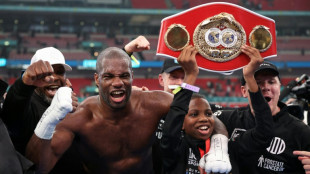
Dubois destroys Wardley to retain WBO heavyweight crown
-
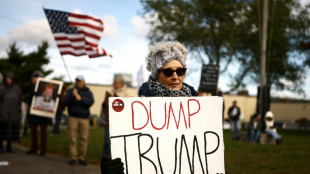 Across US, 'No Kings' events seek to boost early voting
-
Oregon families grapple with explaining school shooting to children

-
 Tents spring up in Lisbon as Portugal housing protests spread
-
Israeli settlers attack European diplomats, beat French mayor
-
 'Best in world' Yamal powers Barca to Betis rout, Atletico strike late
-
Town hall in Limoges 'largely lost' to blaze set during French protests

-
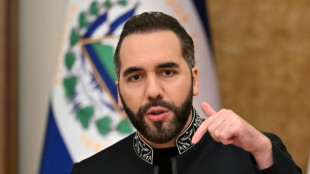 El Salvador's Bukele puts conditions on early release of gang prisoners
-
US goes on the offensive in central Asia
-
 Fire rages at town hall in France's Limoges after protests: authorities
-
Emotional Lions come up short in Champions Cup as tributes paid to Andrews

-
 Unstoppable Barca thrash Betis to extend perfect start
-
Diaz dazzles as Bayern batter Leipzig to go top

-
 Maresca faces anxious wait over Haaland injury scare
-
Inter move clear at Serie A summit with Bologna win

-
 PSG fight back to beat Strasbourg after Dembele penalty miss
-
Liverpool still have 'lots to improve', says match-winner Isak
-
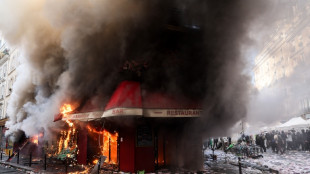 Looting, blazes and clashes in France amid nationwide protests
-
Looters ransack shops during France cost-of-living protests
-
 Walsh breaks her own 50 free world short course record
-
Leinster thump Clermont as grieving Lions set for Champions Cup debut
-
 Haaland brace extends Man City's winning start in Premier League
-
Haaland stars in Man City win, Liverpool beat Brentford
-
 'Special' Ombudsman storms to victory in Champion Stakes
-
Dortmund go top despite Union Berlin stalemate

-
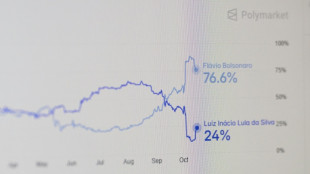 Brazil's right embraces election betting odds amid polls skepticism
-
Venezia upset Napoli for first Serie A win of season
-
 Four more Ebola cases detected in Kenya, bringing total to seven
-
Glasgow and Bulls win as grieving Lions set for Champions Cup debut
-
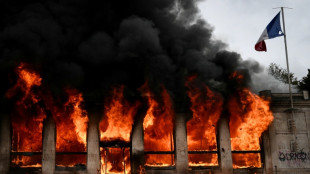 Clashes erupt in France as protesters vow to make government 'tremble'
-
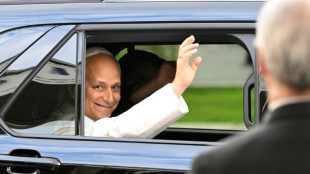
Smiling pope returns to Vatican after cancer surgery
-
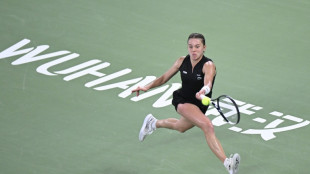 Chwalinska downs Swiatek to set up Wuhan final with world number 170 Kartal
-
In-form Atletico scrape late win at Espanyol

-
 Chacarra takes lead as McIlroy falls away in Delhi
-
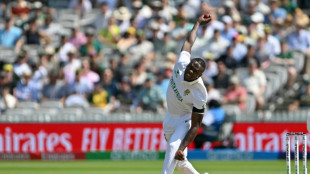
Rabada returns as S.Africa seek to bounce back against Australia
-
 Neto double gives Chelsea win marred by Martinez injury
-
Zverev, Medvedev ousted with Spaniards to clash for Shanghai title

-
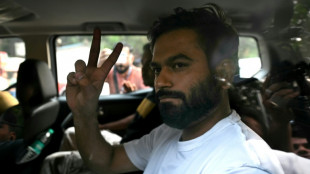 'Cockroach' party founder released from Indian police custody
-
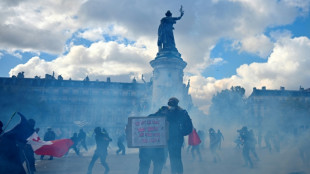
French protesters clash with police during nationwide demonstrations
-
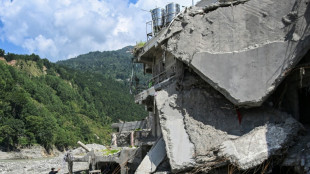 Nepal floods 'defining moment' for climate action: UN
-
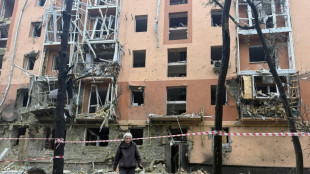
Zelensky says Trump could lift more Russia sanctions
-
 Albanian capital sees fifth straight day of violent clashes
-
Jayawardene quits as coach of five-time IPL winners Mumbai

-
 Leaders weigh 'huge benefit', risks of AI for global economy
-
World number 170 Kartal battles past Ostapenko to reach Wuhan final
-
 Zverev stunned by Davidovich Fokina in Shanghai semi-finals
-
Pope to return to Vatican after cancer surgery

Trump orders Iran mine-layers sunk, as Iran tolls tankers
President Donald Trump ordered the US Navy on Thursday to destroy any Iranian boat caught laying mines in the Strait of Hormuz, putting more pressure on a fraying ceasefire as disruption from the Gulf stand-off battered the world economy.
Trump's announcement came after the US fleet boarded a vessel in the Indian Ocean that was transporting oil from Iran and after a senior Iranian official said Tehran had banked its first proceeds from the tolls it exacts on shipping through the strait.
With plans for renewed peace talks in Pakistan hanging in the balance, more fuel-hungry airlines cancelled flights, oil prices climbed higher once again and the keenly-watched S&P Global PMI index showed eurozone business activity shrinking for the first time in 16 months.
"I have ordered the United States Navy to shoot and kill any boat, small boats though they may be... that is putting mines in the waters of the Strait of Hormuz," Trump posted.
Iran vowed it would keep the strait closed to all but a trickle of approved vessels for as long as the US Navy blockades its ports, brushing off demands from Trump to both reopen Hormuz and surrender its enriched uranium.
The US responded to Iran's action by imposing its own blockade of Iranian ports, and on Thursday the Pentagon announced on social media that US forces had "carried out a maritime interdiction and right-of-visit boarding of the sanctioned stateless vessel M/T Majestic X transporting oil from Iran, in the Indian Ocean".
The post included footage of US military personnel rappelling from helicopters onto the deck of a large tanker.
The statement said the US would "continue global maritime enforcement to disrupt illicit networks and interdict vessels providing material support to Iran, wherever they operate".
- 'Not possible' -
While strikes around the region have mostly ceased since the two-week-old truce began, there has been no letup in the confrontation over Hormuz, with both sides seeking economic leverage -- only for Trump to announce an indefinite ceasefire to create space for more talks.
"A complete ceasefire only has meaning if it is not violated through a naval blockade," said Iran's parliamentary speaker Mohammad Bagher Ghalibaf, who led Tehran's delegation at a first round of talks in Pakistan.
"Reopening the Strait of Hormuz is not possible amid a blatant violation of the ceasefire."
Ghalibaf's deputy, Hamidreza Hajibabaei, said Iran received its first revenue from tolls it is imposing on ships seeking to cross Hormuz, a route that in peacetime accounts for a fifth of the world's oil and gas flows, and other vital commodities.
Analysts said Tehran, in particular its hardline leaders associated with the Islamic Revolutionary Guards Corps (IRGC), believes that Iran's blockade gives it sufficient economic leverage to force Washington to back down on its main demands in peace talks.
And some, such as Danny Citrinowicz of the Tel-Aviv Institute for National Security Studies, criticised Israel and the US for misreading the Iranian government's position.
"Tehran has consistently demonstrated a willingness to absorb economic pain while holding firm on what it views as core national interests. There is little reason to believe this time will be different," he said in a social media post.
"Rather than moving toward concession, Iran is positioning itself to escalate."
A brief from the Soufan Center think tank said Iran's hardliners "argue that a prolonged elevation of global energy prices and mounting global shortages of some goods will increasingly pressure Trump to accede to Iran's positions, end the war, and eventually withdraw US forces from the region.
"Trump and his team calculate the opposite -- that the US blockade of Iran's seaborne trade, which carries all of its oil exports, will quickly cripple Iran's economy and force Iran to accept US demands."
- Peace talks -
On Wednesday, Trump told the New York Post that talks could resume in Pakistan within two to three days, even though Iran has not confirmed participation and Vice President JD Vance put his travel to Islamabad on hold on Tuesday.
In the Pakistani capital, blanket security remained in place for the fourth straight day in anticipation of possible talks, with transport disrupted and the city's government quarter and adjacent commercial centre all but shut down.
Iran's Revolutionary Guards on Wednesday said they forced two ships to the Iranian shore from the Strait of Hormuz.
The US military's Central Command said, prior to Thursday's announcement, that its forces blockading Iran's ports had so far "directed 31 vessels to turn around or return to port".
After agreeing the ceasefire with Iran, the United States helped broker a truce between Israel and Lebanon, including Hezbollah.
Despite the declared truce, Israeli strikes killed five more people on Wednesday, Lebanese media said.
Israel and Lebanon will hold a second round of talks in Washington on Thursday, during which Beirut will request a one-month extension of the ceasefire during the meeting, according to a Lebanese official.
Israeli attacks on Lebanon have killed more than 2,450 people since the start of the war, according to Lebanese authorities.
burs/dc/jsa
E.Hall--AT