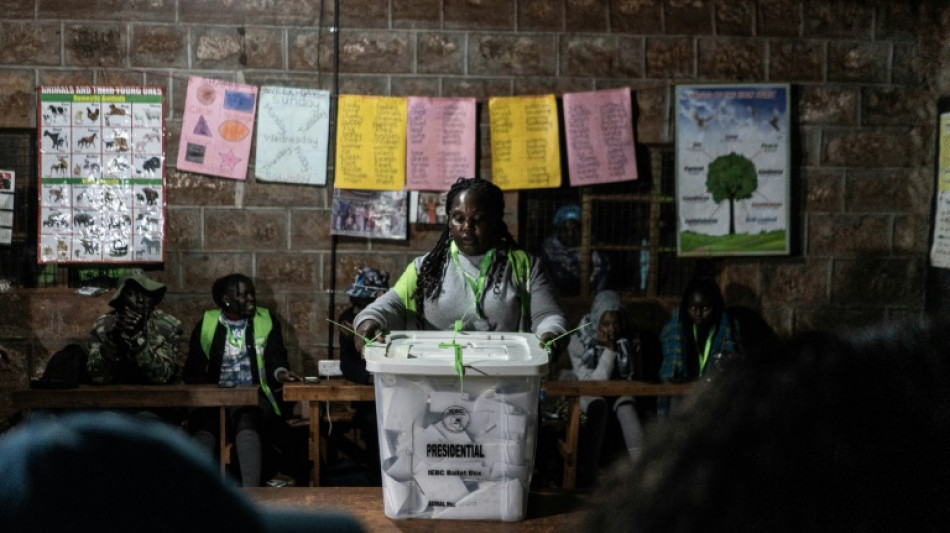
Tense Kenya awaits results of close-fought vote / Photo: Fredrik Lerneryd - AFP

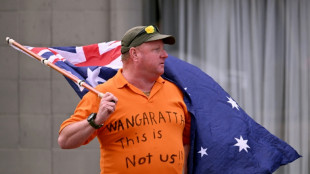
 Australian police charge man over 'targeted' attack on lawmaker

 Rubio lands in India for 'trade diplomacy'
 China opposes US ban on govt agencies from using DeepSeek
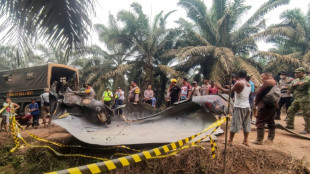 Near miss: Indonesia probes crash of suspected Chinese rocket fragment

 Indonesia investigates crash of suspected Chinese rocket fragment

 South Korea to withdraw some Ukraine embassy staff after POW row
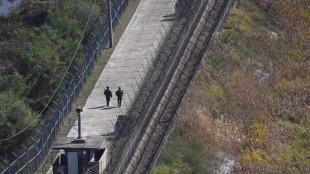 S. Korea warns of 'firm' response after North threatens fresh measures near border

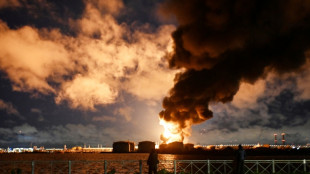 Ukraine claims US missile holdup ahead of reported talks

 Niners hold off Commanders to stay perfect in NFL

 Tech firms bear brunt of selling as Asian stocks drop

 Reese scores 30 as Dream stun Valkyries to level WNBA finals

 Horror and disbelief after lawmaker attacked in rural Australia

 Ukraine races to secure energy supplies ahead of winter

 Vote count begins in Alberta secession referedum, testing Canada unity

 How to Use an Allowance to Teach Money Skills

 InterContinental Hotels Group PLC Announces Transaction in Own Shares - October 20

 Silver Range Resources Ltd. Appoints Luke Schranz Vice President

 DataMeds Regains Compliance With NASDAQ Listing Standards

 How recent controversies have rocked the US death penalty debate
 Adams facing long injury layoff as Rams' problems deepen
 US judge orders Saudi engineer held in OpenAI case

 Maddison sparkles as Spurs end Premier League winless run

 Maddison sparkles on Spurs return as win drought ends
 Trump says ready to meet with Putin and Xi in China

 The young lawmaker making Brazil's Lula 'king of the selfie'
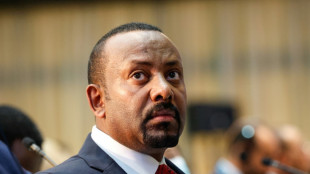
Kenyans waited anxiously on Wednesday for the results of the country's presidential election after a largely peaceful poll, with low turnout pointing to growing frustration with the political elite.
Preliminary results broadcast by Kenyan television suggest a tight race for the presidency between Deputy President William Ruto and Raila Odinga, the veteran opposition leader now backed by the ruling party.
Both men have vowed to maintain calm following Tuesday's poll, but the memory of past election-related violence remains fresh for many Kenyans, who have urged political parties to accept the results.
With pressure building on the Independent Electoral and Boundaries Commission (IEBC), which has to declare the results by August 16, officials worked overnight to count votes and dispel rigging fears, as observers watched.
By 10:00 am (0700 GMT) on Wednesday, the national tallying centre had received nearly 95 percent of the presidential results forms transmitted from thousands of polling stations.
"We call for patience among Kenyans as we undertake this rigorous exercise and also endeavour to complete this exercise as soon as possible," IEBC chairman Wafula Chebukati said in a late-night briefing.
Kenyans, some of whom lined up before dawn to cast their ballot, voted in six elections on Tuesday, choosing a new president as well as senators, governors, lawmakers, woman representatives and some 1,500 county officials.
Despite the early show of enthusiasm however, turnout was markedly lower than previous years, suggesting that for some Kenyans at least, patience with years of unfulfilled promises was running out.
According to latest IECB figures, turnout at 4:00 pm Tuesday, 10 hours after polling began, was just over 56 percent of the 22 million registered voters.
That compares with a final turnout in the disputed August 2017 election of 78 percent.
Some Kenyans said they just wanted the election cycle to end so they could focus on putting food on the table in a country hit by skyrocketing inflation and an unemployment crisis.
"The election was done yesterday, I am not interested in wasting more time on it," Celestine Muoki, a 28-year-old IT specialist, told AFP.
"Let us move on," she said, echoing the exhaustion felt by many in Kenya.
- 'Lack of faith in politicians' -
But few Kenyans expect either Ruto or Odinga to accept the result without a fight, reflecting earlier polls in the East African nation where no presidential election outcome has gone uncontested since 2002.
Once the heir-apparent, Ruto, 55, found himself banished to the sidelines after two-term President Uhuru Kenyatta -- who cannot run a third time -- joined hands with his former foe Odinga, 77, in a move that stunned the country.
Since then, the wealthy businessman has cast himself as the champion of "hustlers" trying to survive in a country ruled by "dynasties" -- the Kenyatta and Odinga families that have dominated Kenyan politics since independence from Britain in 1963.
With a third of Kenya's population living in poverty, economic pressures weighed on voters even before the war in Ukraine sent the prices of essential goods soaring.
Prior to the election, some observers surmised that the economy could surpass tribal affiliations as a key factor driving voter behaviour, while others said politicians' failure to tackle the crisis could keep people away from the ballot all together.
"Many Kenyans... have cited their lack of faith in politicians to improve their current economic circumstances as the main reason for not participating in the August polls," Oxford Economics said in a note last week.
- 'Calm and peaceful' -
If neither Ruto nor Odinga wins more than 50 percent of the vote, Kenya will stage a run-off for the first time in its history.
Kenya's international partners are closely watching the election in a country deemed a beacon of regional stability.
Local polls were suspended in several areas on Tuesday, triggering a protest in one case, but police said the electoral process had largely "remained calm and peaceful with no major incidents to report".
Security is tight nationwide, with a view to preventing a repeat of the post-election violence that has hit Kenya in the past, and schools have been ordered to remain closed until Monday.
The 2007 poll was followed by politically motivated ethnic clashes that killed more than 1,100 people, while Odinga's challenge to the 2017 election result was met with a heavy-handed police response that left dozens dead.
D.Johnson--AT