-
 Activist Thunberg joins France student rally after violence at protests
-
Tech stocks slump on AI jitters; oil falls

-
 Archer and Bethell in England squad for Australia ODI series
-
ePlanet Brokers Publishes H1 2026 Transparency Report and Highlights Best Broker 2026 Award

-
 Formula One to return to Africa in 'early 2030s' in Rwanda
-
Van Gogh work unseen in public for 60 years on show in Hong Kong

-
 US actor Selma Blair charged with assault after alleged flight altercation
-
Prosecutors drop most impeachment charges against Philippine VP Duterte

-
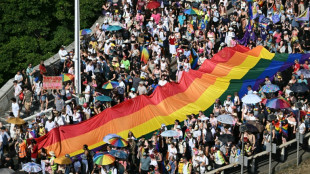 Hungary cuts anti-LGBTQ legislation from Orban-era law
-
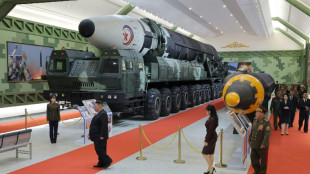
Hypersonic weapons highlight arms race on the Korean peninsula
-
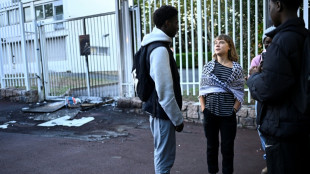 'Our future is being robbed': Greta Thunberg joins France student protests
-
Fiji appoint ex-Springboks boss White as coach ahead of World Cup
-
 Late superstar Anita Mui's ashes missing in Hong Kong
-
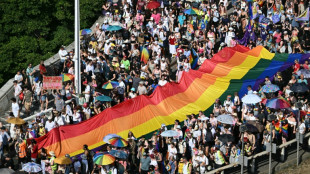
Hungary to reverse Orban-era anti-LGBTQ legislation
-
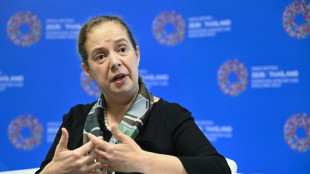 'No choice': IMF says developing countries must cut spending despite war shock
-
Allen rushes Bills to thrilling 37-34 win over Rams

-
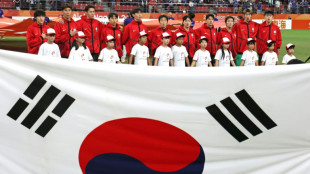 Boasting South Korea footballers spark rethink of military service exemptions
-
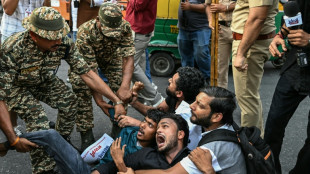
India youth shift tactics as police clamp down on election protest
-
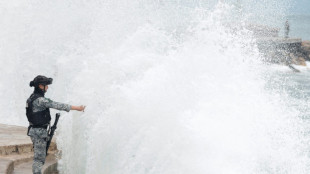 Five dead as Hurricane Simon, Rachel pummel Mexico's Pacific coast
-
Malaysia's Firefly extends flight cancellations due to haze
-
 Seoul, Tokyo stocks plunge as Asia suffers fresh tech rout
-
IMF upgrades 2026 growth forecast but warns of 'split' outlook
-
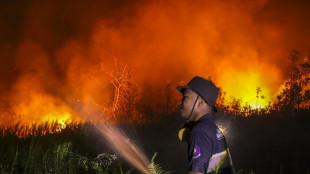 Damaged and drained, Indonesia's peatlands go up in smoke
-
Infantino could pull off 'Houdini' act as critics struggle for candidate
-
 Dominant Australia wary of Pacific threat at Rugby League World Cup
-
France braces for fresh nationwide student demonstrations
-
 Pope to be admitted to hospital for lung operation
-
Ahead of Israel vote, desert town becomes frontline against ultra-Orthodox expansion
-
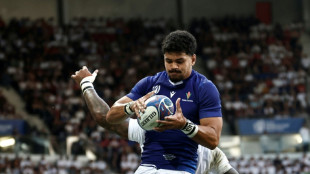 Samoa's McFarland welcomes 'massive' arrival of ex-All Blacks for World Cup run-in
-
El Nino Watch: the impacts around the world this week
-
 Brewers beat Dodgers 7-4 to extend MLB playoff lead
-
Man City, PSG clash at contrasting time for state-backed projects

-
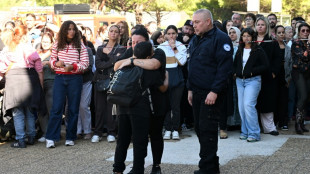 Teenager shoots headmaster, teacher at French school
-
Akkodis Brings Multilingual Intelligence to Mercedes-AMG PETRONAS Formula One Team races

-
 Caledonia Files NI 43-101 Technical Reports on SEDAR+ Supporting August 28, 2026 Mineral Resource Announcements
-
InterContinental Hotels Group PLC Announces Transaction in Own Shares - October 13
-
 BioChromato Supports U.S. Market Expansion with Bioz Badges and Globally Published Research
-
DataMEDS SI Provides Business Update On CLIA Lab Helomics And Its Super Intelligence Predictive Oncology Division
-
 RAEK Secures 26 SI Domains to Support Its Vision for the Super Intelligence Economy
-
Gabe Vigh: The Chief Legal Officer Driving Razavi Law Group's Legal Strategy

-
 CoTec Holdings Corp. Notes EU Strategic Project Designation for HyproMag GmbH
-
Bluejay Achieves Toray Contractual Manufacturing Milestone, Advancing Supply-Chain Resilience and Commercialization Readiness
-
 INEO Reports 47% Fiscal 2026 Revenue Growth as Q4 Revenue Reaches Record $1.03 Million
-
Melbourne imam denies links to suspected flydubai hijacker
-
 'Breaking Bad' actor RJ Mitte dead: representatives
-
Coventry crush Newcastle to climb out of relegation zone

-
 Former DR Congo president Kabila forms new force with M23 armed group
-
'Devastating' waves leave California beach homes on brink of collapse
-
 Tom Cruise's 'Digger' tanks, leaving studio with $250 mn hole
-
Meta says its new AI models on par with OpenAI, Anthropic
Ex-leader ahead as Costa Ricans elect new president
Costa Ricans voted for a new president Sunday from a crowded field of candidates, with a center-left former leader ahead of the pack with about 60 percent of ballots counted in one of Latin America's stablest democracies.
Twelve hours of voting closed at 6 pm (midnight GMT) in what is frequently rated the region's "happiest" country, a tourist mecca and a leading green economy.
However, polls show unemployment, corruption and creeping living costs topping the concerns of 3.5 million eligible voters in the country of five million people.
Jose Maria Figueres, 67, of the center-left National Liberation Party (PLN), had roughly 27 percent of the vote with 63 percent of ballots counted, the Supreme Electoral Tribunal said.
To win in the first round, one candidate must take 40 percent of the vote -- otherwise the two leading contenders will face each other in an April 3 run-off.
The eventual winner will be expected to tackle a worsening economy where unemployment has been steadily rising for more than a decade and reached 14.4 percent in 2021.
The poverty rate stood at 23 percent last year while the public debt was 70 percent of GDP.
Costa Rica's problems have worsened with the coronavirus pandemic dealing a hard blow to its critical tourism sector.
On Sunday, Figueres, who led the country from 1994 to 1998, condemned the levels of poverty as well as housing shortages.
"We have never experienced these things in this magnitude," he said.
For Francisco Zeledon, the first voter in line at one polling station, "voting is the most important weapon we have to solve problems."
"We have to solve poverty and create jobs for people," the 35-year-old said.
Polls have showed about a third of voters are undecided, faced with a choice of 25 presidential candidates.
But one outcome looked likely: the ruling Citizens' Action Party (PAC) appeared set for a bruising defeat with anti-government sentiment sky-high.
- Record unpopularity -
"The ruling party is completely weakened and has no chance" after two successive terms in office, said political analyst Eugenia Aguirre.
"The presidential unpopularity figure of 72 percent is the highest since the number was first recorded in 2013," she added.
This means the country's traditional political heavyweights -- the PLN and the Social Christian Unity Party -- could return to the fore after decades of a near political duopoly only recently broken by the PAC.
With results trickling in around 0600 GMT, second place remained closely contested between the economist Rodrigo Chaves (16 percent) and conservative evangelical preacher Fabricio Alvarado Munoz (15 percent).
Munoz commands support from the evangelical community, which makes up about 20 percent of Costa Rica's population.
Meanwhile, center-right Lineth Saborio of the PUSC garnered 12 percent.
Presidents in Costa Rica cannot seek immediate re-election, leaving incumbent Carlos Alvarado Quesada out of the running.
- Problems 'worsened' -
Costa Rica is known for its eco-tourism and green policies, with its energy grid run entirely on renewable sources.
Unlike many of its volatile Central American neighbors, Costa Rica has no army, has had no armed conflicts since 1948 and no dictator since 1919.
But the worsening economic situation has hit confidence in the political class.
Voters under 40 have only known "periods in which not only problems have not been resolved, but they have worsened," university student Edgardo Soto, an undecided voter, told AFP.
Apathy and abstentionism are features of Costa Rican elections.
In 2018, 34 percent of voters stayed away, though participation is technically obligatory.
Eugenia Zamora, president of Costa Rica's electoral tribunal, said Sunday's vote kicked off with high turnout in the morning, and proceeded without incident.
"This is a country with a robust democracy... It offers lessons for other countries," added Isabel de Saint Malo, head of the Organization of American States observer mission.
Outgoing president Alvarado said the vote was an affirmation of Costa Rica's place among "the world's strongest democracies."
Costa Ricans also cast their vote Sunday for the 57-member Congress.
"I hope that whoever wins really thinks of the people," said 77-year-old Mayra Sanchez after voting in Moravia, "and not of themselves."
M.O.Allen--AT