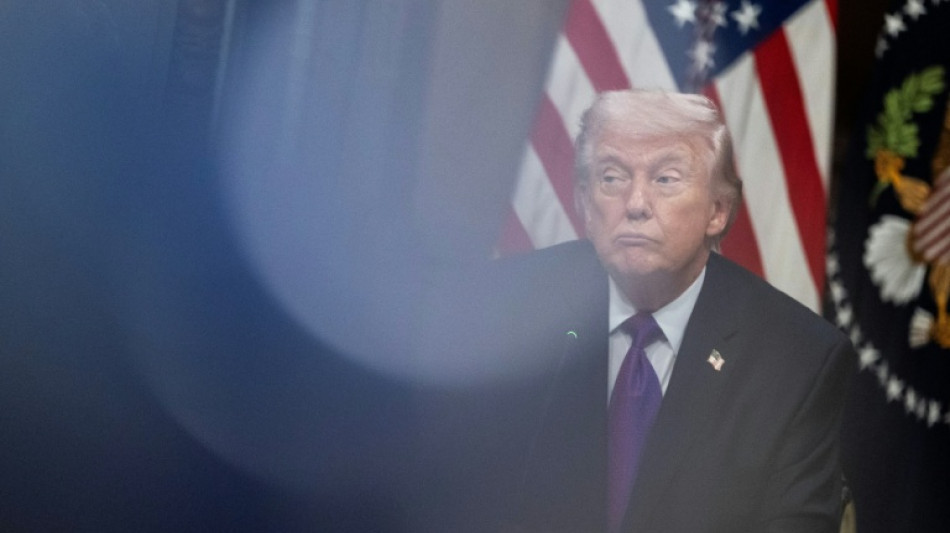
Vibes war? Trump pitches Iran conflict on 'feeling' / Photo: ANDREW CABALLERO-REYNOLDS - AFP/File

 Guehi insists players have 'trust and belief' in Man City after charges
 UN climate panel head wants swift end to deadlock over key scientific report
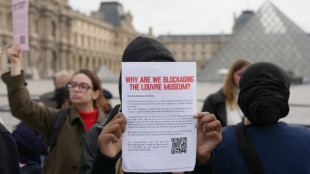 PM calls for curfews in France as govt grapples with unrest
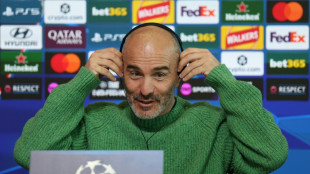 Man City's Semenyo out for up to eight weeks

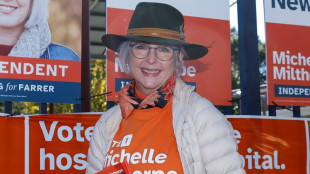 Australian lawmaker critically hurt in 'violent' vehicle attack

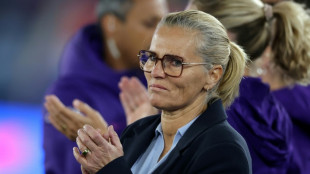 England women's coach Wiegman signs two-year contract extension

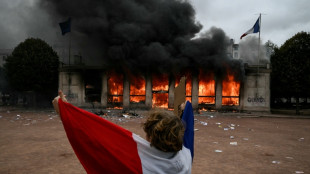 Louvre blocked as France grapples with unrest
 Bollywood actor Tiger Shroff shot at in Mumbai, three suspects held: police
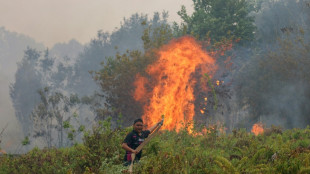
 UN biodiversity summit opens with nature goals off track
 'Physical hell': Hong Kong hosts gruelling underwater hockey tournament
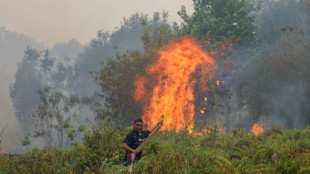
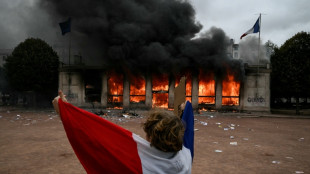 Police 'lost control' during French protests, says interior minister

 Australia's new Ghost Shark submarines grow some 'teeth'

 'I call it a bribe': Pennsylvania residents spurn $10,000 data center checks

 In a former US steel city, ordinary people struggle to get by

 'Liar,' 'clown': Lula and Bolsonaro spar in Brazil poll debate
 Record El Nino? Depends who's counting

 On the front line of ocean conservation off Portugal's Madeira

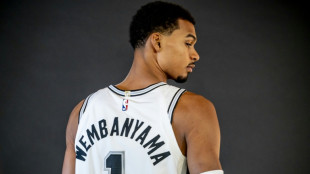 Wembanyama targets title breakthrough as NBA season tips off

 With LeBron on board it's title or bust for Philly fans
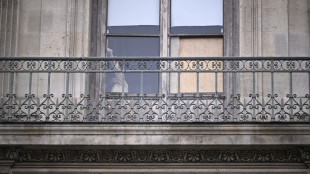 One year after Louvre heist, where are the missing jewels?
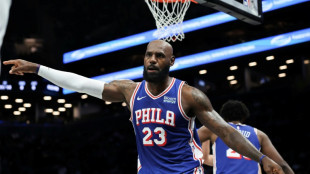
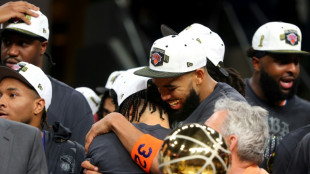 Knicks face tall task in NBA championship repeat bid
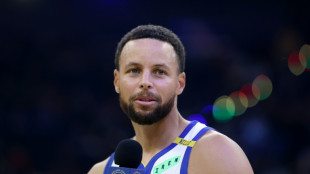 Warriors' Curry 'fine' after limping out of practice - Kerr

 INEO Announces Preliminary Q1 Fiscal 2027 Revenue of More Than $1.3 Million and Adjusted EBITDA Near Break-Even

 HyProMag USA Deploys Mobile Inserma System, Extending Hard Disk Drive Processing to Customer Sites Across the United States

 Mako Mining Announces Q3 2026 Production Results with Gold Recovered of 12,743 oz Au (Sales of 11,581 oz Au), and Positive Permitting Updates at Mt. Hamilton and San Albino

Donald Trump has plunged the United States into its most significant conflict in decades over a "feeling." It's not his political opponents saying this, but the White House itself.
Throughout the first week of the war with Iran, the US president has prioritized impulse and emotion over explanations and reasoning.
"I hope you're impressed," Trump, a former reality TV host, told an ABC News reporter on Thursday. "How do you like the performance?"
Official government accounts are posting clips on social media that present the military operation like a video game, often with sharp captions that would suit a blockbuster war film.
"This could be the first war ever launched based on vibes," joked American comedian and talk show host Jimmy Fallon this week.
Journalists on Wednesday bombarded White House press secretary Karoline Leavitt with questions about what motivated US military intervention -- which Trump oversaw from his luxury Mar-a-Lago residence in Florida.
She replied that the president had acted because he "had a good feeling that the Iranian regime was going to strike United States assets and our personnel in the region."
- 'Incoherent, immoral, arrogant' -
Experts said the Trump administration has taken a new approach in how it has sought to justify and communicate the military action to the public.
Sean Aday, a public relations professor at George Washington University, said he has "never seen worse messaging in wartime from a US administration."
"It's been a combination of incoherent, immoral, arrogant, amateurish, and at times trafficked in outright fabrication," he told AFP.
Aday contrasted it with ex-president George W. Bush's attempts to justify the 2003 US invasion of Iraq, whose administration spent "nearly a year and a half trying to persuade the public it was necessary."
Richard Haass, a former US diplomat, pointed to how Trump has largely ignored formal national security processes, "having spent the better part of the last year hollowing out the national security apparatus."
The National Security Council, a body that helps the president shape his diplomatic and military strategy, has been significantly downsized since Trump returned to power in January 2025.
Marco Rubio now combines the roles of secretary of state and national security adviser -- positions that were previously separate.
- Contradictory comments -
Trump has been vague about both the reason for entering a war with Iran and the objectives being pursued.
Instead of holding press conferences he has given several short phone interviews with reporters, producing a mosaic of contradictory comments.
And while his cabinet members state Washington is not seeking regime change, the US president has insisted that he should be involved in choosing Iran's next supreme leader after the killing of Ayatollah Ali Khamenei.
Trump has also brushed aside economic concerns from the conflict which has driven up the price of gasoline -- a potential vulnerability for his Republican party ahead of midterm elections this year.
A poll released Wednesday by NBC shows that 52 percent of US voters oppose the military action in Iran.
By contrast, the start of the war in Afghanistan in 2001 was met with strong approval, and the public initially supported the offensive launched in Iraq.
But on both Afghanistan and Iraq, negative opinions grew as the conflicts dragged on.
D.Johnson--AT