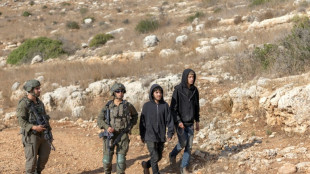
Mideast war enters 'next phase' as strikes hit Iran, Lebanon / Photo: - - AFP

 Guehi insists players have 'trust and belief' in Man City after charges
 UN climate panel head wants swift end to deadlock over key scientific report
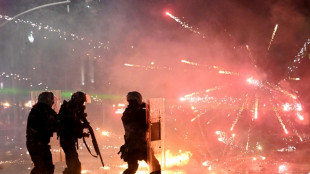
 PM calls for curfews in France as govt grapples with unrest
 Man City's Semenyo out for up to eight weeks

 Australian lawmaker critically hurt in 'violent' vehicle attack

 England women's coach Wiegman signs two-year contract extension
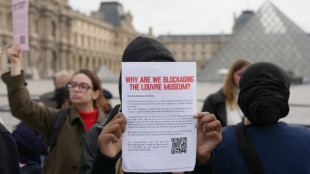
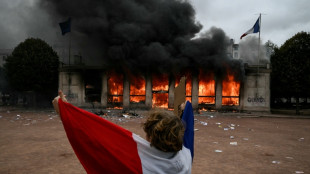 Louvre blocked as France grapples with unrest
 Bollywood actor Tiger Shroff shot at in Mumbai, three suspects held: police
 UN biodiversity summit opens with nature goals off track

 'Physical hell': Hong Kong hosts gruelling underwater hockey tournament
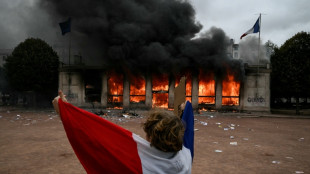 Police 'lost control' during French protests, says interior minister

 Australia's new Ghost Shark submarines grow some 'teeth'

 'I call it a bribe': Pennsylvania residents spurn $10,000 data center checks

 In a former US steel city, ordinary people struggle to get by

 'Liar,' 'clown': Lula and Bolsonaro spar in Brazil poll debate
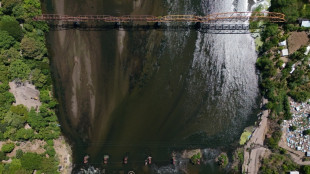 Record El Nino? Depends who's counting
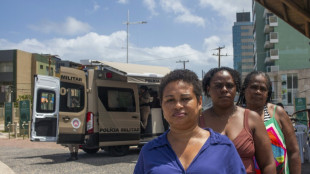
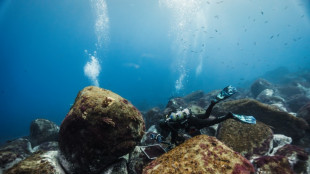 On the front line of ocean conservation off Portugal's Madeira

 Wembanyama targets title breakthrough as NBA season tips off

 With LeBron on board it's title or bust for Philly fans
 One year after Louvre heist, where are the missing jewels?

 Knicks face tall task in NBA championship repeat bid

 Warriors' Curry 'fine' after limping out of practice - Kerr
 INEO Announces Preliminary Q1 Fiscal 2027 Revenue of More Than $1.3 Million and Adjusted EBITDA Near Break-Even

 HyProMag USA Deploys Mobile Inserma System, Extending Hard Disk Drive Processing to Customer Sites Across the United States

 Mako Mining Announces Q3 2026 Production Results with Gold Recovered of 12,743 oz Au (Sales of 11,581 oz Au), and Positive Permitting Updates at Mt. Hamilton and San Albino

Fresh strikes rocked Iran and Lebanon on Friday, as Israel vowed to escalate to a new phase in the Middle East war that has spiralled rapidly throughout the region and beyond.
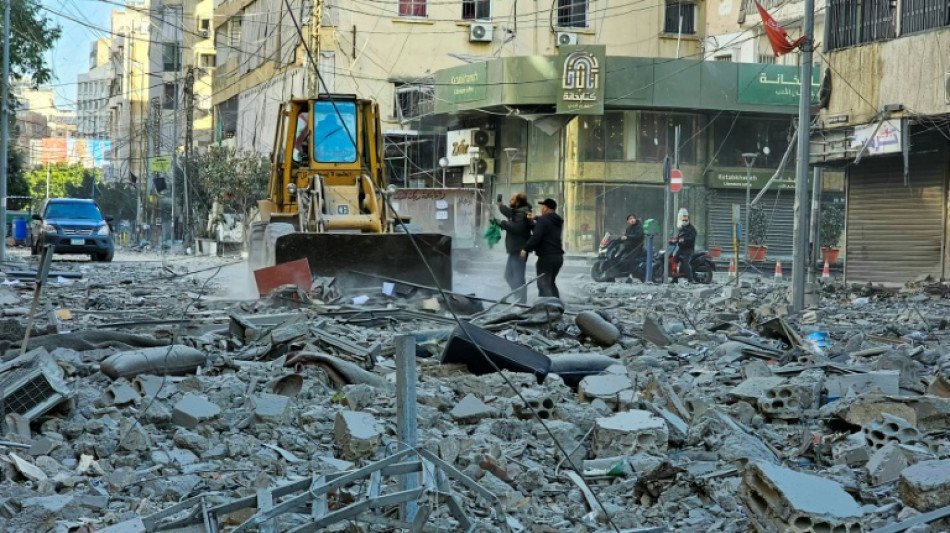
AFPTV images from Beirut's southern suburbs showed mangled buildings and burned-out vehicles after heavy Israeli bombing overnight, with tens of thousands fleeing the destruction.
The war, now entering its seventh day, has dragged in global powers, upended the world's energy and transport sectors, and brought chaos to even usually peaceful areas of the volatile region.
Powerful explosions shattered the skies above Iran's capital Tehran early Friday as Israel said it was striking "regime infrastructure" in the city.
Internet coverage is running at about one percent, according to monitor group Netblocks, limiting information about the impact of the war on ordinary Iranians.
In Tehran, the war has emptied the usually traffic-jammed streets but residents told AFP that security forces are keeping a tight grip on the population.
The powerful Islamic Revolutionary Guard Corps (IRGC) "has closed almost every main street with armed personnel and heavy machine guns to frighten people", a 30-year-old Tehran resident told AFP from Paris.
"The people are the real enemy in their eyes, not the Americans. Their extremists say first you have to deal with the enemy at home."
Friday morning's strikes on Tehran followed warnings from Israel and the US they were stepping up their attacks, first launched on Saturday in a barrage that killed Iran's supreme leader Ayatollah Ali Khamenei.
"We are now moving to the next phase of the operation," Israel's military chief Lieutenant General Eyal Zamir said in a televised statement.
"We have additional surprises ahead which I do not intend to disclose," he added.
US Defence Secretary Pete Hegseth also announced "firepower over Iran and over Tehran is about to surge dramatically".
President Donald Trump said it would be a "waste of time" currently to send ground troops into Iran, but has insisted he would "have to be involved" in choosing Iran's next leader.
According to Iran's health ministry, US and Israeli strikes on the country have killed 926 people, a number AFP could not independently verify.
Iran has launched missile and drone attacks at Israel and the Gulf since the war began. In Israel, at least 10 people have been killed, according to first responders there.
The US military has reported the deaths of six of its personnel since the war began Saturday.
- 'We were humiliated' -
The conflict has drawn in Israel's neighbour Lebanon after militant group Hezbollah launched missiles in support of its backer Iran.
Israel struck several towns in the south of the country overnight, with widespread destruction in the southern Beirut suburbs, considered a Hezbollah stronghold and home to an estimated 600,000 to 800,000 people.
AFP correspondents on the ground saw scenes of panic and terror as residents fled en masse after an unprecedented Israeli order to evacuate immediately if they wanted to save their lives.
Hundreds of families milled around on Beirut's Ramlet al-Baida beach, left with nowhere to go.
"We fled from the suburbs, we were humiliated," one man told AFP, declining to give his name.
"We'll sleep on the road tonight and God alone knows what will happen to us."
Israel's military chief Zamir has ordered troops to expand the area under his army's control in southern Lebanon, whose health ministry said 123 had been killed in strikes.
Iran has kept up its attacks on Israel, with a volley of missiles aimed at Tel Aviv while rocket trails also lit up the sky in Netanya, further north.
- 'Volatility remains elevated' -
The war has not spared the rich countries of the Gulf, formerly seen as a tourist hot spot and rare Middle East safe haven.
Qatar intercepted a drone attack on a US air base on its territory early Friday, while Saudi Arabia shot down three drones east of its capital Riyadh.
Thirteen people, seven of them civilians, have been killed in Gulf countries since the war began, including an 11-year-old girl in Kuwait.
The conflict has expanded as far afield as the Sri Lankan coast, where a US submarine torpedoed an Iranian frigate, and Azerbaijan, which threatened retaliation after a drone hit an airport.
Nations have scrambled to repatriate holidaymakers caught up in the fighting with air traffic severely limited as missiles and drones dominate the skies above the region.
The Gulf region's reputation as a paradise for influencers and luxury tourism has taken a battering as Iranian missiles have struck hotels and residential buildings.
"Unless the war ends soon -- and if anything a more intense conflict seems more likely -- markets will struggle," said IG chief market analyst Chris Beauchamp.
"Volatility remains elevated... but a continued decline for the moment seems likely."
burs-ric/ser
L.Adams--AT