Could the US-Israel war on Iran drag on? / Photo: ATTA KENARE - AFP

 Ronaldo handed 30-day suspension: Portuguese federation
 France announces curfews as government grapples with unrest

 Boland sets pace as South Africa struggle
 Ukraine on back foot as Kremlin moots US, China meeting
 'Stay home!': Tourists find themselves in a France convulsed by protests

 Kenyan cult leader guilty on all charges over 191 starvation deaths

 Eagles star Hurts to miss rest of NFL season: reports
 Oil-rich Alberta votes on Canada breakup

 Israel announces arrests after West Bank settler attacks on Westerners
 Guehi insists players have 'trust and belief' in Man City after charges
 UN climate panel head wants swift end to deadlock over key scientific report
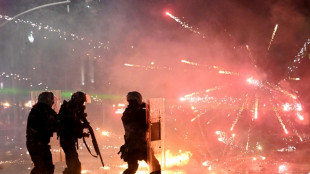
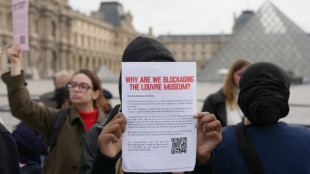 PM calls for curfews in France as govt grapples with unrest
 Man City's Semenyo out for up to eight weeks

 Australian lawmaker critically hurt in 'violent' vehicle attack

 England women's coach Wiegman signs two-year contract extension
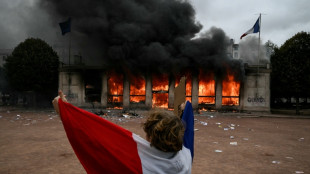 Louvre blocked as France grapples with unrest
 Bollywood actor Tiger Shroff shot at in Mumbai, three suspects held: police
 UN biodiversity summit opens with nature goals off track

 'Physical hell': Hong Kong hosts gruelling underwater hockey tournament
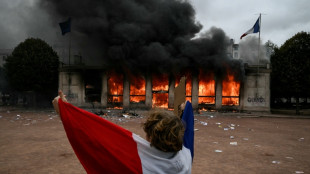 Police 'lost control' during French protests, says interior minister

 Australia's new Ghost Shark submarines grow some 'teeth'

 'I call it a bribe': Pennsylvania residents spurn $10,000 data center checks

 In a former US steel city, ordinary people struggle to get by

 'Liar,' 'clown': Lula and Bolsonaro spar in Brazil poll debate
 Record El Nino? Depends who's counting

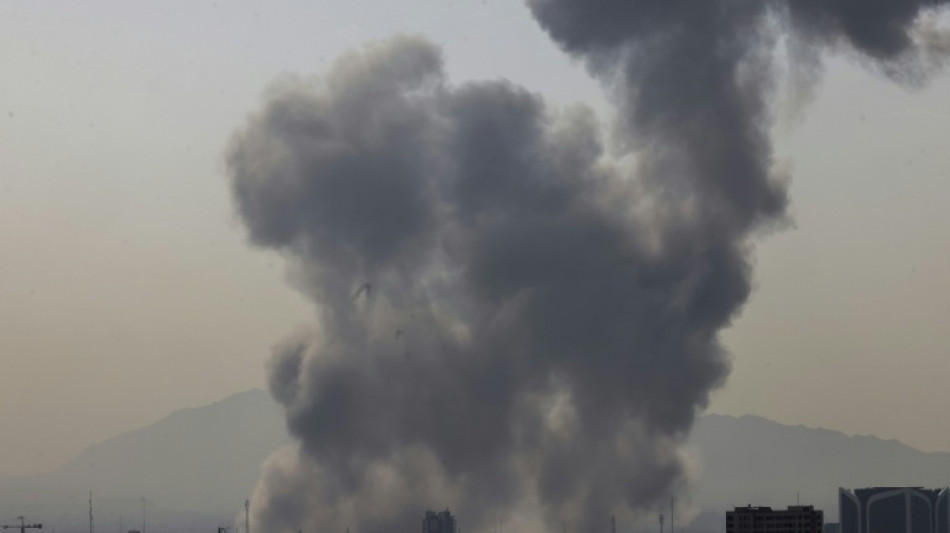
The US-Israeli strikes launched on Iran Saturday could become an extended operation, with strategic goals both multiple and complex -- aiming to decapitate the Islamic republic and eviscerate its security capabilities.
In the 12-day war in June last year, the Israelis, backed by the Americans, carried out targeted strikes aimed at destroying key Iranian nuclear sites.
This time "we are embarking on an operation that is unfolding on a completely different scale, more complex and more complicated" than in June, Israel's army chief Lieutenant General Eyal Zamir warned.
Iran's Foreign Minister Abbas Araghchi said US and Israeli installations involved in the operation were "legitimate targets" -- before Iran's state televison announced a new wave of missiles had been fired at US bases in the Gulf.
"We are in a large-scale military campaign that, in my opinion, is going to last several days, or even several weeks," said David Khalfa, co-founder of the Atlantic Middle East Forum research centre.
- 'Existential' phase -
He described the attacks as a "multi-domain offensive" aimed "both at disrupting the regime's chain of command, shaking the repressive apparatus at its foundations, and provoking at the very least an internal transition, if not outright regime change".
The joint US-Israeli strikes targeted Iran's Supreme Leader Ali Khamenei -- still alive, according to Tehran -- as well as the chief of staff and head of the Revolutionary Guards, the regime's ideological army.
On top of that, there have been strikes on Iran's ballistic missile programme.
"This is an all-out decapitation campaign and an effort to wear down Iran's capabilities," Khalfa told AFP.
"It is a direct blow to the state's security architecture and governing apparatus," said Sanam Vakil, director of the Middle East and North Africa programme at British think tank Chatham House.
"This new stage of conflict is existential and clearly about regime survival. It is also unlikely to end quickly."
Araghchi appeared to be dampening down an escalation by announcing on US television that he had explained to Gulf capitals that Tehran had "no intention of attacking them" but was targeting US bases on their soil "as an act of self-defence".
Although there is currently no communication with Washington, "if the Americans want to talk to us, they know how they can contact me," the Iranian minister said, adding he was "clearly interested in de-escalation".
- Potential conflagration -
According to Khalfa however, the Iranians are already "in horizontal escalation".
At a moment when the regime's survival is at stake, "they are prepared to regionalise the conflict by targeting American bases in the Arabian-Persian Gulf and by striking Israel as well", he argued.
The danger is that Arab countries "might decide to allow the Americans to launch strikes from their bases, or even join the fray themselves because they consider that the Iranian regime has crossed red lines by attacking them on a massive scale," said Khalfa.
At the same time, Iran's proxies could also push for a regional escalation that would prolong the conflict.
Lebanon's Hezbollah has already called on Saturday for "the states and peoples of the region" to oppose the "aggression" on Iran.
Washington itself "risks being drawn into a new conflict in the Middle East with no clear way out", said Brandan Buck, a researcher at the Washington-based Cato Institute.
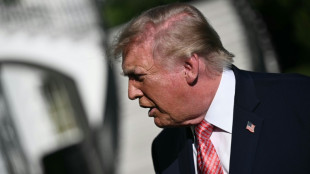
President Donald Trump "is repeating the same pattern of strategic self-delusion that trapped his predecessors, promising limited action while paving the way for a protracted conflict", he said.
W.Moreno--AT