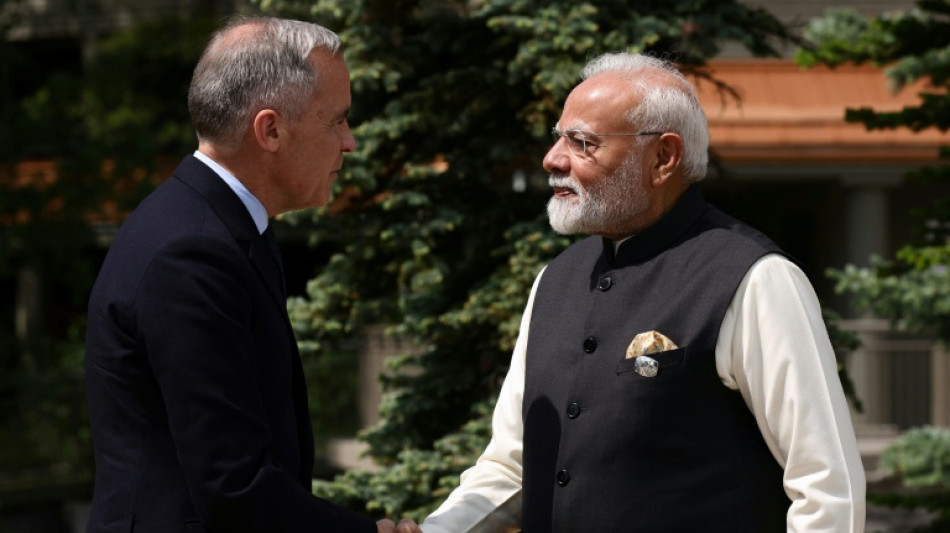
Carney on route to Asia to promote Canada trade as US ties falter / Photo: Teresa SUAREZ - POOL/AFP

 US to auction deep sea mining leases off American Samoa

 Australian lawmaker hurt in car attack underwent surgery overnight: PM
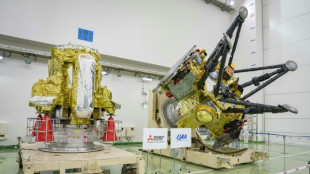 Japan launches rocket for potential world first Mars moon mission

 Ethiopia PM warns Eritrea of 'severe consequences' if supports enemies

 Boland grabs opportunity for Australia as South Africa struggle in second Test

 Ronaldo handed 30-day suspension: Portuguese federation
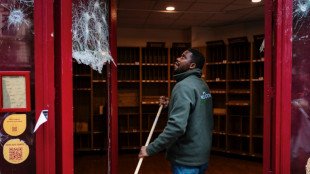 France announces curfews as government grapples with unrest
 Boland sets pace as South Africa struggle
 Ukraine on back foot as Kremlin moots US, China meeting
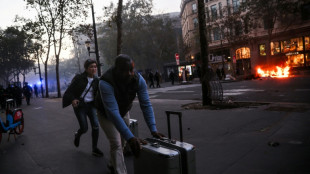 'Stay home!': Tourists find themselves in a France convulsed by protests

 Kenyan cult leader guilty on all charges over 191 starvation deaths
 Eagles star Hurts to miss rest of NFL season: reports
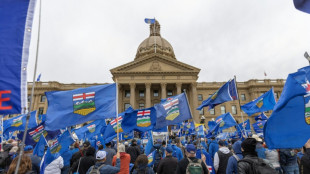 Oil-rich Alberta votes on Canada breakup

 Israel announces arrests after West Bank settler attacks on Westerners
 Guehi insists players have 'trust and belief' in Man City after charges
 UN climate panel head wants swift end to deadlock over key scientific report
 PM calls for curfews in France as govt grapples with unrest
 Man City's Semenyo out for up to eight weeks

 Australian lawmaker critically hurt in 'violent' vehicle attack
 England women's coach Wiegman signs two-year contract extension
 Louvre blocked as France grapples with unrest

 Bollywood actor Tiger Shroff shot at in Mumbai, three suspects held: police
 UN biodiversity summit opens with nature goals off track

 'Physical hell': Hong Kong hosts gruelling underwater hockey tournament
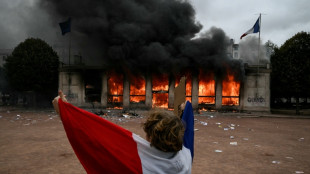 Police 'lost control' during French protests, says interior minister
Canadian Prime Minister Mark Carney was flying to Asia on Thursday for a three-country tour with a first stop in India, where he hopes to double trade to offset the damage of his country's fracturing relations with the United States.
Carney's India visit marks the latest effort to reset bilateral ties that effectively collapsed after Ottawa accused New Delhi of orchestrating a deadly campaign against Sikh activists on Canadian territory.
For Carney, the trip that includes stops in Australia and Japan is part of a broad effort to pivot the Canadian economy away from excessive reliance on its southern neighbor.
In 2024, before US President Donald Trump returned to office and upended global trade through a flurry of tariffs, more than 75 percent of Canadian exports went to the United States. Two-way trade that year exceeded $900 billion.
So far Trump broadly adhered to the North American free trade agreement he signed during his first term and about 85 percent of US-Canada trade remains tariff-free.
But at the same time, he also imposed painful industry-specific tariffs and there are fears that if he scraps the broader trade deal, the Canadian economy will be hit hard.
Carney has made boosting commerce with Europe and Asia cornerstones of his strategy to backstop Canada's economy, should free trade with Washington collapse.
University of Toronto public policy expert Drew Fagan said Carney was wise to pursue other markets, calling for a strategy that seeks to do "more elsewhere, when there's an opportunity."
The prime minister has said he wants to more than double two-way trade with India by 2030, eyeing a target of Can$70 billion ($51 billion) by 2030.
Fagan cautioned that progress with countries like India cannot mitigate the damage of a US rupture.
"It's not a solution. It's not a replacement and it never will be," Fagan told AFP.
- Transnational repression -
Carney left Ottawa on Thursday morning en route to Mumbai.
He is expected to meet with business groups in the Indian city over the weekend before heading to New Delhi for talks with Prime Minister Narendra Modi, a meeting that will be closely watched.
Before Carney took office last year, Ottawa accused Modi's government of direct involvement in the 2023 killing of Hardeep Singh Nijjar, a naturalized Canadian citizen who advocated for an independent Sikh state called Khalistan.
Former prime minister Justin Trudeau's government further charged India with directing a campaign of intimidation against Sikh activists across Canada.
India has denied those allegations.
Canadian Foreign Minister Anita Anand was asked Monday if Canadian concerns about transnational repression would feature at the New Delhi talks.
"Yes, that is always at the forefront of our minds," Anand told reporters in Ottawa.
Carney's hopes for trade growth with Australia and Japan are more modest, but his office said cooperation over critical mineral supply chains will be a priority.
Advanced economies have made a push to deepen critical mineral cooperation, especially in the processing of rare earth elements essential to power many high-tech products.
China currently has dominant control of rare earth supply chains, a concern that Canada highlighted throughout its just-concluded G7 presidency.
T.Wright--AT