AI summit statement delayed to 'maximise' signatories: India / Photo: Stephane LEMOUTON - POOL/AFP

 Ukraine claims US missile holdup ahead of reported talks
 Niners hold off Commanders to stay perfect in NFL

 Tech firms bear brunt of selling as Asian stocks drop

 Reese scores 30 as Dream stun Valkyries to level WNBA finals
 Horror and disbelief after lawmaker attacked in rural Australia
 Ukraine races to secure energy supplies ahead of winter

 Vote count begins in Alberta secession referedum, testing Canada unity

 How to Use an Allowance to Teach Money Skills

 Ukraine claims US missile holdup as Trump floats summit without Zelensky

 Detained Suu Kyi receives UK royal package: Myanmar govt

 Japan successfully launches probe in historic Mars moon mission

 US to auction deep sea mining leases off American Samoa

 Australian lawmaker hurt in car attack underwent surgery overnight: PM
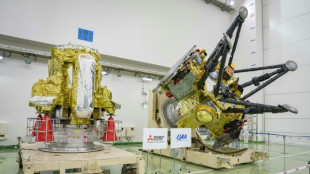 Japan launches rocket for potential world first Mars moon mission

 Ethiopia PM warns Eritrea of 'severe consequences' if supports enemies

 Boland grabs opportunity for Australia as South Africa struggle in second Test

 Ronaldo handed 30-day suspension: Portuguese federation
 France announces curfews as government grapples with unrest
 Boland sets pace as South Africa struggle
 Ukraine on back foot as Kremlin moots US, China meeting

 'Stay home!': Tourists find themselves in a France convulsed by protests

 Kenyan cult leader guilty on all charges over 191 starvation deaths

 Eagles star Hurts to miss rest of NFL season: reports
 Oil-rich Alberta votes on Canada breakup

 Israel announces arrests after West Bank settler attacks on Westerners
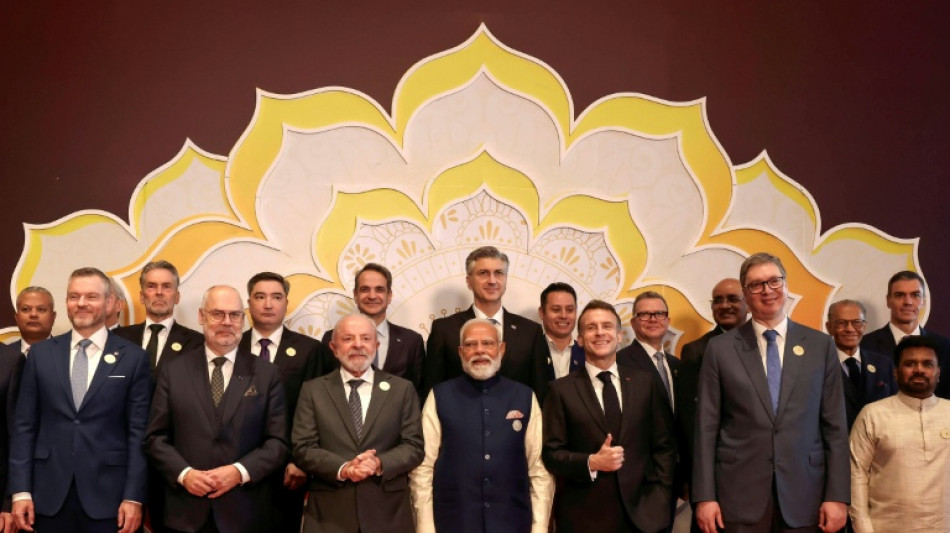
Dozens of national delegations at an artificial intelligence summit in India will issue their statement on how the world should handle the technology on Saturday, a day later than expected, the host country said.
"There is huge consensus on the declaration. We are just trying to maximise the number," India's IT minister Ashwini Vaishnaw told reporters at the AI Impact Summit in New Delhi on Friday.
"The declaration and its contours will be shared transparently tomorrow," he said, adding it had more than 70 signatories so far but he hoped the figure would cross 80.
Vaishnaw declined to give details of what the statement would say as he thanked participants of this week's event that was attended by tens of thousands of people, including world leaders and tech CEOs.
The summit was the fourth annual international meeting to discuss the implications of fast-evolving AI technology, and the first hosted by a developing country.
Some visitors had complained of poor organisation, including chaotic entry and exit points, at the vast summit and expo site.
Police detained on Friday a group claiming to be from the youth wing of the opposition Congress party who staged a shirtless protest against Prime Minister Narendra Modi inside the venue.
Hot topics at the summit included the societal benefits of multilingual AI translation, the threat of job disruption and the heavy electricity consumption of data centres.
But analysts said that the broad focus, and vague promises made at its previous editions in France, South Korea and Britain, would make concrete commitments unlikely.
- 'Less hype, less fear' -
The next AI summit will take place in Geneva in 2027.
In the meantime, a UN panel on AI would start work towards "science-led governance", the global body's chief Antonio Guterres said Friday.
"We are barrelling into the unknown," he said. "The message is simple: less hype, less fear. More facts and evidence."
The UN General Assembly has confirmed 40 members for a group called the Independent International Scientific Panel on Artificial Intelligence, Guterres said.
It was created in August, aiming to be to AI what the UN's Intergovernmental Panel on Climate Change (IPCC) is to global environmental policy.
However, the head of the US delegation warned against centralised control of generative AI, highlighting the difficulties of reaching a consensus.
"As the Trump administration has now said many times: We totally reject global governance of AI," White House technology adviser Michael Kratsios said at the Delhi summit.
The United States did not sign last year's summit statement, and it released its own bilateral declaration with India on Friday.
The two countries agreed to "pursue a global approach to AI that is unapologetically friendly to entrepreneurship and innovation".
India has used the summit to push its ambition to catch up with the United States and China in the AI field, including through large-scale data centre construction, and new nuclear power plants to power them.
Delhi expects more than $200 billion in investments over the next two years, and US tech titans unveiled a raft of new deals and infrastructure projects in the country this week.
Sam Altman, head of ChatGPT maker OpenAI, has called for oversight on AI in the past but said last year that taking too tight an approach could hold the United States back.
"Centralisation of this technology, in one company or country, could lead to ruin," he told the summit on Thursday.
"This is not to suggest that we won't need any regulation or safeguards. We obviously do, urgently, like we have for other powerful technologies."
M.O.Allen--AT