Ukraine frontline town just wants 'peace and silence' / Photo: Anatolii Stepanov - AFP

 Middle East fuel crunch drives solar push in tiny Fiji
 Indian rappers use music to sound climate alarm

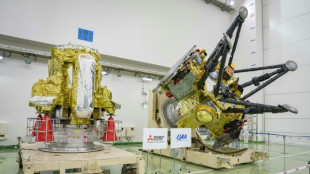
 Japan probe on its way to Mars moon
 Lula or Bolsonaro's son? Brazil makes a final choice
 EU unveils strategy to boost Arctic presence

 How recent controversies have rocked the US death penalty debate
 Adams facing long injury layoff as Rams' problems deepen
 US judge orders Saudi engineer held in OpenAI case
 Maddison sparkles as Spurs end Premier League winless run
 Maddison sparkles on Spurs return as win drought ends
 Trump says ready to meet with Putin and Xi in China
 The young lawmaker making Brazil's Lula 'king of the selfie'

 Christiane Amanpour to leave CNN after 43 years

 Ronaldo handed 30-day suspension after walking out on Portugal

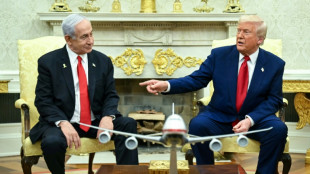 Netanyahu basks in Trump endorsement week before election
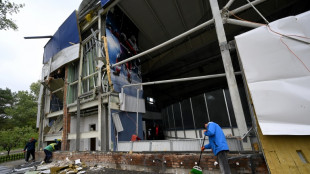
 Saudi airport closure disrupts life in kingdom's capital

 Ramaphosa tells South Africa to prepare for loss of US-Africa trade deal
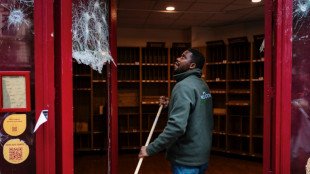
 France presses resale platforms to remove 'stolen' goods after unrest
 Yamal v PSG: Ballon d'Or backdrop to Champions League showdown

 Araujo says too soon to talk about permanent Liverpool move

 US wants to be 'strong partner' for central Asia: Rubio

 'Special' to face friend Perez in Champions League, says Liverpool's Iraola
 Monitor says Indonesia fires have burned nearly two million hectares

 French PM says could declare state of emergency over unrest 'if needed'
 Albanian PM warns of 'red line' after days of unrest
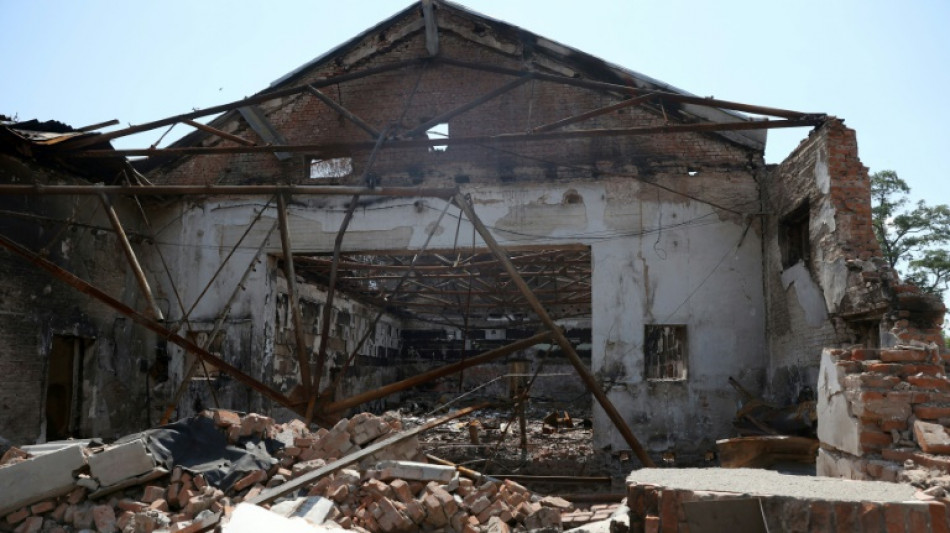
There is little left of Soledar. A church, a few food shops and an ironmonger in a basement.
Located right next to the front line, this mining town in eastern Ukraine's Donetsk region -- where several thousand people still live -- has been under constant shelling for more than three months.
The terrifying sounds of explosions break the silence at regular intervals in the now ghostly town, whose name translates as "Gift of Salt" after a giant salt mine on the outskirts.
The mine, managed by Ukrainian company Artemsol, normally produces millions of tons a year and is also a tourist attraction known for its "fairytale salt sculptures" according to the brochures.
Soledar, which had 15,000 inhabitants before the war, is also known for an underground sanatorium to treat pulmonary diseases.
That was before the invasion.
Soldar found itself on the path of Russian troops pushing to take over the Donetsk region and came under fire from both sides.
The mine, struck several times, is now closed.
Many inhabitants have fled. According to the local residents who have remained, there are only some 2,000 people left fending for themselves.
The houses along the main street are half destroyed or blackened by smoke.
The cultural centre has been destroyed and its ruins still smell of smoke. Papers can be seen scattered in the ruins and a phone handset lies on a desk.
"It happened on the night of July 9th to 10th. That night, a dozen missiles struck Soledar," said Tetyana, a woman walking past with her five-year-old daughter and 67-year-old mother.
The centre burned for several days with no firefighters to extinguish the flames.
"There are no more local authorities, no police, no doctors, no pharmacy. Everyone has left. We've been abandoned," Tetyana said.
- 'I can't leave them' -
Like an apparition, an elegant woman with short white hair walks along a deserted street with five cats.
Smiling but frightened, Lyudmyla explained that her husband is disabled and cannot move.
"And then there are the abandoned cats. I can't leave them," said the former schoolteacher, heading towards one of the few food shops left open.
The shop is supplied by volunteers who come twice a week, braving shelling and missile strikes.
Under the shop, in the basement, is a large ironmonger which has become a relatively safe meeting place for the town's inhabitants.
Residents come to buy gas canisters, nails, crockery and bed linen. It is one of the few places left where neighbours can interact.
Yury, the 59-year-old shopkeeper, who has a long grey ponytail and wears a baseball cap and overalls, leans on his walking stick behind the counter.
Despite everything, his eyes still sparkle.
"If I let myself get depressed, it's not good for my old bones," he said.
But his gaze darkens when he talks about his two grandchildren aged eight and 12 who still live in Soledar.
What do they do with their days? "They create stress," sighed the grandfather.
He said he keeps them busy by building a heating unit with zinc plates "to prepare for winter".
- 'We are not separatists!' -
Like in all the towns on east Ukraine's front line, those who stay cannot or do not want to evacuate.
"We just want to stay where we live. We are not separatists! Write this down -- we are not separatists!" Larysa, a former bank employee, leaning out from her balcony.
Regional authorities regularly urge people to evacuate and those that remain are often considered as harbouring pro-Moscow views and awaiting the arrival of Russian troops.
Sitting in front of her home, Liya Cherkashyna, 84, does not care about either side -- she just wants someone to fill five bottles of water for her from the town's one working pump.
Yesterday, someone promised to bring her water in exchange for a bottle of vodka which she does not have.
From her balcony, Larysa said: "We just want peace. And silence".
E.Flores--AT