'Killed without knowing why': Sudanese exiles relive Darfur's past / Photo: Joris Bolomey - AFP

 Ukraine's young figure skaters twizzle on despite Russian threat

 Asian football endorses Infantino re-election as FIFA president
 Complete Kane hopes for 'special night' as Ballon d'Or rumours swirl

 Rooney calls United squad 'selfish babies' after Fernandes criticism

 Teddy Wilson, son of World Cup-winner David, gets Wallabies call-up

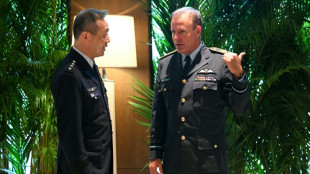 New Zealand military chief resigns over 'inappropriate relationship'

 Man Utd's Carrick on borrowed time, free-scoring Brighton face Liverpool
 Asian stocks head into weekend on a low as tech extends losses

 'Generational rage': Young Europeans fight to be heard

 Lula, Bolsonaro to clash once more before Brazil vote
 Dressed to kill: Haircuts cap menacing look of Japan's yakuza
 Napa Valley's wineries feel Trump's tariff squeeze

 Venezuela protests demand return of Nobel winning leader Machado
 Marquez tops incident-packed opening practice for Australian MotoGP

 New York votes to ban Central Park horse carriages after decades of debate

 What Does a Race-Ready Bike Actually Cost?

 Eylsia Nicolas Hits #1 in the United States as Her Multi‑Category Chart Sweep Extends Across Global All‑Genres and International Markets
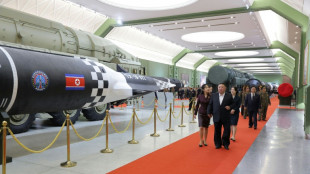
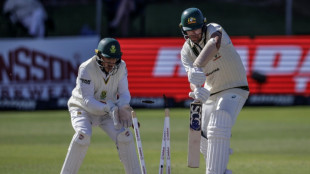 Australia face selection headaches after 'shambolic' South Africa defeat

 Around 150,000 rally in Belgrade as Serbia heads to pivotal poll

 Hamilton sets sights on racing in African grand prix
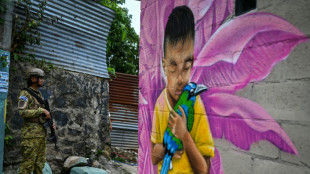
 Bournemouth hammer 10-man Milan, Juventus denied at the death

 Judge orders Trump to give deposition in BBC lawsuit by Dec 11

 'Fake' pollsters hit US midterms

 Global markets retreat as tech mood sours, oil prices jump

 Juventus denied at the death, Sunderland make point in Poland in Europa League

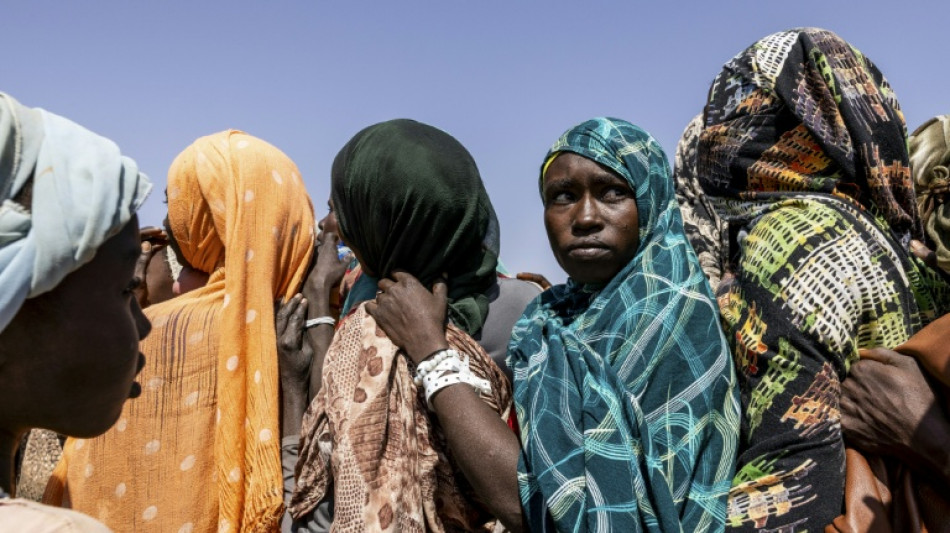
Decades after Darfur was the scene of some of the 21st century's worst atrocities, Sudanese exiles say the nightmare has returned as images of fresh bloodshed emerge from the region.
For the diaspora watching from afar, alleged crimes in El-Fasher -- the last army stronghold in Darfur before its fall to paramilitaries last month -- mirror the massacres that once shocked the world.
"Sometimes it's hard to believe it's happening again," said Abdullah Yasser Adam, a researcher from South Darfur's capital Nyala, who now lives in Cairo and uses a pseudonym for security reasons.
"People are being killed without knowing why. It feels like the end of the world."
Adam, 45, belongs to the Fur community, one of several non-Arab groups targeted between 2003 and 2008 in the western region when Omar al-Bashir's government armed Arab militias, the Janjaweed, to crush a rebellion.
He is among six million Sudanese living in exile, including four million who fled after war erupted in April 2023 between the army and the same fighters, now rebranded as the Rapid Support Forces.
Survivors of the RSF assault on El-Fasher described scenes Adam recognised instantly: summary executions, mass flight, and towns burned and emptied at gunpoint.
"Planes overhead, Janjaweed on camels and horses, vehicles on the ground," he said, recalling stories of survivors who staggered into Nyala in 2003.
"People were hunted like prey," he said. "They arrived on foot, many barefoot. Mothers carried children whose malnutrition you could see in their swollen bellies."
"Today, the attacks are the same," he added, "only with more advanced weapons."
- 'Same coin' -
The RSF is led by Mohamed Hamdan Daglo, known as Hemedti, who rose from camel trader to militia commander under Bashir.
Bashir's campaign in Darfur, framed as a counter-insurgency, became a devastating assault on non-Arab tribes demanding equality and political inclusion.
Sudanese-American poet Emtithal Mahmoud, who fled Darfur to the United States at four and returned in 2000 at age six, recalls seeing one of the early crackdowns in her hometown, El-Fasher.
"I remember us seeing the smoke rise from downtown," Mahmoud, 32, told AFP from Philadelphia.
"I hid underneath the bed that day with four other people. I could see the soldiers' boots coming in. And I saw our blood on their ankles," she said.
That war left 300,000 dead and 2.7 million displaced, according to the UN.
Bashir is wanted by the International Criminal Court on genocide charges.
Last week the UN Human Rights Council ordered investigators to probe recent alleged atrocities in El-Fasher.
After Bashir's fall in 2019, Hemedti recast himself as a statesman and army ally, analysts say, but disagreements over integrating the RSF into the military triggered the 2023 conflict.
For Mahmoud, the "Darfur genocide never ended".
"It became more complex politically, but the killing never stopped," she said.
Both sides, she argues, committed past atrocities.
The army "would carpet bomb our villages and the Janjaweed would" wait to kill survivors, she said.
"They would burn crops. They would throw bodies in wells. They would rape women and children."
Adam agreed that "they were two sides of the same coin."
Their roles may have shifted, but "the Sudanese people remain the victims," he said.
During the current war, the army faces accusations of indiscriminate air strikes and chemical weapons use, while the RSF is accused of executions, rape and looting.
- 'Worse than 2003' -
For Amar Salah Omar, a 34-year-old electrician from the Massalit tribe who has lived in Paris since 2016, foreign involvement has made today's war even deadlier.
The United Arab Emirates has been accused of giving the RSF weapons -- a claim it denies -- while analysts say the army is backed by Egypt, Saudi Arabia, Turkey, Russia and Iran.
"What's happening today is even worse than in 2003," Omar told AFP.
The RSF "didn't have as much power" back then, he said, but now "they are untouchable."
With El-Fasher's fall, the RSF controls all five Darfur state capitals, effectively slicing Sudan in two: the army in the north, east and centre, and the RSF ruling Darfur and parts of the south.
Nearly 100,000 people have fled El-Fasher, yet tens of thousands remain trapped in famine conditions after an 18-month siege.
Hospitals and markets have been shelled, and aid has been blocked. Similar patterns are emerging in the neighbouring Kordofan region.
Coman Saeed, a 33-year-old volunteer with Sudan's Emergency Response Rooms network, now exiled in Uganda, warns of a massacre "just like what took place in El-Fasher" if the RSF captures Dilling and Kadugli, two army-held cities in South Kordofan.
In Darfur itself, where the RSF has set up a parallel government, Omar remains in contact with friends in Nyala and other towns.
"They live in fear of being targeted," he said.
burs-maf/jfx
H.Gonzales--AT