Sudan's gold rush wreaks havoc on health / Photo: ASHRAF SHAZLY - AFP

 Saudi airport closure disrupts life in kingdom's capital

 Ramaphosa tells South Africa to prepare for loss of US-Africa trade deal
 France presses resale platforms to remove 'stolen' goods after unrest
 Yamal v PSG: Ballon d'Or backdrop to Champions League showdown
 Araujo says too soon to talk about permanent Liverpool move

 US wants to be 'strong partner' for central Asia: Rubio

 'Special' to face friend Perez in Champions League, says Liverpool's Iraola

 Monitor says Indonesia fires have burned nearly two million hectares

 French PM says could declare state of emergency over unrest 'if needed'
 Albanian PM warns of 'red line' after days of unrest
 Putin, Xi and Trump could meet at APEC summit: Kremlin

 Microsoft exits data centre deal in blow to UK AI ambitions

 European stocks retreat as France violence spreads

 North Korea warns 'grave situation' prevailing along border
 Raya proud of Arsenal's 'incredible' reaction after third straight win

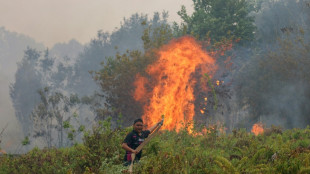 Indonesia fires have burned nearly two million hectares: monitor
 Australian lawmaker 'critically' hurt in attack, officials say

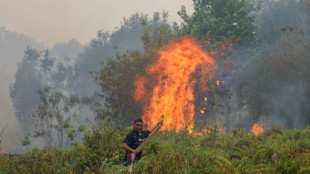 Indonesia fires burned over 1.9 mn hectares through September: monitor
 Asian tech stocks mixed after Wall St losses, eyes on earnings
 China's third-quarter growth narrowly beats forecasts
 Asian stocks start week on back foot, tracking tech-led Wall St losses
 China growth narrowly beats forecasts

 Faith and fury: Texas Senate rivals offer contrasting visions
 Women await justice for police killings in Brazil
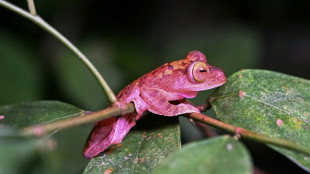 The painstaking task of cataloguing the world's species

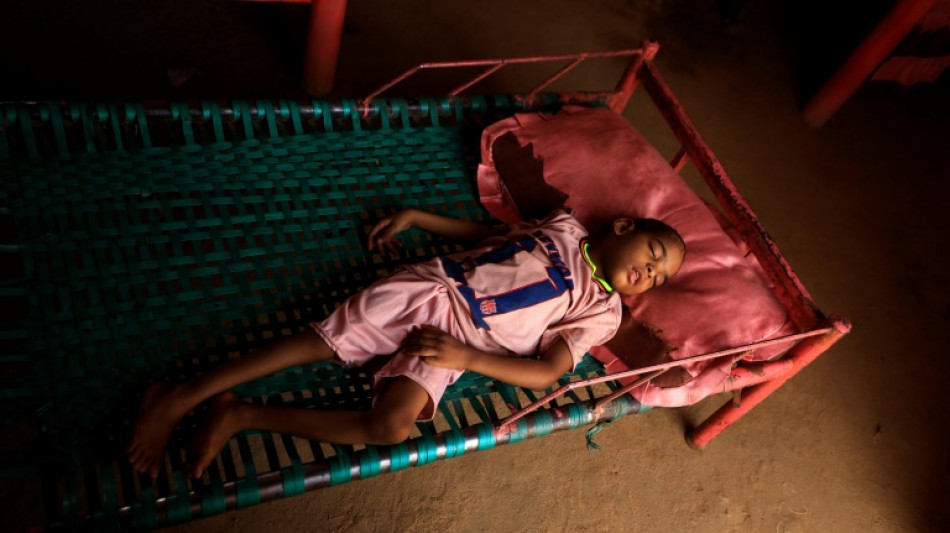
Sudanese mother Awadya Ahmed has long wondered why her youngest child Talab was born blind and unable to walk; now she suspects the piles of poisonous waste left by gold miners.
In recent years, a growing number of traditional miners have flocked to her village hoping to strike it rich.
But they leave behind hazardous white-powdered waste laden with toxic chemicals including mercury used in the gold extraction process.
The waste is dumped near farmland, water sources and residential areas.
"His four brothers were born in good health, but Talab is the only one born after mining residues spread," Ahmed, 45, told AFP at her home in Banat village, in River Nile state north of Khartoum.
The four-year-old lay beside her, unable to move.
Artisanal gold mining is widespread across much of Sudan, employing more than two million people and producing about 80 percent of the gold extracted nationwide, according to experts.
Sudan is one of the world's poorest countries, and mining remains a source of fast profits attracting many.
The industry has flourished since oil-rich South Sudan broke away in 2011 during the rule of now-ousted president Omar al-Bashir, a period marked by economic hardship, government mismanagement, corruption and international sanctions.
- 'Harmful to health' -
But chemical contamination from artisanal gold extraction poses clear health dangers.
Mercury damages the nervous, digestive and immune systems and can be fatal. It also threatens the development of children in the womb and early in life, according to the World Health Organization.
Ahmed is not the only one of Banat's 8,000 residents to have observed birth defects and miscarriages.
In a nearby house, Awad Ali says his daughter was "a very normal child," until she turned two. "Then she became unable to move or walk, stand up or sit down," he said.
Community leader Algaily Abdelaziz said the problems began five years ago.
"Since we saw these waste deposits appear, children have been born with deformities, and there have been still-births," Abdelaziz said, noting 22 children had been born in the village with deformities including blindness and brain damage.
Saleh Ali Saleh, from Khartoum's Neelain University's Faculty of Petroleum and Minerals, notes that it is well known "that mercury is harmful to health".
A January report by Saleh and other Sudanese researchers found that around 450,000 tonnes of mining waste -- rife with mercury -- dot the lush green landscape of River Nile state.
Samples of blood, urine, drinking water and soil from several parts of the state have shown high levels of mercury traces, according to the report.
"People, frankly, are not concerned with removing the waste," said Ali Mohammed Ali, head of the Sudanese Environment Conservation Society.
The process "requires special treatment" and is "ideally carried out away from residential areas or water sources," he added.
Such safety measures are far from the minds of miners.
Around 50 kilometres (30 miles) from Banat, Mohammed Issa mixed mercury with sand in a large metal bowl with his bare hands, hoping to separate gold from other minerals.
"That's how people do it here," the 25-year-old said.
Issa said he abandoned a meagre life of farming and herding in North Kordofan state to search for the precious metal.
- Years to fix -
In 2019, Sudan's now-deposed transitional government issued a decree banning the use of mercury and cyanide after protests against their use at gold mines.
The decision has rarely been enforced and miners continue to use the chemicals in more secluded outlying areas, Saleh said.
Political and economic turmoil in Sudan has piled pressure on households already struggling to make ends meet.
The country's economic crisis worsened after an October military coup led by army chief Abdel Fattah al-Burhan.
The coup triggered cuts to crucial international aid and fed into spiralling prices of basic commodities.
Sudan is one of Africa's top gold producers, generating 30.3 tonnes of gold in the first half of 2021 alone, according to official figures -- which do not include the artisanal output.
The Central Bank puts Sudan's gold revenues in the first quarter of this year at $720 million, reflecting the official output.
The state-run company supervising mining activities declined multiple requests for comment by AFP.
The lucrative business has long been controlled by shadowy companies with links to the security services which flourished under Bashir.
Saleh warns there will be no quick fix.
"The damage already done to the environment cannot be treated easily," said Saleh.
"If we managed to stop today, it will still take us years and years to contain the impact of artisanal mining."
For little Talab, it is already too late.
Ch.Campbell--AT