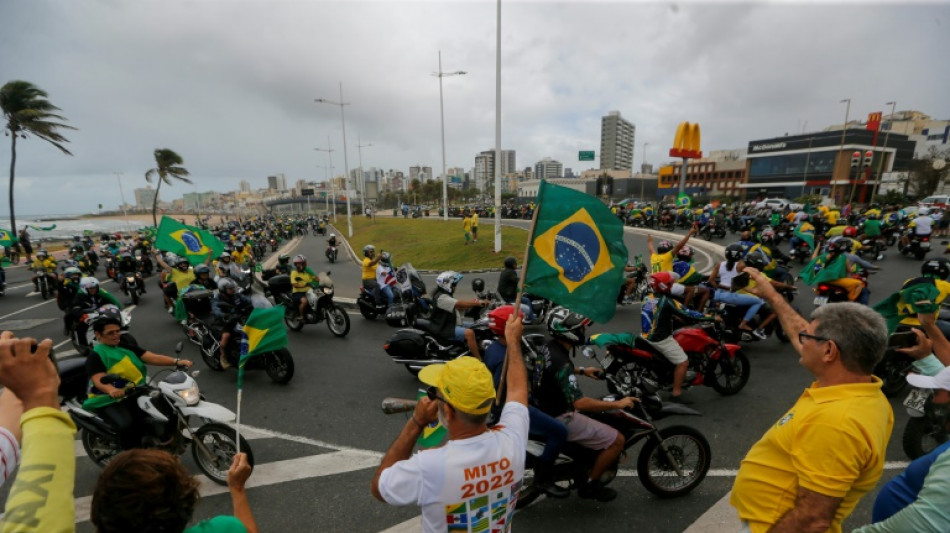
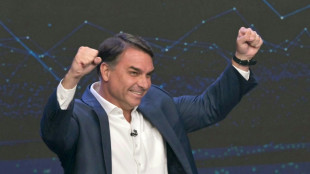
Security fears for Bolsonaro, Lula in tense election campaign / Photo: ARISSON MARINHO - AFP/File

 Saudi airport closure disrupts life in kingdom's capital
 Ramaphosa tells South Africa to prepare for loss of US-Africa trade deal
 France presses resale platforms to remove 'stolen' goods after unrest
 Yamal v PSG: Ballon d'Or backdrop to Champions League showdown
 Araujo says too soon to talk about permanent Liverpool move
 US wants to be 'strong partner' for central Asia: Rubio
 'Special' to face friend Perez in Champions League, says Liverpool's Iraola
 Monitor says Indonesia fires have burned nearly two million hectares
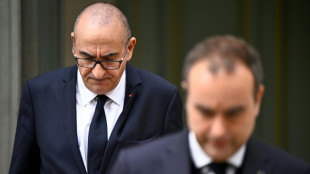 French PM says could declare state of emergency over unrest 'if needed'
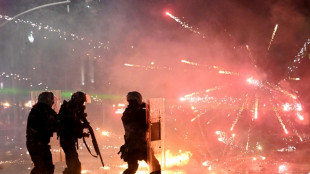 Albanian PM warns of 'red line' after days of unrest
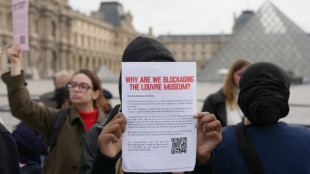
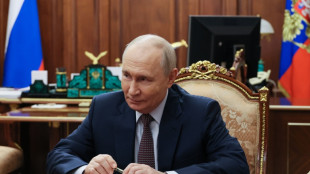 Putin, Xi and Trump could meet at APEC summit: Kremlin
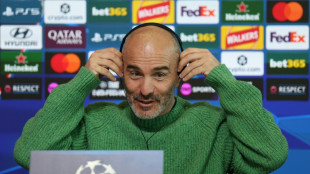
 Microsoft exits data centre deal in blow to UK AI ambitions
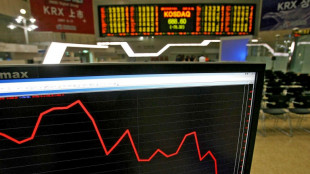 European stocks retreat as France violence spreads
 North Korea warns 'grave situation' prevailing along border
 Raya proud of Arsenal's 'incredible' reaction after third straight win
 Indonesia fires have burned nearly two million hectares: monitor
 Australian lawmaker 'critically' hurt in attack, officials say

 Indonesia fires burned over 1.9 mn hectares through September: monitor
 Asian tech stocks mixed after Wall St losses, eyes on earnings
 China's third-quarter growth narrowly beats forecasts
 Asian stocks start week on back foot, tracking tech-led Wall St losses

 China growth narrowly beats forecasts
 Faith and fury: Texas Senate rivals offer contrasting visions
 Women await justice for police killings in Brazil

 The painstaking task of cataloguing the world's species
Brazil's far-right President Jair Bolsonaro and leftist rival Luiz Inacio Lula da Silva have both taken to wearing bullet-proof vests to campaign rallies ahead of the October elections, with the candidates' security a major concern in an atmosphere of deep political polarization.
The assassination last Friday of Japan's ex-prime minister Shinzo Abe at an election campaign rally sparked a flurry of concern on social media in Brazil that conditions at home were ripe for a similar crime.
Then on Sunday, a Lula partisan was shot dead at a political party event by a policeman shouting pro-Bolsonaro slogans.
Lula blamed the death on "hate speech encouraged by an irresponsible president," while Bolsonaro retorted that violent people should join "the left, which has an undeniable past of violent episodes."
The president himself was stabbed in the abdomen during his previous presidential campaign in 2018, by a man later declared mentally unfit to stand trial.
"Political violence in Brazil has a long history," political analyst Oliver Stuenkel of the Getulio Vargas Foundation in Sao Paolo told AFP.
"It has mostly been limited to the municipal level, (but) we now see, in part due to the radical, extreme polarization, that it is reaching the federal level" of politics.
Historically, dozens of candidates get shot with every municipal election in Brazil.
Bolsonaro is trailing behind Lula in opinion polls ahead of the first round of presidential elections on October 2.
There will be a runoff on October 30 if no candidate gets 50 percent of first-round votes.
- 'Clearly worried' –
Bolsonaro, 67, has had his presidential protection upgraded, but does not avoided crowds on the campaign trail.
Lula, 76, has employed a team of private security guards to reinforce the team of 35 police that political commentator Lauro Jardim told CBN radio already take care of him.
The former president has taken a more cautious stance with his public engagements.
From the official opening of the campaign on August 16, he and all other rival candidates to Bolsonaro will have access to a pool of some 300 federal police members dedicated to election protection.
This "unprecedented" deployment, according to the federal police, could be increased as the risk calculus changes.
Lula and Bolsonaro, leading the rest of the candidate pack, "can both be targeted by extremist individuals, so it is good to see them taking their safety more seriously," said Silvio Cascione, Brazil director for the Eurasia Group consultancy.
"Lula's staff is clearly worried about the risk... Lula will prioritize indoor events with strict security protocols" with open-air events "much less frequent than in previous campaigns," he added.
Last week, at a Lula campaign event on a massive public square in Rio de Janeiro, a man hurled a small explosive device into the crowd.
No one was hurt, but the attack sparked concern as it happened despite restricted access to the event and the use of metal detectors to screen attendees.
- 'Violent language' –
According to the University of Rio de Janeiro's Observatory of Political and Electoral Violence, 214 cases of violence ranging from threats to murders have been recorded against politicians since January this year.
About 40 were homicides -- many of the victims candidates or ex-candidates for mayoral office or municipal councils.
The total represented a rise of 32 percent over the first half of 2020, when the country held municipal elections.
Observers say the political climate in Brazil has become deeply polarized since Bolsonaro took office in 2019.
The left and right have both accused each other of inflaming violence.
Stuenkel points to the use of "violent language, especially in pro-Bolsonaro groups, or by the candidate himself."
Bolsonaro has repeatedly sought to cast doubt on the credibility of the election system, and there are fears he may reject the outcome if he loses and even foment violence similar to what happened in the United States.
"They are trying to transform the campaign into a war, to instill fear in Brazilian society," Lula charged on Tuesday.
Experts have also pointed with concern to an explosion of 474 percent of private firearm ownership under the Bolsonaro government.
Despite the growing nervousness, observers doubt the candidates will significantly limit their public outreach.
"It is tremendously important (to them) to promote a narrative of broad, popular support for their candidacy," said Stuenkel.
W.Nelson--AT