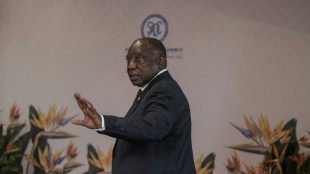
Saudi mindset shows signs of shift towards Israel / Photo: Fayez Nureldine - AFP/File

 Araujo says too soon to talk about permanent Liverpool move
 US wants to be 'strong partner' for central Asia: Rubio

 'Special' to face friend Perez in Champions League, says Liverpool's Iraola

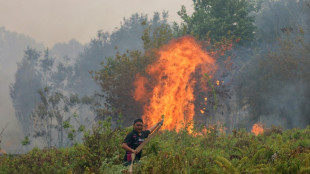 Monitor says Indonesia fires have burned nearly two million hectares

 French PM says could declare state of emergency over unrest 'if needed'
 Albanian PM warns of 'red line' after days of unrest
 Putin, Xi and Trump could meet at APEC summit: Kremlin
 Microsoft exits data centre deal in blow to UK AI ambitions

 European stocks retreat as France violence spreads
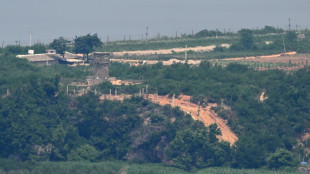 North Korea warns 'grave situation' prevailing along border

 Raya proud of Arsenal's 'incredible' reaction after third straight win

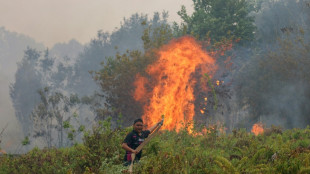 Indonesia fires have burned nearly two million hectares: monitor

 Australian lawmaker 'critically' hurt in attack, officials say

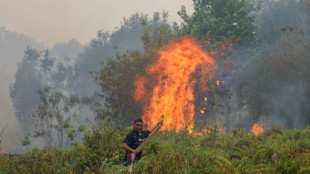 Indonesia fires burned over 1.9 mn hectares through September: monitor

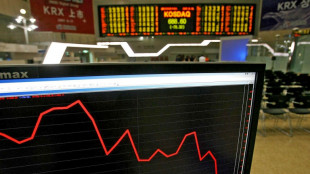 Asian tech stocks mixed after Wall St losses, eyes on earnings

 China's third-quarter growth narrowly beats forecasts
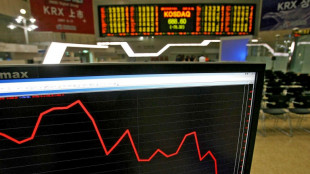 Asian stocks start week on back foot, tracking tech-led Wall St losses

 China growth narrowly beats forecasts

 Faith and fury: Texas Senate rivals offer contrasting visions

 Women await justice for police killings in Brazil
 The painstaking task of cataloguing the world's species

 Nations seek reset at UN talks as nature goals off track

 Rubio seeks to strengthen US foothold in Central Asia
 LeBron joins 76ers to chase one more NBA title at age 41

 Rays one win from World Series return after downing Guardians
Israeli journalist Yoav Limor did not know what to expect when he travelled with a colleague this month to Saudi Arabia, a country long notorious for promoting anti-Israel sentiment in textbooks and in sermons by some imams.
They were in for "a pleasant surprise", he wrote in a subsequent column for the Israel Hayom newspaper, as Saudi market vendors and taxi drivers mostly greeted them with curiosity rather than disdain.
"Some smiled and shook their head in disbelief or worry. Others were curious and struck up a conversation," wrote Limor, adding that "no one made us feel unwelcome".
US President Joe Biden's trip to the Middle East, which began on Wednesday, has fuelled speculation of a possible breakthrough in normalising ties between Israel and Saudi Arabia, which does not recognise the Jewish state.
The kingdom has repeatedly said it would stick to the decades-old Arab League position of not establishing official ties with Israel until the conflict with the Palestinians is resolved.
Analysts stress that, despite growing behind-the-scenes business and security contacts, any immediate gains are likely to be more incremental than the US-brokered Abraham Accords which created ties between Israel and two of the kingdom's neighbours, the United Arab Emirates and Bahrain.
Yet the experience of Limor, who qualified for a tourist visa because he holds a non-Israeli passport, hints at changes in Saudi public opinion that officials hope could one day lay the groundwork for a formal bilateral relationship.
US officials say it shows meaningful progress towards the kind of deal that would, for Israel, represent the ultimate diplomatic prize.
"For too many decades, the Kingdom of Saudi Arabia was a great exporter of Jew-hatred," said Deborah Lipstadt, Washington's special envoy to combat anti-Semitism, in a speech this month after visiting the kingdom in June.
"But what I found is something quite different, something that has changed there dramatically in the last few years."
- 'Potential ally' -
Signs of that transformation appeared well before the Abraham Accords pushed by the Trump administration, which Riyadh has so far refused to join.
Saudi textbooks once denigrated Jews and other non-Muslims by depicting them as animals and asserted that "disobedience is the characteristic of the Jews".
But they have been undergoing revisions for years, as documented by the Israeli nonprofit group IMPACT-SE which monitors textbook content.
At this point, anti-Jewish material has been "largely removed, which is greatly to be admired", the group said in a June report.
The Saudi education ministry did not respond to a request for comment on the textbooks.
Anti-Israeli speech by imams is also "generally rare", and the Islamic affairs ministry has encouraged a "rejection of bigotry", the US State Department said in its latest human rights report on Saudi Arabia.
Mohammed al-Issa, a Saudi cleric who heads the Muslim World League, won praise from Israel in January 2020 after he travelled to Poland for events marking 75 years since liberation of the Nazi death camp Auschwitz.
King Salman hosted Jerusalem-based rabbi David Rosen the following month, and during Ramadan that year the Saudi-controlled MBC network aired a television show in which a character brushed aside the taboo of doing business with Israel.
Further examples have cropped up since the Abraham Accords were unveiled in August 2020.
Israeli drivers participated in the January 2021 Dakar Rally in Saudi Arabia, and the Arab News, the kingdom's main English-language daily, has published Israeli opinion writers.
In a sign that the Saudi leadership may no longer fear a fierce backlash to eventual normalisation, state media in March quoted Crown Prince Mohammed bin Salman, the de facto ruler, describing Israel as a "potential ally".
- 'I do not like them' -
What impact these moves have had on public opinion can be difficult to gauge in an absolute monarchy which places strict limits on political expression.
There is little chance of Riyadh shifting its focus to ties with Israel "while ignoring the Palestinian issue", nor is that something ordinary Saudis would want, said Mohammed Alyahya, a fellow at the Belfer Center at Harvard University.
"The public sentiment has changed, but I don't think it's changed in such a way that people don't care about Palestine anymore, or people don't hold Israel to account for crimes it commits," Alyahya said.
The kingdom's internal dynamics are different from those of its neighbours, said Brian Katulis of the Middle East Institute in Washington.
"I don't see a broad wellspring of more openness that you see in places like the Emirates that are much smaller, where you can do sort of interfaith things and have a synagogue. I think that's slower to happen in a place like Saudi Arabia right now," Katulis said.
Saudi officials have been tight-lipped on potential outcomes from Biden's visit and did not respond to a request for comment on possible agreements concerning Israel.
Whatever emerges –- like allowing direct flights from Israel to Saudi Arabia for Muslim pilgrims –- is likely to stop well short of full normalisation.
That may be all many Saudis can stomach for now.
"It is impossible for me to go to Israel one day. I do not like them," said Abo Rashed, an auto parts salesman in the capital who referred to Israelis as "occupiers".
"But the government knows better. They will choose whatever is best for the people and the country."
R.Chavez--AT