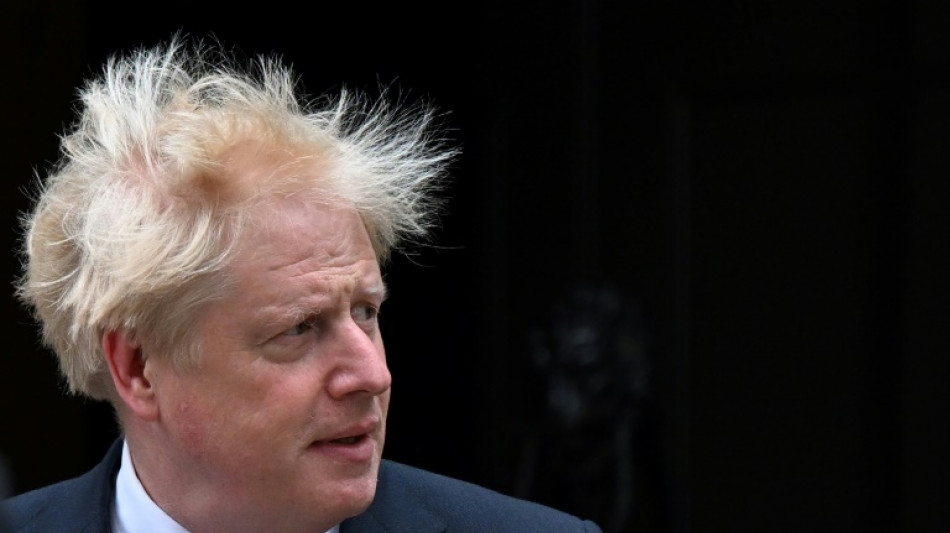
Why is Boris Johnson still prime minister? / Photo: JUSTIN TALLIS - AFP

 European stocks retreat as France violence spreads
 North Korea warns 'grave situation' prevailing along border

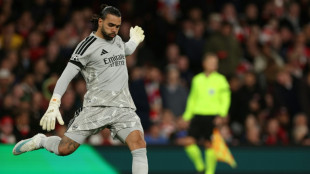 Raya proud of Arsenal's 'incredible' reaction after third straight win

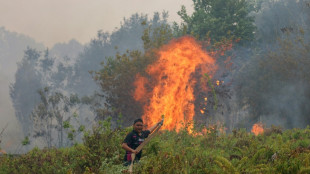 Indonesia fires have burned nearly two million hectares: monitor

 Australian lawmaker 'critically' hurt in attack, officials say

 Indonesia fires burned over 1.9 mn hectares through September: monitor

 Asian tech stocks mixed after Wall St losses, eyes on earnings

 China's third-quarter growth narrowly beats forecasts

 Asian stocks start week on back foot, tracking tech-led Wall St losses

 China growth narrowly beats forecasts

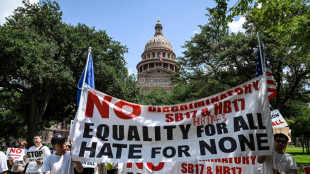 Faith and fury: Texas Senate rivals offer contrasting visions

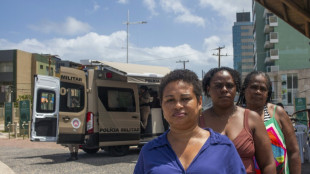 Women await justice for police killings in Brazil

 The painstaking task of cataloguing the world's species

 Nations seek reset at UN talks as nature goals off track

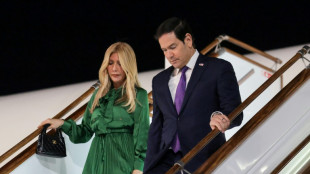 Rubio seeks to strengthen US foothold in Central Asia

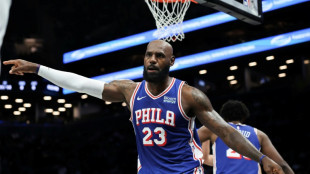 LeBron joins 76ers to chase one more NBA title at age 41
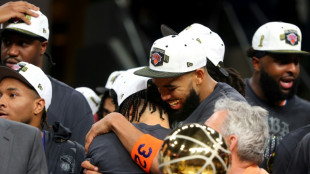
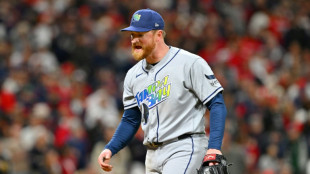 Rays one win from World Series return after downing Guardians
 Stillwater Critical Minerals Files NI 43-101 Technical Report for the Updated Stillwater West Mineral Resource Estimate in Montana, USA
 Caledonia Mining Corporation Plc: Notification of Relevant Change To Significant Shareholder
 BioNxt Completes GMP Manufacturing and Submits Clinical Trial Application for Sublingual Cladribine Drug Candidate

 DEA Denies Federal Marijuana Manufacturing License: Are State Operators Next?

 Great Western Mining Corporation PLC Announces Holding(s) in Company

 HyProMag USA Deploys Mobile Inserma System, Extending Hard Disk Drive Processing to Customer Sites Across the United States

 CoTec Holdings Corp. Notes HyProMag USA Deployment of Mobile Inserma System, Extending Hard Disk Drive Processing to Customer Sites Across the United States
 Kings' Ben Simmons tears Achilles in training
Prime Minister Boris Johnson has announced his resignation but is going nowhere for now -- and British voters get no say in his successor. Why?
- The long goodbye -
Bowing to a cabinet insurrection, the scandal-tainted Johnson said Thursday that he was stepping down as Conservative leader.
But he said he would remain in 10 Downing Street until Britain's ruling party elects a successor -- which could take months.
Until then, he continues to wield all the trappings of executive authority.
Britain has no formal designation of a "caretaker" leader in between party elections.
In fact, Britain has no formal constitution at all. Instead it has centuries of convention accrued in royal palaces, parliament and the courts.
- Unpresidential -
The unwritten constitution dictates that Britain is a parliamentary democracy.
The leader of the biggest party gets to be prime minister, with the consent of the monarch.
After a general election, the situation is normally clear-cut -- unless, as in 2010, no single party emerges with an overall majority.
The prime minister needs to prove their majority through a vote of confidence.
If leader of the biggest party, that is guaranteed, if necessary, with the backing of one or more smaller parties (as in 2010).
But parties often change leaders between elections, as now, and as in 2016 when Theresa May succeeded David Cameron following his defeat in Britain's Brexit referendum.
In fact, the last leader to have been voted in and voted out at the ballot box by the public was Tory prime minister Edward Heath way back in 1974.
Labour insists that Johnson cannot hang around a day longer.
It says it will push a no-confidence vote unless the Conservatives agree to install a new leader much more quickly.
- Lacking confidence -
Normally, a ruling party with a working majority of 73 seats would be assured of winning such a vote in the House of Commons.
But several Tories have also expressed their unease at Johnson staying in office for longer.
If -- and it's a big if -- enough of them rebelled and Labour won, Johnson would have to go immediately.
By convention, the Conservatives would have to rapidly anoint another leader, who would have to show they do have majority support in the Commons.
Failing that, Britain would have to hold a general election.
Pressure has grown down the years for a new prime minister, elected internally by their party, to seek a popular mandate.
When Gordon Brown took over as Labour leader and prime minister from Tony Blair in 2007, Brown came close to calling a snap election.
But fatally, he hesitated, the global financial crisis intervened, and Labour lost in 2010.
L.Adams--AT