What next for Putin in Ukraine fight? / Photo: Mikhail Klimentyev - SPUTNIK/AFP

 Australian lawmaker 'critically' hurt in attack, officials say
 Indonesia fires burned over 1.9 mn hectares through September: monitor
 Asian tech stocks mixed after Wall St losses, eyes on earnings
 China's third-quarter growth narrowly beats forecasts

 Asian stocks start week on back foot, tracking tech-led Wall St losses

 China growth narrowly beats forecasts

 Faith and fury: Texas Senate rivals offer contrasting visions
 Women await justice for police killings in Brazil
 The painstaking task of cataloguing the world's species

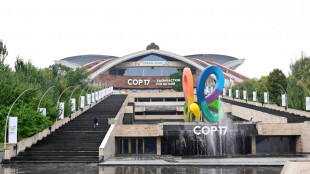 Nations seek reset at UN talks as nature goals off track

 Rubio seeks to strengthen US foothold in Central Asia

 LeBron joins 76ers to chase one more NBA title at age 41

 Rays one win from World Series return after downing Guardians
 BioNxt Completes GMP Manufacturing and Submits Clinical Trial Application for Sublingual Cladribine Drug Candidate

 Caledonia Mining Corporation Plc: Notification of Relevant Change To Significant Shareholder

 Kings' Ben Simmons tears Achilles in training
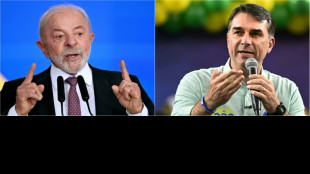 Lula, Bolsonaro set for first debate showdown in bitter election race

 Mbappe hits two as Real Madrid rout Sevilla
 Browns edge Ravens for division lead, Texans beat Jags

 Lyon go top of Ligue 1 as Monaco fall to first defeat of the season
 Venezuela opposition alliance reaffirms Nobel laureate Machado as leader
 'Street Fighter' wins N. America box office, buzzy doc stuns in 2nd

 NFL: Paris game to go ahead despite protests in France
 Arteta hails Arsenal 'finishers' after Madueke fells Forest

 Trump backs ally Netanyahu ahead of Israel's tight election

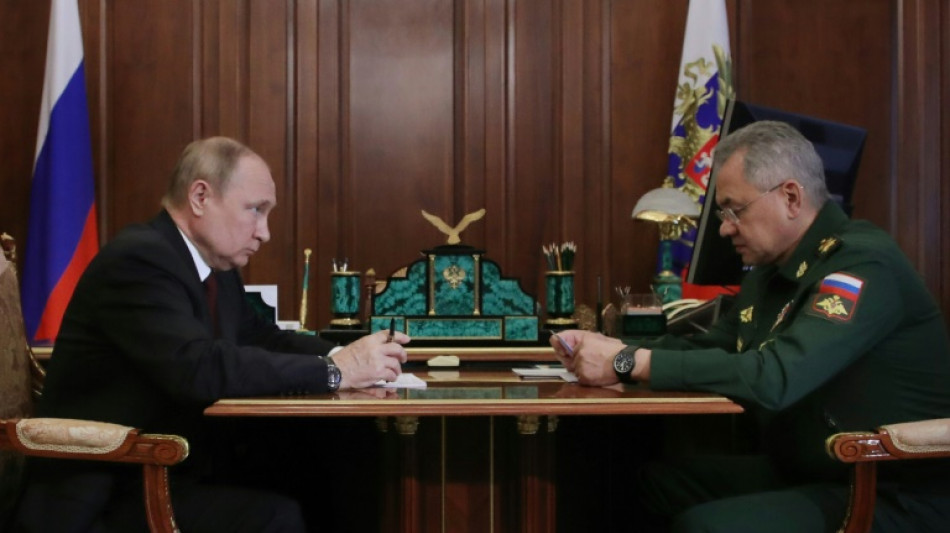
Russian President Vladimir Putin must now decide his next steps in the five-month invasion he started in February.
After Russian troops captured the strategic Ukrainian city of Lysychansk on Sunday, here are five different options raised by security experts who spoke with AFP:
- Grinding advance -
Russian forces appear on course to take full control of the Donbas region that was already partly held by pro-Kremlin separatists before the February 24 invasion.
With Lysychansk and its twin city Severodonetsk captured in the past weeks, Putin's troops "can hope to take Sloviansk and Kramatorsk and the surrounding regions," said Pierre Grasser, a researcher at Paris' Sorbonne university.
Sloviansk in particular is home to "a relatively welcoming population -- at least those who have remained there" rather than fleeing the fighting, he added.
But there may be limits to how far the Russians can press into their neighbour's territory.
"Their steamroller works well near their own borders, their own logistical centres and their airbases. The further away they get, the harder it is," said Pierre Razoux, academic director of the Mediterranean Foundation for Strategic Studies (FMES).
- Control the Black Sea -
Southern Ukrainian city Kherson was one of the first to fall to Russian forces in the opening days of the war.
But Russia's grip on the country's Black Sea coast is not secure.
"Counter-attacks by Ukraine in the south... place Russian forces in a dilemma. Do they sustain their eastern offensive, or do they significantly reinforce the south?" said Mick Ryan, a former general in the Australian army.
The question is all the more pressing as "the war in the south is a front of greater strategic importance" than the Donbas, he added.
Claiming territory along the coast could allow Moscow to create a land bridge to the Crimean peninsula, which it annexed in 2014, while both sides want to control Ukraine's Black Sea ports.
- Crack Kharkiv -
Ukraine's second-largest city Kharkiv is close to the northeastern border with Russia -- and located in a pocket still controlled by Kyiv that could yet be cut off by Russian forces.
"If the Ukrainians collapse and Kharkiv is completely isolated, the Russians could force them to choose between committing to defend the city or taking the pressure off in the south towards Kherson," said Pierre Razoux.
It will be up to President Volodymyr Zelensky and Ukrainian commanders "to deploy their units so as to prevent a big summer breakthrough" that could encircle Kharkiv, he added.
Home to 1.4 million people in peacetime, a siege of Kharkiv could be a bloody affair lasting up to a year, Razoux said.
- Divide the West -
While the West has so far kept up a mostly united front of sanctions and support for Ukraine, continued Russian advances could drive the allies' judgements of their interests apart.
"The goal for Russia is to continue to grind down Ukrainian forces on the battlefield, while waiting for the political will to support Ukraine to fade among Western countries," said Colin Clarke, research director at the Soufan Center think-tank in New York.
Deliveries of Western military aid have been too slow and too small to turn the battle decisively in Kiev's favour.
Meanwhile, the war's inflationary impact on basics like food and energy may gradually turn public opinion away from the strong initial support for Ukraine.
"The Americans could tell the Ukrainians 'you can't go on'," said Alexander Grinberg, an analyst at the Jerusalem Institute for Security and Strategy.
- Open talks -
Russia itself is suffering heavy costs from Western sanctions, battlefield casualties and losses of military materiel.
"Putin will be forced to negotiate at some point, he's bitten off more than he can chew," said Colin Clarke.
In late June, Kremlin spokesman Dmitry Peskov already raised the option of talks -- on condition of "applying all the conditions set by Russia", which remain unacceptable to Kiev.
But his control over domestic information means the Russian leader has a free hand to tell the public that his objectives have been achieved and justify a pause in the fighting.
A bigger challenge might be divisions on the Ukrainian side.
"They could tolerate a frozen conflict, but not a defeat."
E.Flores--AT