14 dead as coalition bombs Yemen after UAE attack

 Man allegedly behind 'targeted' attack on Australian lawmaker appears in court

 Musk backs SpaceX-Tesla merger as rocket firm turns profit

 Zelensky, US hail 'productive' talks to end Trump feud

 'Unbelievable' Foden back in the groove with treble in Man City rout

 Pistons rally to beat Celtics in NBA 2026-27 season opener

 PSG late show downs Barca in Champions League, Liverpool fight back

 Liverpool strike back to beat Villarreal in seven-goal thriller

 Dow boosted as markets rotate from tech shares

 Zelensky hails resumption of US advance warning of strikes on Ukraine

 Carrick says only wins can ease doubts over Man Utd future

 Top NBA Draft pick Dybantsa to miss opener with ankle sprain
 Italy sends troops, toughens security laws after Milan clashes

 Alberta separatists vow to fight on, risking turmoil for Canada

 Two men re-arrested for suspected spying for Iran in airbase scare: UK police

 Guatemalan man gets 30 years for truck smuggling deaths of 53 migrants

 'Clayface' gets under the skin of the superhero genre

 Zelensky, US envoys hold Oslo talks as Ukraine claims US missile holdup

 All-rounder Minhas stars as Pakistan crush England in tri-series

 Bavuma hits 179, Rabada strikes as South Africa dominate

 Allrounder Minhas stars as Pakistan crush England in tri-series
 Albania PM blames 'hybrid war' for week of unrest

 Bavuma hits 179 to lead South African fightback

 Solid GM results overshadowed by latest jump in commodity costs

 Houthi attacks undermine Saudi Arabia's economic ambitions
 French PM vows 'massive' police deployment for new demonstrations

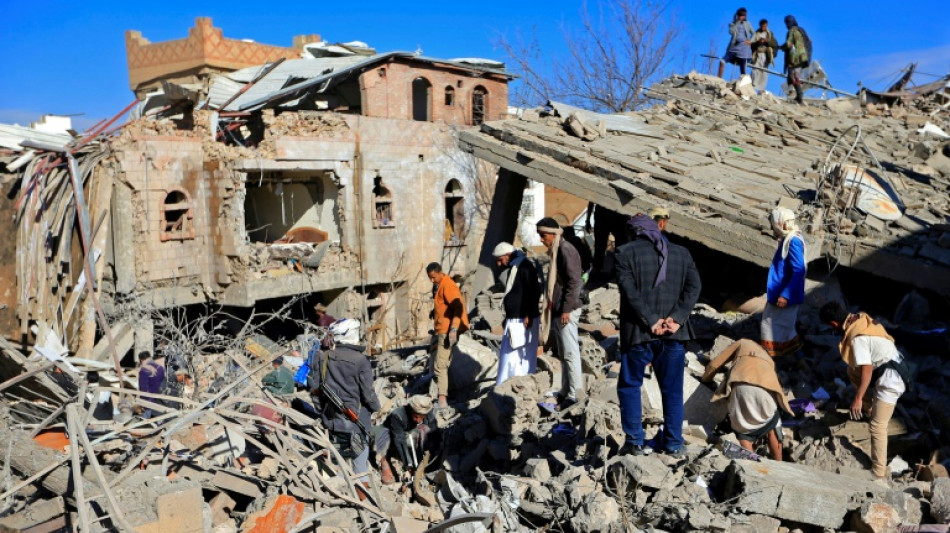
The Saudi-led coalition killed 14 people in air strikes on Yemen's rebel-held capital, a medical source said Tuesday, after an attack by Huthi insurgents on the United Arab Emirates sent regional tensions soaring.
Sanaa residents were combing the rubble for survivors of the strikes that levelled two houses, hours after the Huthis had killed three people Monday in a drone and missile attack on the UAE capital Abu Dhabi.
Huthi Brigadier General Abdullah Qassem Al-Junaid, director of the rebels' air force academy, was killed along with family members, the rebels' Saba news agency said.
Coalition forces launched further strikes on Sanaa on Tuesday.
"The search is still going on for survivors in the rubble," said Akram al-Ahdal, a relative of several of the victims.
The UAE, part of the Saudi-led coalition fighting the Iran-backed rebels, had vowed a tough response to Monday's attack, the first deadly assault acknowledged inside its borders and claimed by the Yemeni insurgents.
The attack on the renowned Middle East safe haven of UAE, which opened a new front in the seven-year war, followed a surge in fighting in Yemen including battles between the rebels and UAE-trained troops.
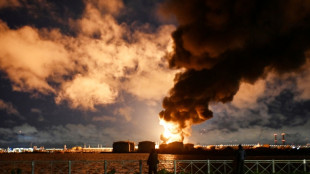
Crude prices soared to seven-year highs partly because of the Abu Dhabi attacks, which exploded fuel tanks near storage facilities of oil giant ADNOC. The Huthis later warned UAE residents to avoid "vital installations".
Yemen, whose nearly seven-year-old war has killed hundreds of thousands, occupies a strategic position on the Red Sea, a vital conduit for oil from the resource-rich Gulf.
After the attacks, Saudi Arabia's de facto ruler, Crown Prince Mohammed bin Salman, and Abu Dhabi Crown Prince Mohamed bin Zayed agreed in a phone call to "jointly stand up to these acts of aggression", UAE state media said.
- 'No end in sight' -
The Abu Dhabi attack marked a new phase in the Yemen war and further reduced hopes of any resolution to the conflict, which has displaced millions in what was already the Arabian peninsula's poorest country.
The United States pledged to hold the Huthis accountable, while Britain, France and the European Union also condemned the assault.
The targeting of Abu Dhabi followed intense clashes in Yemen, including advances by the UAE-trained Giants Brigade, who drove the rebels out of Shabwa province.
The defeat dealt a blow to the Huthis' months-long campaign to capture neighbouring Marib, the government's last stronghold in the north.
Earlier this month, the Huthis hijacked the UAE-flagged Rwabee in the Red Sea, charging that it was carrying military equipment -- a claim disputed by the coalition and the UAE.
The ship's 11 international crew are being held captive.
Yemen's civil war began in 2014 when the Huthis seized the capital Sanaa, prompting Saudi-led forces to intervene to prop up the government the following year.
The conflict has been a catastrophe for millions of its citizens who have fled their homes, with many on the brink of famine in what the UN calls the world's worst humanitarian crisis.
The UN has estimated the war killed 377,000 people by the end of 2021, both directly and indirectly through hunger and disease.
"There is no end in sight for the Yemen war," Elisabeth Kendall, a researcher at the University of Oxford's Pembroke College, told AFP.
"Rather, the conflict is escalating and new fronts are opening up, both domestically and now regionally."
P.Smith--AT