'Stop production': Small US firms battered by shifting tariffs / Photo: Brendan SMIALOWSKI - AFP/File

 Monaco hold Lille as both move to top of Ligue 1
 Isak extends hot streak as Liverpool sink Brighton

 Brazil chooses between Lula and Bolsonaro in nail-biter vote

 UDST opens Fall 2027 admissions to students in Qatar and abroad

 Kuwait public works minister and UK ambassador discuss closer cooperation

 Historic Ramallah olive press joins modern production with local tradition

 Hebron operation forces 373 Palestinian families from their homes

 Kuwait legal department reviews new commercial concealment law

 Poland’s WB Group plans $100 million India investment for drone production

 Insurance deductibles and no-claim bonuses require a careful claims decision

 Credit-card shortcuts can turn impulse spending into lasting debt

 Chicago Fire rally past Atlanta United 3-2 to hold fourth place

 John Catlin wins Hong Kong Open and secures first Masters invitation

 Serbia on track for high turnout as students challenge ruling party
 Pakistan keep England to 241 despite Duckett ton

 Ukraine war divides Bulgaria as voters elect president
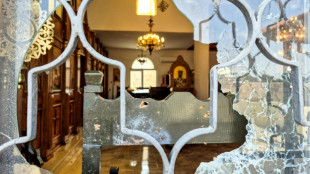 Shock and grief in a Jordanian village after church attack
 Top-ranked Rybakina crushes Fernandez to win fourth title of season
 UK PM calls for 'honest discussion' about EU free movement

 Far-right leader Le Pen kicks off tilt at French presidency amid nationwide protests

 Naomi Osaka could quit tennis if daughter asks her to

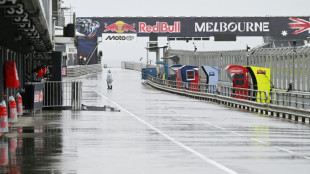 Last MotoGP race at Phillip Island cancelled due to weather in Marquez setback

 Sri Lanka seeks faster green energy shift after oil shocks
 Riyadh airport resumes flights following Houthi attacks

 'Call of Duty' North Korea invasion edition tops sales charts in South
When US President Donald Trump announced tariffs on almost all trading partners in April, Ben Knepler contacted the factory in Cambodia producing his company's outdoor furniture. "Stop production," he ordered.
The announcement involved a 10-percent levy on imports from most partners, set to rise further for many of them. For Cambodia, the planned duty was a staggering 49 percent.
"That night, we spoke to our factory," Knepler told AFP. "We literally cannot afford to bring our own product into the US with that kind of tariff."
The decision was even more painful for Knepler and his Pennsylvania-based company, True Places, given that he had previously shifted production of his outdoor chairs to Cambodia from China, following tariffs on Chinese imports imposed by Trump during his first presidency.
"We were facing 25-percent tariffs in China, and there were zero-percent tariffs in Cambodia," Knepler recalled.
It took him a year to move the massive equipment and molds to Cambodia only to see another steep levy.
With Trump's "reciprocal" tariff hikes taking effect last Thursday, these Cambodia-made chairs face a lower -- though still significant -- 19 percent duty.
- 'Wheel of misfortune' -
Knepler's experience echoes that of many US companies producing everything from yo-yos to clothing abroad, after years of offshoring American manufacturing.
To cope, businesses use various strategies.
Some pass on the new costs as a surcharge to customers. Others halted imports when duties reached prohibitive levels, hoping Trump would strike bilateral trade deals that would make their businesses viable again.
Trump frames his tariffs as paid for by other countries, touting tens of billions in revenue this year -- but firms contest this description.
"We make the tariff payments when the product comes into the US," Knepler stressed. "Before we sell it, we're the ones who pay that tariff."
Now saddled with hundreds of thousands of dollars in debt he took on to relocate the company's production to Cambodia, Knepler worries if his business will survive.
He likens the rapid policy changes to spinning a "wheel of misfortune," resulting in a new tariff each time. Over four months this year, the planned tariff rate on Cambodian exports has gone from 0 to 49 percent, to 10 percent, to 36 percent, to 19 percent, he said.
"No one knows what it's going to be tomorrow," he added. "It's impossible to have any kind of confidence in what the rate will be in three- or four-months' time."
Economists warn that tariffs could fuel inflation and drag on growth.
EY chief economist Gregory Daco noted that the duties effective Thursday raise the average tariff rate to 17.6 percent from 2.8 percent at the start of the year -— the highest level since the early 1930s.
While Trump lauds the limited effects his duties have had on US prices so far, experts say tariffs take time to filter through to consumers.
Many of Trump's sweeping levies also face legal challenges over his use of emergency economic powers.
- Price hikes -
The global tariffs are especially hard to avoid.
Barton O'Brien said he accelerated production and borrowed money to bring in as much inventory as possible before Trump took office.
On the election campaign trail, the Republican leader had floated a 60-percent tariff on imports from China, where O'Brien makes most of his products.
The Maryland-based veteran selling dog harnesses and other accessories rented a container to ship as many products as he could before Trump's new tariffs would take effect. "I had dog life jackets in the bathroom," he told AFP.
There is "no way" to produce domestically, he said, adding that comparable American-made products sell for nearly six times his retail prices.
He makes some items too in India and Vietnam.
But Chinese products face an additional 30-percent duty this year, even under an extended truce now expiring in November. The rates for India and Vietnam are 25 percent and 20 percent respectively.
"If you look at the brands I compete with, we're all made in the same countries. We're all going to have to raise prices together," said O'Brien.
H.Gonzales--AT