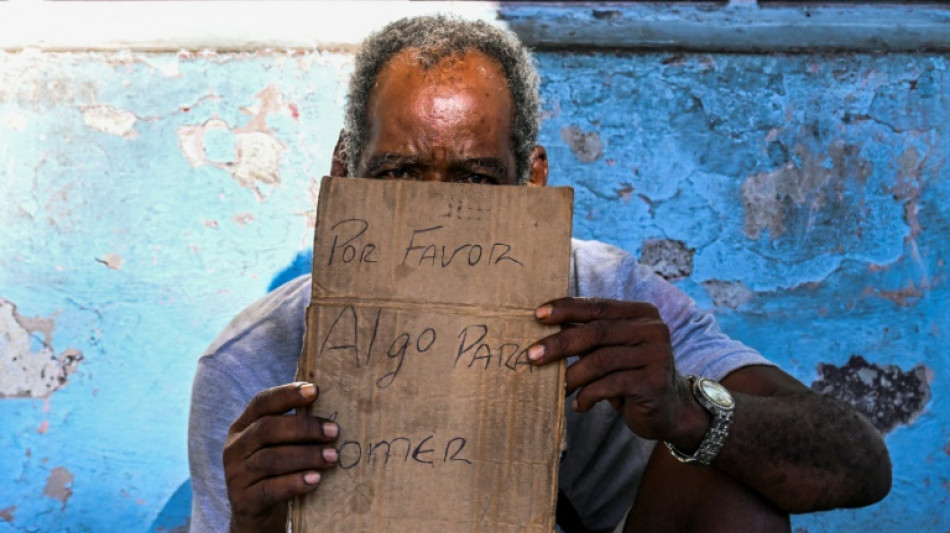
'Please, something to eat': Cubans forced to beg in economic crisis / Photo: Yamil LAGE - AFP

 Chiefs and 49ers suffer first losses of NFL season, Vikings stay unbeaten

 Obama mocks Trump tariffs on Canada during Michigan campaign stop

 Brewers erase four-run deficit as Rays lose World Series Game 2
 Shadab century and record last-wicket stand carry Pakistan past England
 Baylor dismisses Dave Aranda and appoints Joe Klanderman interim coach

 Stocks sink as traders brace for tech earnings, central bank decisions
 Albert Zahn’s carved birds find a lasting home in Wisconsin museums

 NPS Vatsalya offers three choices when a child turns 18

 China's Communist Party elite gather for governance talks

 Maine logging, cross-border ties whipsawed by US-Canada tariff war

 From Carnegie to Claude: AI wealth could reshape philanthropy

 India and Russia plan 2027 pilot voyages on Northern Sea Route

 What challenges await Brazil's Lula in his fourth term?

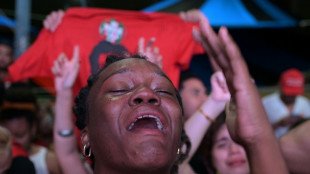 Brazil's Lula defies odds to clinch poll victory against Flavio Bolsonaro

 Falcons hand 49ers first defeat of NFL season, Vikings remain unbeaten

 Top Gold IRA Companies in the US Ranked in New Gold IRA Reviews Analysis Report

 Readers debate YES Bank bonds, climate commitments and candidate disclosure
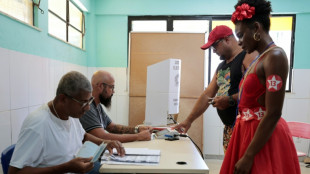
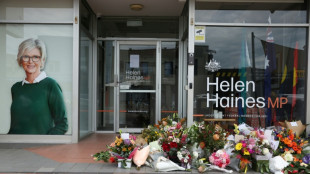 Australian politicians pay tribute to wounded lawmaker

 Modi opens RBI data centre and cybersecurity training institute

 Nifty heads toward weakest Samvat of Modi era after 13% fall

 Disappointed Verstappen admits to wrong tyre strategy at US Grand Prix

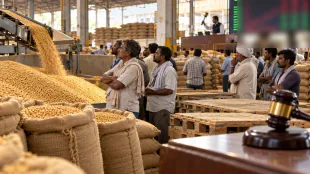 India trims weekly wheat auction volume despite strong miller demand

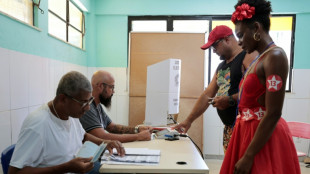 Brazil braces for result of knife-edge election after voting chaos

 Bleems adds UFFF toys and collectibles through Kuwait partnership

 Real Madrid beat Barcelona in La Liga Clasico

William Abel peers inside a plastic bag he dug out of a trash can in Havana while scrounging for his next meal. It contains rice, vegetables, a meatless chicken bone and flies competing for the spoils.
The 62-year-old has been sleeping on the streets since his house outside the capital collapsed two years ago -- a frequent occurrence due to the dilapidation of many buildings, echoing an economy in ruins.
"Food is the hardest part. I've been rummaging through trash cans for two years to eat," he tells AFP, his speech hindered by many missing teeth.
Under a grimy T-shirt, Abel's body is skeletal. He says he suffers from arthritis, hypertension, and a liver problem for which he has no medicine.
He admits he used to drink "quite a lot... You know, we're going through a tough time."
Abel is one of a visibly growing number of beggars and homeless people in a country confronting its worst economic crisis in three decades.
Earlier this month, Labor and Social Security Minister Marta Elena Feito resigned after causing an outcry with her statement that "there are no beggars" in the communist state crippled by decades of US sanctions.
Analysts also point to structural weaknesses in Cuba's centralized economy and the Covid-19 pandemic's blow to the tourism industry.
Long a champion of egalitarian socialism but critically short on foreign currency, the Cuban state has not had enough money these last four years to keep up with spending on social programs such as free healthcare and subsidized food.
At the same time, food prices have skyrocketed nearly 500 percent, throwing Cubans into precarity.
There are no official numbers on poverty in Cuba, where the word "poor" is not used in official communications, but rather terms such as "vulnerable people."
Government data shows that 189,000 families and 350,000 individuals benefit from social aid programs on the island of 9.7 million inhabitants.
- 'A real problem' -
Juan De La Cruz, 63, told AFP he had been a beggar for two weeks.
He sat on the street in a busy neighborhood of central Havana with a piece of cardboard on which he had scribbled: "Please, something to eat."
"What Social Security gives me is not enough," said De La Cruz, who lost a leg to diabetes four years ago and receives an amount equivalent to less than $3 a month at the informal exchange rate.
It is not enough to buy a kilo of chicken, he said, and the soup kitchen is little comfort. "The food is bad, rice without butter, without oil."
At least he has a place to sleep, said the retired stretcher bearer, "a very small room," but "empty, empty, empty."
President Miguel Diaz-Canel was forced to enter the fray over his minister's remarks, lambasting her "lack of sensitivity" and telling parliament that beggars are "concrete expressions of social inequalities" in Cuba.
Prime Minister Manuel Marrero also acknowledged the country was facing "a real problem."
In the absence of official data, experts have to rely on estimates.
Sociologist Mayra Espina Prieto recently calculated that "between 40 and 45 percent" of Cubans live "in poverty."
And UNICEF, the UN's children's agency, said last year that nearly one in ten Cuban children lived in "severe child food poverty," which means they survive one or two food groups a day, sometimes less.
- 'A small room' -
Arnaldo Victores sleeps in a motorcycle garage, on plastic bags, in a peripheral neighborhood of Havana.
As he has no fixed address, the 65-year-old former physiotherapist cannot access social benefits in spite of his visual impairment.
Every day, he travels to the city center and begs on a busy street.
His dream? Just "a small room with a bathroom," Victores told AFP.
Across the street from where he is forced to beseech strangers for alms there stands a brand-new state-owned hotel with 42 floors -- the tallest in the capital and a symbol of unforgivable waste for many Cubans struggling to make ends meet.
M.Robinson--AT