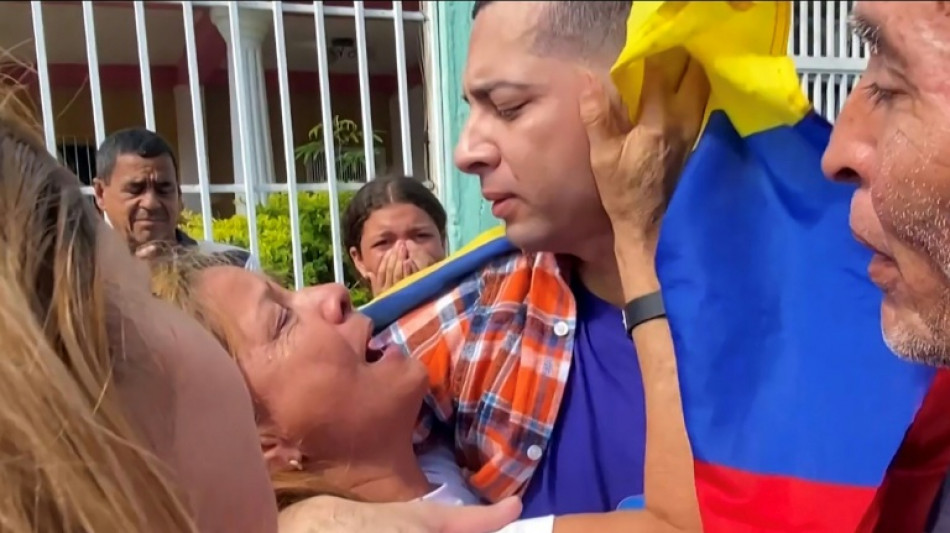
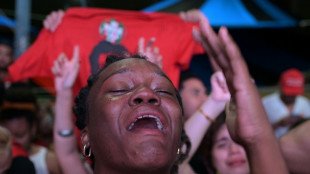
Tears of joy as Venezuelan migrants return from Salvadoran prison 'hell' / Photo: Ramon VELIZ - AFP

 Chiefs and 49ers suffer first losses of NFL season, Vikings stay unbeaten

 Obama mocks Trump tariffs on Canada during Michigan campaign stop
 Brewers erase four-run deficit as Rays lose World Series Game 2
 Shadab century and record last-wicket stand carry Pakistan past England

 Baylor dismisses Dave Aranda and appoints Joe Klanderman interim coach

 Stocks sink as traders brace for tech earnings, central bank decisions

 Albert Zahn’s carved birds find a lasting home in Wisconsin museums

 NPS Vatsalya offers three choices when a child turns 18

 China's Communist Party elite gather for governance talks

 Maine logging, cross-border ties whipsawed by US-Canada tariff war

 From Carnegie to Claude: AI wealth could reshape philanthropy

 India and Russia plan 2027 pilot voyages on Northern Sea Route

 What challenges await Brazil's Lula in his fourth term?

 Brazil's Lula defies odds to clinch poll victory against Flavio Bolsonaro

 Falcons hand 49ers first defeat of NFL season, Vikings remain unbeaten

 Top Gold IRA Companies in the US Ranked in New Gold IRA Reviews Analysis Report

 Readers debate YES Bank bonds, climate commitments and candidate disclosure
 Australian politicians pay tribute to wounded lawmaker

 Modi opens RBI data centre and cybersecurity training institute

 Nifty heads toward weakest Samvat of Modi era after 13% fall

 Disappointed Verstappen admits to wrong tyre strategy at US Grand Prix

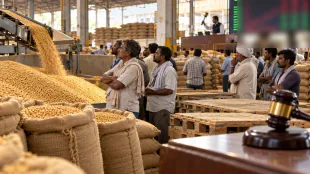 India trims weekly wheat auction volume despite strong miller demand

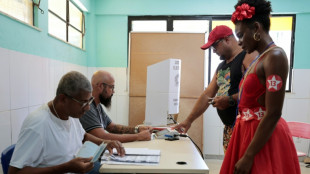
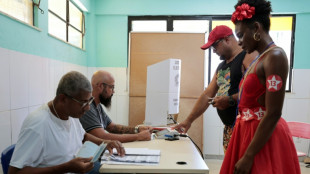 Brazil braces for result of knife-edge election after voting chaos

 Bleems adds UFFF toys and collectibles through Kuwait partnership

 Real Madrid beat Barcelona in La Liga Clasico

Tears of joy and relief flowed freely Tuesday as Venezuelan Maikel Olivera returned home to his mother's embrace after four months of "hell" in a Salvadoran prison.
The 37-year-old is one of 252 Venezuelan migrants flown home last Friday from a notorious "anti-terrorism" prison where they were sent by the United States in March in a fear-inducing crackdown on undocumented migrants.
Family and friends waited impatiently for Olivera to be released by Venezuelan officials after days of medical tests and questioning, breaking out in tearful cheers and waving Venezuelan flags as they saw a police car finally approaching his family home Tuesday.
"You've come back to life, my love!" Olivera's mother Olivia Rojas exclaimed, hugging her son and lovingly stroking his face before taking a step back to look him up and down for any visible signs of distress.
Cars honked in celebration and one person in the crowd wore a T-shirt with the slogan: "Migrating is not a crime."
When the clamor died down, Olivera described the CECOT prison he and his compatriots were held at as "real hell."
"There were beatings 24 hours a day," he told AFP of the experience.
"They told us: 'you will rot here, you will be imprisoned for 300 years.' I thought I would never return to Venezuela again."
The CECOT was built by Salvadoran President Nayib Bukele to house dangerous criminals in a successful but much-criticized war on gangs.
Bukele accepted payment of millions of dollars from Donald Trump's administration to add migrants deported from the US to his prison population in a move widely denounced by human rights groups.
Olivera was arrested in the United States just days short of his second month there, accused of being a gang member, held for five months and then sent to El Salvador with 251 other Venezuelans.
After four months incommunicado at the CECOT, Olivera and the others were finally freed in a prisoner exchange deal with Washington.
And not a minute too soon.
Caracas -- itself under investigation for alleged rights violations in its own prisons -- says the men were beaten, shot with rubber bullets, sexually abused and given rotten food to eat during their incarceration.
- 'They raped him' -
The men had been sent to El Salvador despite US officials not providing any evidence for claims that they were gang members, and without any due process on American soil.
The last they were heard of was when Bukele shared images of the men arriving at CECOT in chains, their heads shorn.
Olivera said they were not allowed to receive visits from lawyers or family members.
"I had a friend who was gay, they raped him," he said. "They beat us just for taking a shower."
Olivera was delivered Tuesday by authorities to the city of Barquisimeto, a more than four-hour drive west from the capital Caracas where the men arrived in two planes last week.
Another four hours west, Mervin Yamarte, 29, broke down in tears when he arrived to see his young wife Jeannelys Parra, their six-year-old daughter, and his mother, Mercedes, among an excited, 300-strong welcoming committee.
"It was complete torture what we were enduring, I have many marks on my body," he told AFP.
Mercedes Yamarte, 46, had worked for days to prepare a special meal and decorate her humble home with balloons in the colors of the Venezuelan flag.
She had raised a banner outside reading: "Welcome to your homeland, you were missed."
Also in Maracaibo, Yarelis Herrera, 45, was overcome at being reunited with her son Edwuar Hernandez, who she said appeared "very changed" by his experience. "He looks more like a man now."
He is 23.
Olivera, Yamarte, Hernandez and many others risked the dangerous journey to the United States to find work and send money home to economic and political crisis-riddled Venezuela.
The South American country has lost about a quarter of its population -- some eight million people -- to emigration under President Nicolas Maduro, whose claims to victory in two successive elections are widely considered illegitimate.
"They have no record of criminal activity, nothing. Humble people seeking a better future who ended up in this nightmare," Mervin Yamarte's younger brother Jonferson told AFP of the migrants' grim fate.
He had escaped a similar fate by returning home from the United States on a humanitarian flight organized by Caracas.
O.Ortiz--AT